Itineraries
Kamakura itinerary: half day, one day and two days with Enoshima
This page contains affiliate links. Booking through them costs you nothing extra and supports the site. Details.
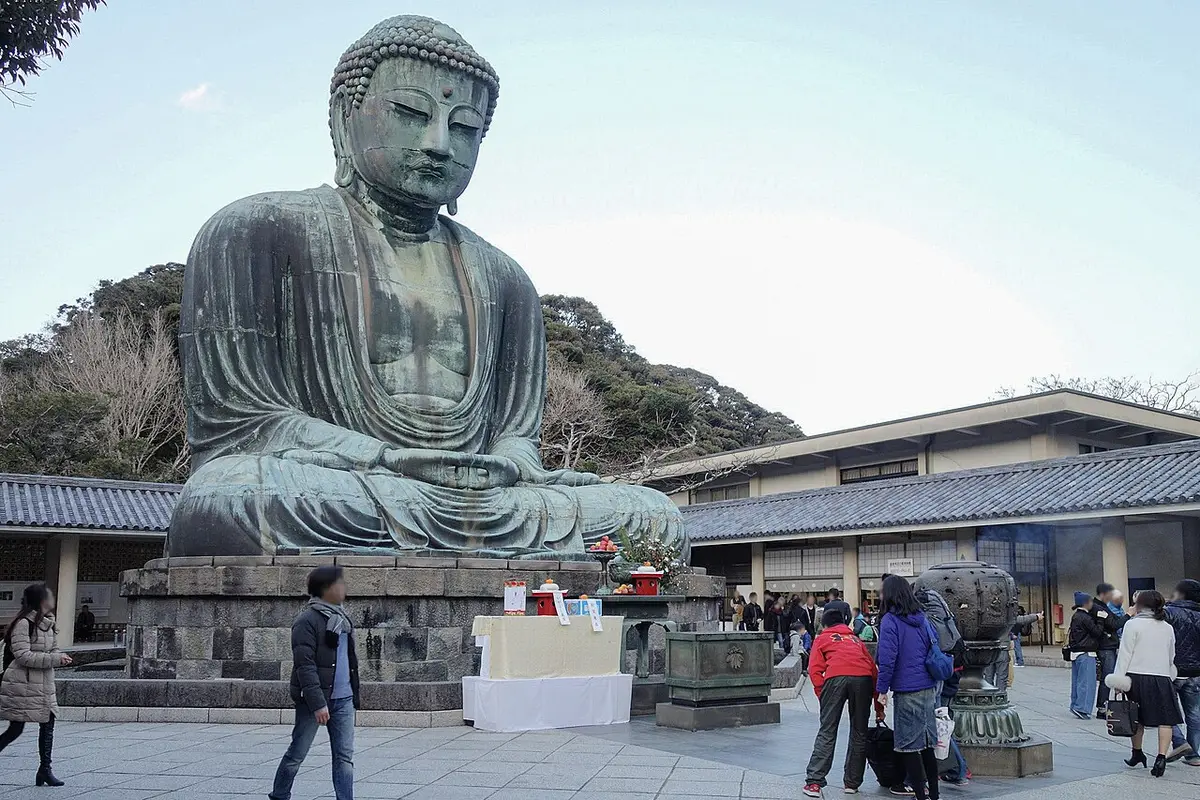
Table of contents
- Which Kamakura itinerary fits your day
- Half-day Kamakura itinerary: Kamakura Station via Hase
- One-day Kamakura itinerary: Kita-Kamakura, Tsurugaoka, Hase
- Two days in Kamakura with Enoshima: day 1
- Two days in Kamakura with Enoshima: day 2
- Seasonal swaps: hydrangea, autumn leaves, cherry blossom
- Practical: tickets, timing and costs
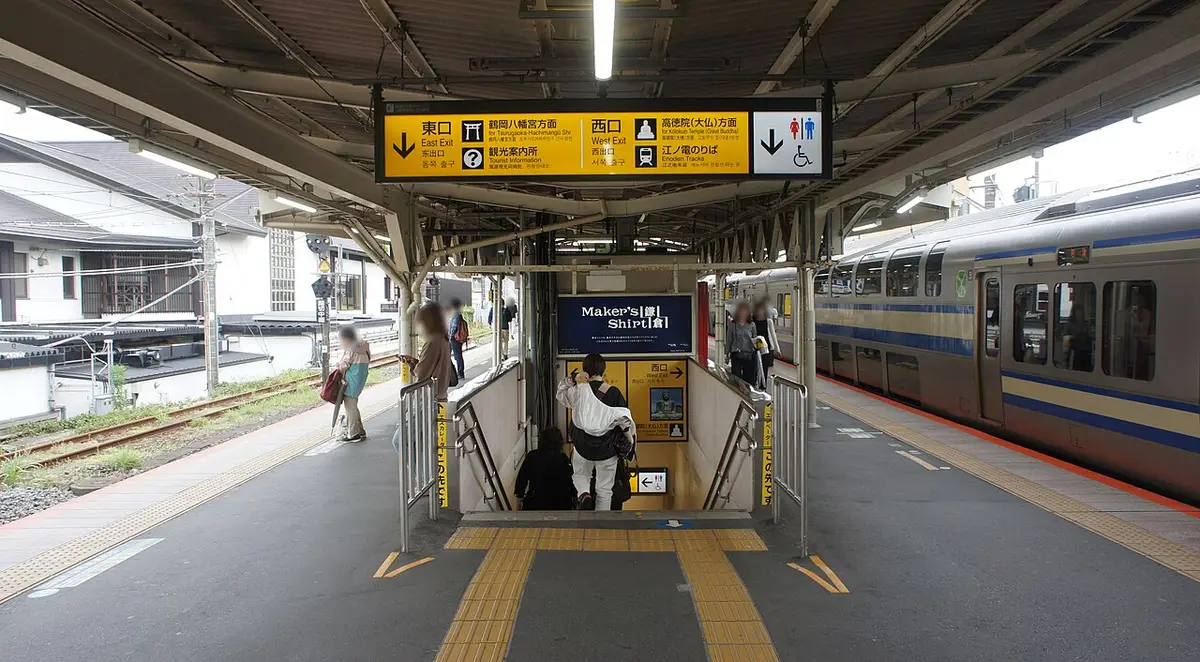
Kamakura is 56 minutes from Tokyo Station on the JR Yokosuka Line, and its sights sit in three clusters: Kita-Kamakura’s Zen temples in the north, Tsurugaoka Hachimangu and Komachi-dori in the center, and Hasedera and the Great Buddha in Hase, four minutes down the coast on the Enoden. Below are three routes built from those clusters: a half day via Hase, a full day from Kita-Kamakura to Hase, and two days with Enoshima and a night in between. Each leg has its train time and fare, each stop its fee and hours, and each route the train to catch from Tokyo. The one decision: be at your first temple when it opens.
Which Kamakura itinerary fits your day
| Route | On the ground | Stops | Leave Tokyo Station (weekday) | Trains and fees per adult from Tokyo |
|---|---|---|---|---|
| Half day via Hase | about 4 to 5 hours | Hasedera, Great Buddha, Komachi-dori, Tsurugaoka Hachimangu | 6:32, arrives Kamakura 7:30 | ¥3,168 |
| Full day | about 8 hours | Engakuji, Meigetsu-in (optional), Kenchoji, Tsurugaoka, Komachi-dori, Hasedera, Great Buddha | 7:25, arrives Kita-Kamakura 8:17 | ¥4,036 |
| Two days with Enoshima | day 1 and day 2, one night | Day 1 as the full day plus Hokokuji; day 2 Hase and Enoshima | 7:25 on day 1 | ¥2,302 on day 1, ¥3,659 on day 2 |
These are weekday trains in November 2026 (JR East route search); weekend times can differ, so look up your date the day before. Costs add up IC-card train fares and adult temple fees only; food and a kimono come on top. Our trip cost calculator adds those for your group. If you start from Shinjuku, Shinagawa or Yokohama, the day trip from Tokyo guide has the train and pass choice for each station.
Walking times are at an easy pace; steps and weekend crowds add more.

Half-day Kamakura itinerary: Kamakura Station via Hase
This route is the classic morning: the two big Hase sights at opening time, then back to the town center for Komachi-dori and the shrine. It suits a half day before Yokohama or Tokyo in the afternoon, or a first visit with children (see Kamakura with kids for strollers and steps).
Timed legs
| Leg | Time | Fare or fee |
|---|---|---|
| Tokyo Station 6:32 to Kamakura 7:30, JR Yokosuka Line, no change | 58 min | ¥1,034 |
| Enoden Kamakura to Hase (trains about every 14 minutes) | 4 min | ¥200 |
| Hase Station to Hasedera on foot | 5 min | Hasedera ¥400 |
| Hasedera to Kotoku-in on foot | 5 min | Kotoku-in ¥300 |
| Kotoku-in to Hase Station on foot, Enoden back to Kamakura | 7 min plus 4 min | ¥200 |
| Kamakura Station to Komachi-dori and Tsurugaoka Hachimangu | about 7 min, then about 7 min on foot | free |
From Shinagawa, the 6:41 reaches Kamakura at 7:30 too; from Yokohama, the 7:03 reaches Kamakura at 7:30. From Shinjuku, the 6:40 reaches Kamakura at 7:37 with a change at Ofuna. The Enoden leaves Kamakura toward Hase about every 14 minutes from 5:20 (timetable), and the fare table lists every station pair. Fares and the Noriorikun day pass are explained in our Enoden guide.
Hasedera
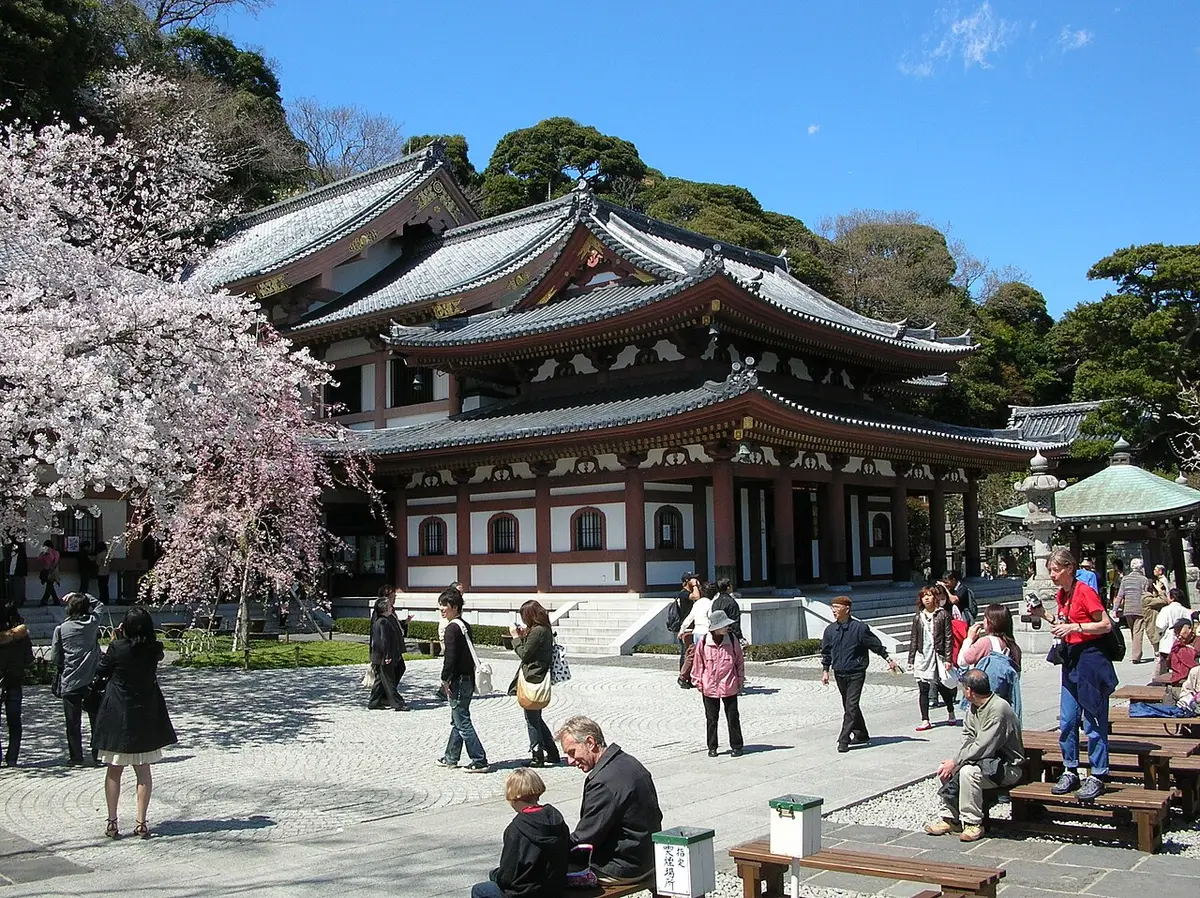
Hasedera opens at 8:00, and at that hour the terraces above the main hall, the cave of Benzaiten and the lookout over Yuigahama are quiet. The temple climbs the hillside in stages, so allow about an hour and expect steps; the Hasedera guide covers the halls, the Kannon Museum and the cave. From April to June it stays open until 17:30, so on a spring afternoon you can also swap the order and do it last. In June the hydrangea path has its own timed ticket (see the June swap below). A half-day private guide can start here and plan the rest of the day around your interests.
Fee ¥400 (child ¥200)Hours 8:00-17:00 (April to June until 17:30)From Hase Stn 5 min walkMapOfficial site

Kotoku-in (the Great Buddha)
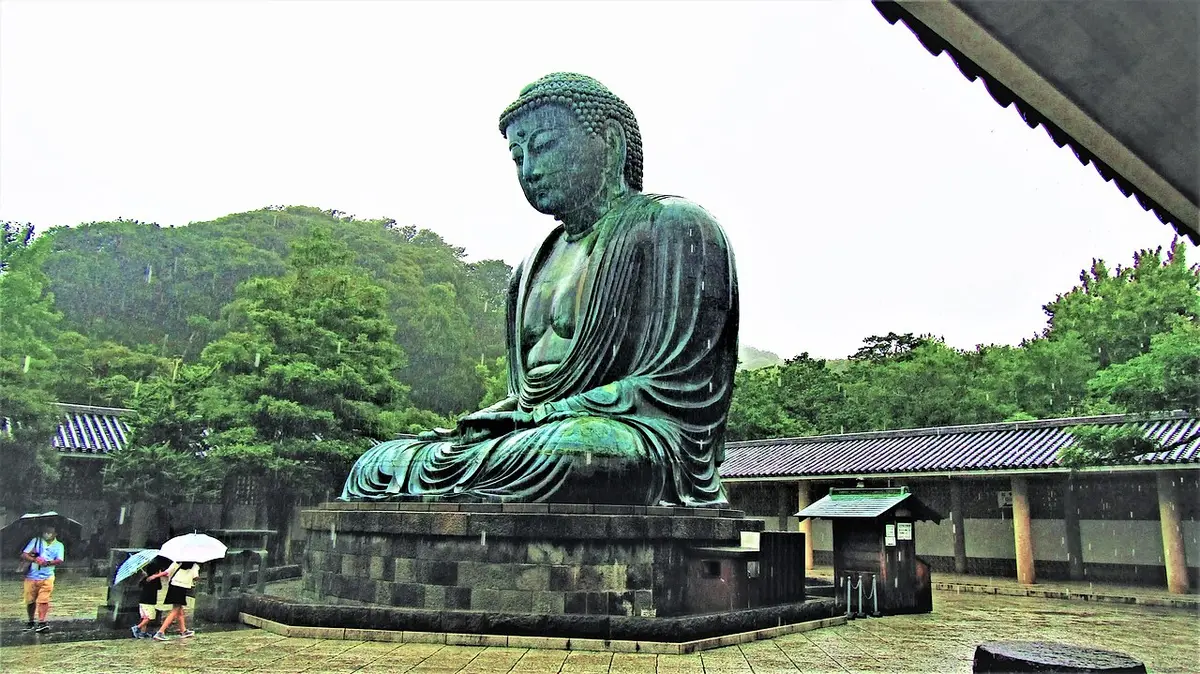
Five minutes on foot from Hasedera, the bronze Amida Buddha sits in the open air, which is rare among Japan’s large Buddha statues. Both sights open at 8:00, so whichever you reach second you still see before the tour buses. For ¥50 more you can step inside the hollow statue until 16:30 (fees and hours). Kotoku-in asks visitors not to eat or drink in the precincts, so keep the Komachi-dori snacks for later. More on the statue, its casting and the quieter corners of the grounds is in our Great Buddha guide. The Daibutsu hiking trail starts about 10 minutes up the road if you want to walk back to the center over the hills instead of taking the train.
Fee ¥300 (child ¥150)Inside the statue ¥50 extra, 8:00-16:30Hours 8:00-17:30 (October to March until 17:00)From Hase Stn 7 min walkMapOfficial site

Komachi-dori and a kimono for the afternoon
Back at Kamakura Station, Komachi-dori runs from the east exit toward the shrine: snack stalls, sweet shops and lunch counters for shirasu (whitebait) bowls, which our Kamakura food guide covers. It fills up as the day-trip crowd arrives, so this route reaches it close to lunch on purpose. Two kimono shops near the station entrance make it easy to wear one for the shrine photos: the kimono experience at the Komachi-dori entrance dresses you and does simple hair styling in about an hour, and Kamakura Hanka kimono and yukata rental is also in Komachi. Book a morning slot and return the kimono before the shop closes.
Fee free (shops and food extra)From Kamakura Stn about 7 min on footMap
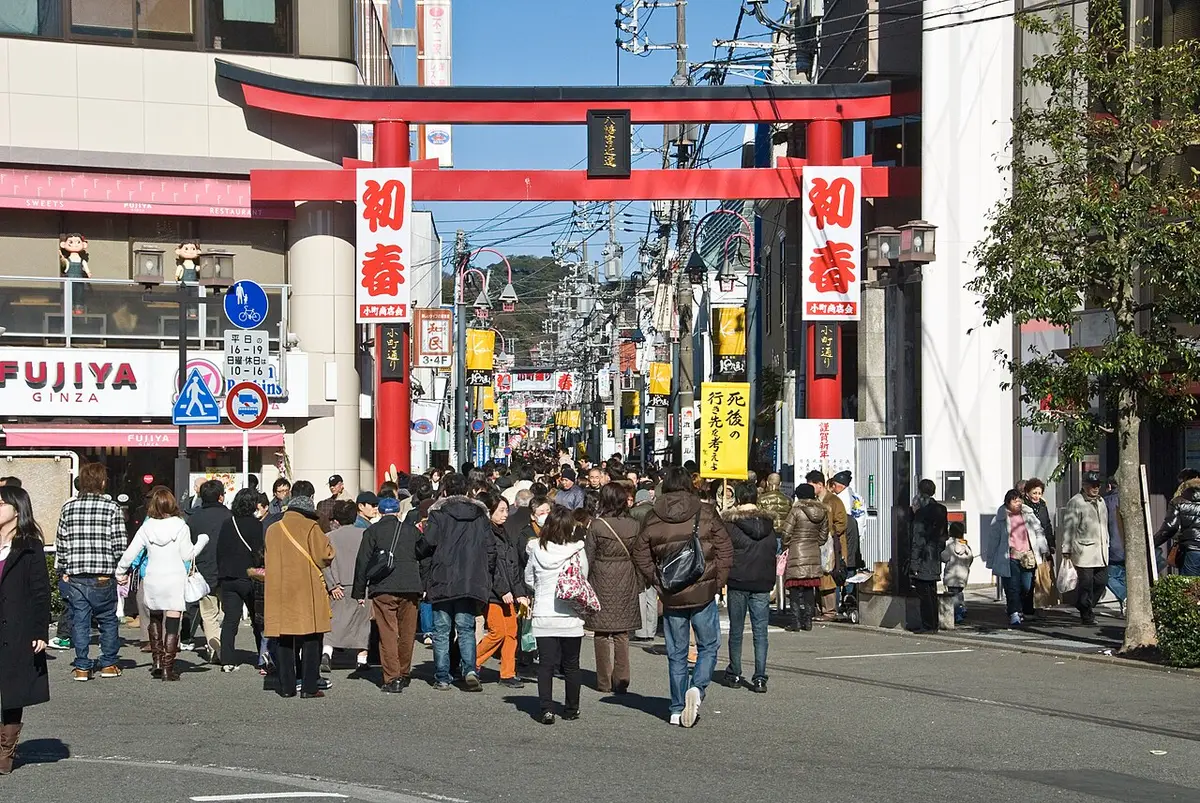

Tsurugaoka Hachimangu
Kamakura’s main shrine closes the half day. The gates are open from 6:00 to 20:00 every day and the grounds cost nothing, so it fits whatever time you have left. Walk up the main steps to the hall for the view down the Wakamiya-oji avenue to the sea, then come back down past the ponds. The Tsurugaoka Museum and the Kamakura Kokuhokan treasure museum sit inside the grounds if it rains. Background on the shrine and its festivals is in our Tsurugaoka Hachimangu guide. From the shrine, Kamakura Station is a 10-minute walk.
Fee free (grounds)Gates 6:00-20:00 all yearFrom Kamakura Stn 10 min walk (east exit)MapOfficial site
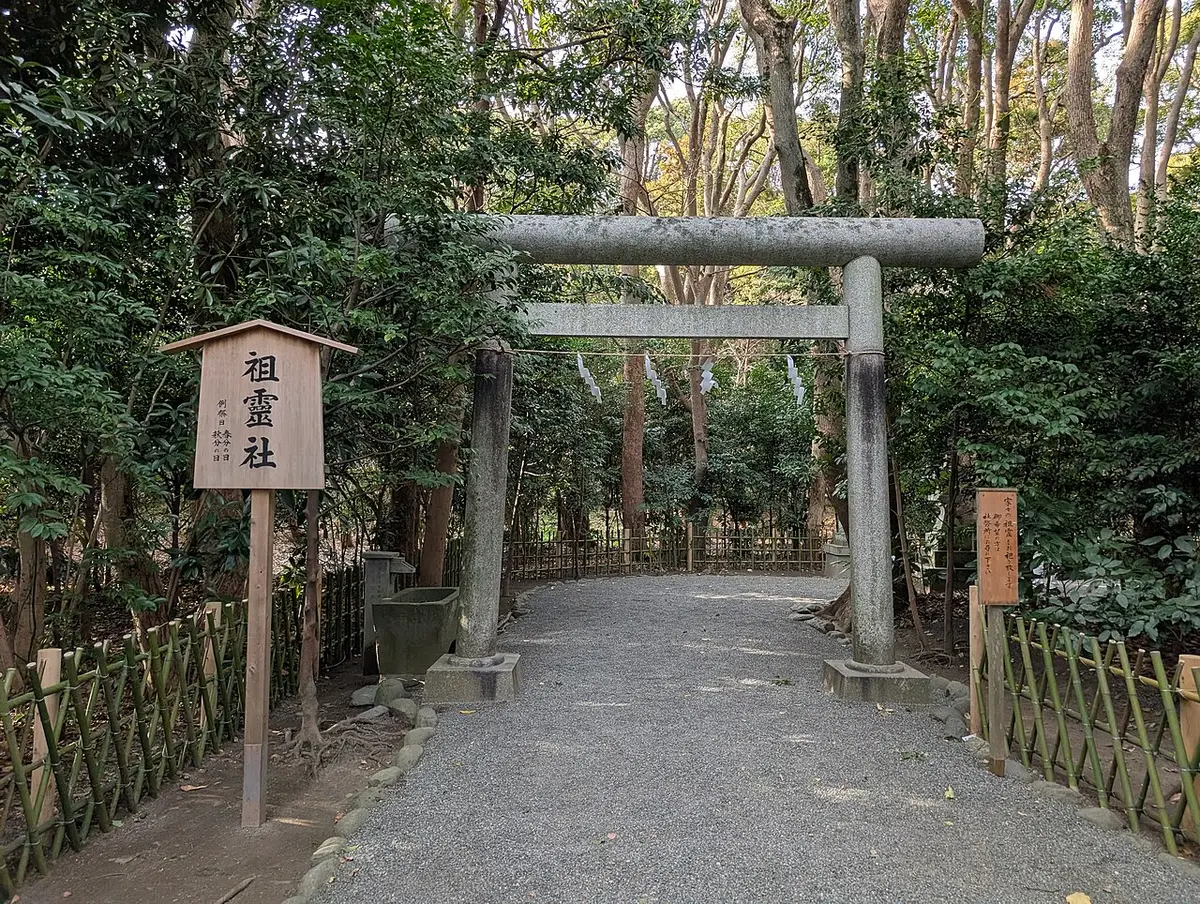

Quieter alternative: Zeniarai Benten and the western hills
On a weekend when Hase is packed, the city’s own quieter route goes west from Kamakura Station instead: past Eishoji and Kaizoji, over the Kewaizaka pass to Zeniarai Benten, then Sasuke Inari and back to the station. Zeniarai Benten is a small shrine in a hollow in the hills, where visitors rinse coins for luck. It is about 21 minutes on foot from Kamakura Station and opens 8:00 to 16:30; entry is by donation. Sasuke Inari, with its rows of red torii, is about 6 minutes further on foot. Kaizoji asks ¥100. From Zeniarai the Great Buddha is about 27 minutes on foot over the hill if you want to join the main route after all.
Fee donationHours 8:00-16:30 (arrive by 16:00)From Kamakura Stn about 21 min on footMapOfficial site
Half-day cost line: JR Tokyo to Kamakura and back ¥2,068, Enoden ¥200 each way, Hasedera ¥400, Kotoku-in ¥300: ¥3,168 per adult.
One-day Kamakura itinerary: Kita-Kamakura, Tsurugaoka, Hase
The full day walks the length of old Kamakura from north to south, downhill most of the way, and ends by the sea. The order matters: Kita-Kamakura’s temples open at 8:30 and close at 16:30 (Engakuji at 16:00 from December to February), while Kotoku-in stays open until 17:00 or 17:30, so the Great Buddha belongs at the end.
Timed legs
| Leg | Time | Fare or fee |
|---|---|---|
| Tokyo Station 7:25 to Kita-Kamakura 8:17, JR Yokosuka Line, no change | 52 min | ¥902 |
| Kita-Kamakura Station to Engakuji | 1 min walk | ¥500 |
| Engakuji to Meigetsu-in (optional) | about 12 min on foot | ¥500 |
| Meigetsu-in to Kenchoji | about 16 min on foot | ¥500 |
| Kenchoji to Tsurugaoka Hachimangu | about 13 min on foot | free |
| Tsurugaoka to Komachi-dori to Kamakura Station | about 7 min plus 7 min on foot | lunch |
| Enoden Kamakura to Hase, then Hasedera and Kotoku-in | 4 min, then 5 and 5 min on foot | ¥200, ¥400, ¥300 |
| Kotoku-in to Hase Station, Enoden to Kamakura, JR to Tokyo | 7 min, 4 min, 56 min | ¥200, ¥1,034 |
These times are from JR East’s route search. An earlier train, the 7:13 from Tokyo, reaches Kita-Kamakura at 8:04, which leaves you waiting at Engakuji’s gate. If you skip Meigetsu-in, Engakuji to Kenchoji is about 18 minutes on foot.
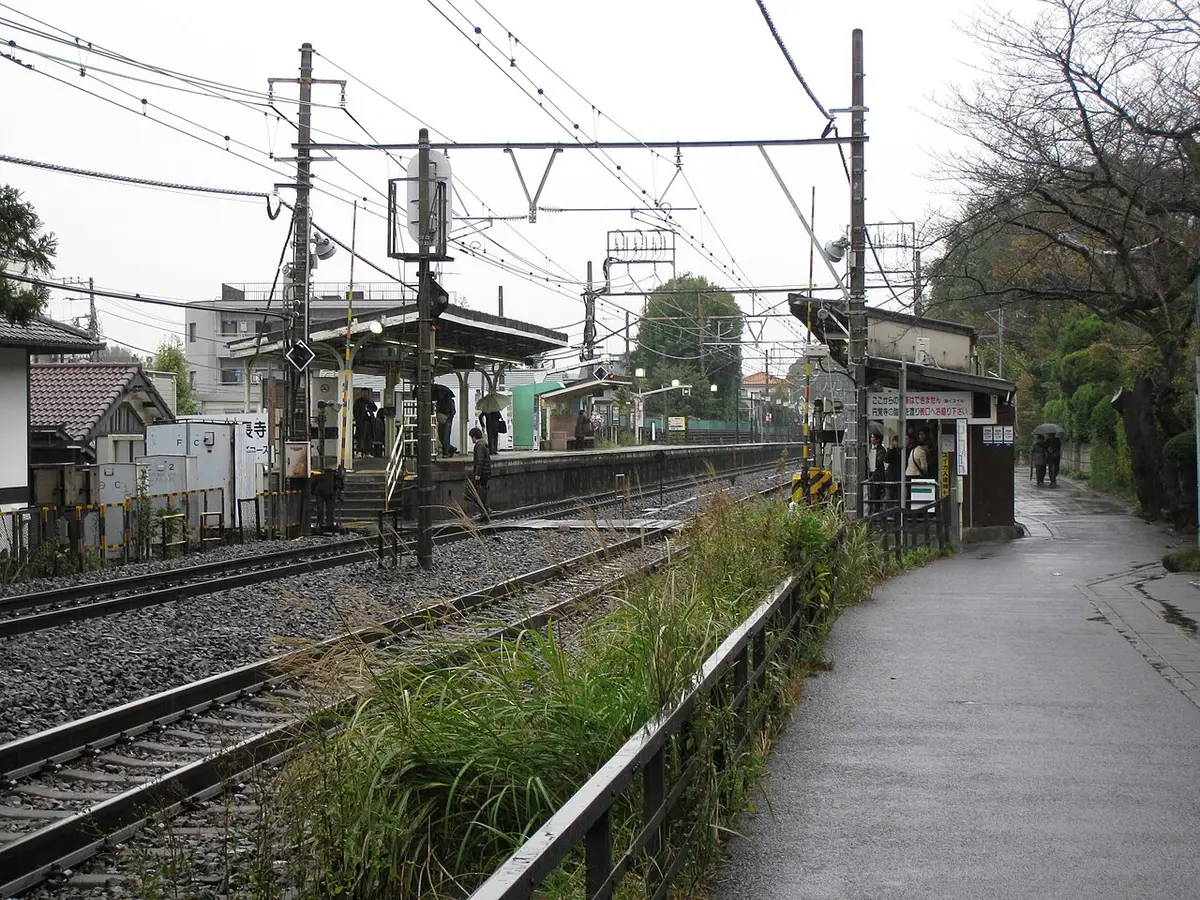

Engakuji
One of Kamakura’s great Zen temples begins a minute from the station. The big wooden Sanmon gate, the Buddha hall and the long climb through the valley to the bell take about an hour at a steady pace. At 8:30 the valley is still quiet. In early November the first autumn color in Kamakura appears around here, according to the city tourism association. The Kita-Kamakura guide covers the smaller temples along the road, Tokeiji and Jochiji, if you want to add one. A licensed guide makes the Zen background easier to follow: the City of Samurai walking tour runs about 3.5 hours in groups of up to ten.
Fee ¥500 (child ¥200)Hours 8:30-16:30 (December to February until 16:00)From Kita-Kamakura Stn 1 min walkMapOfficial site
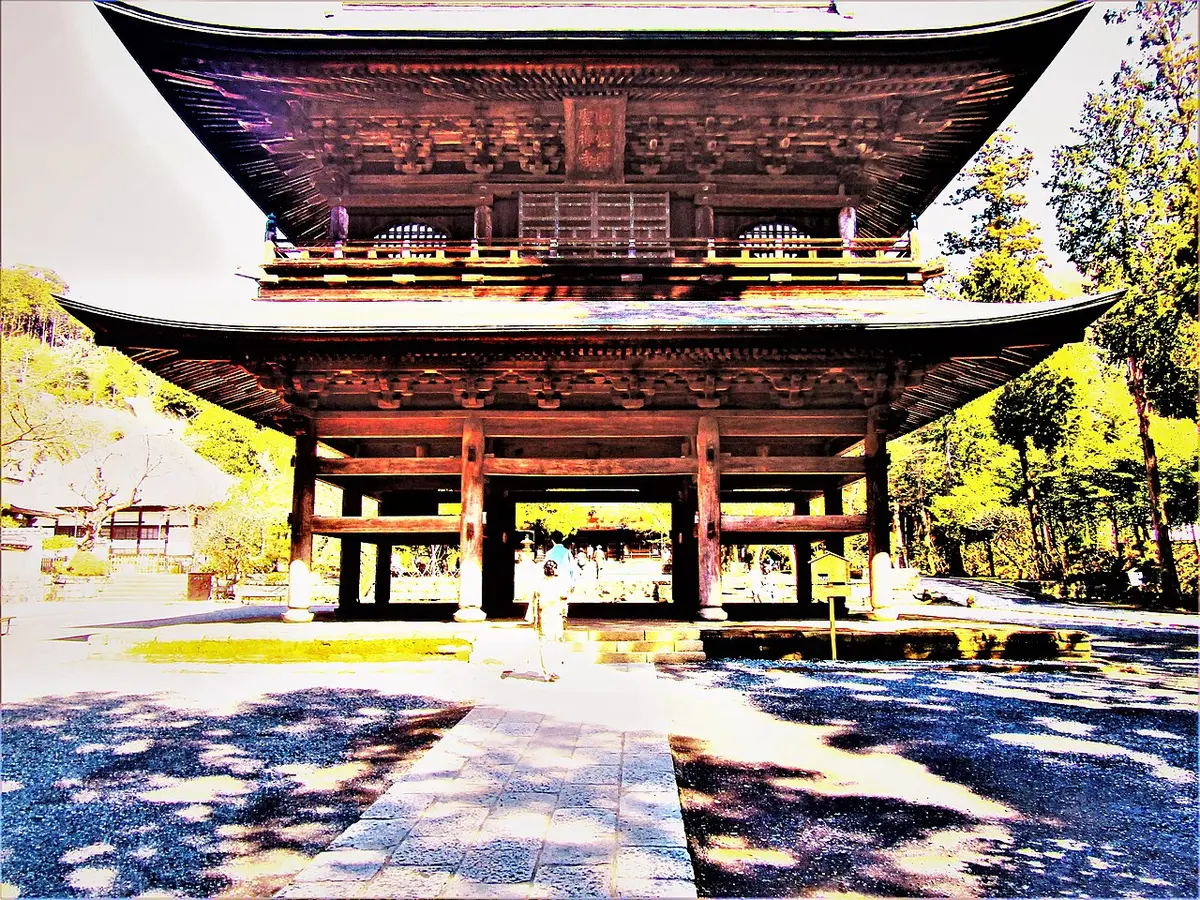

Meigetsu-in (optional)
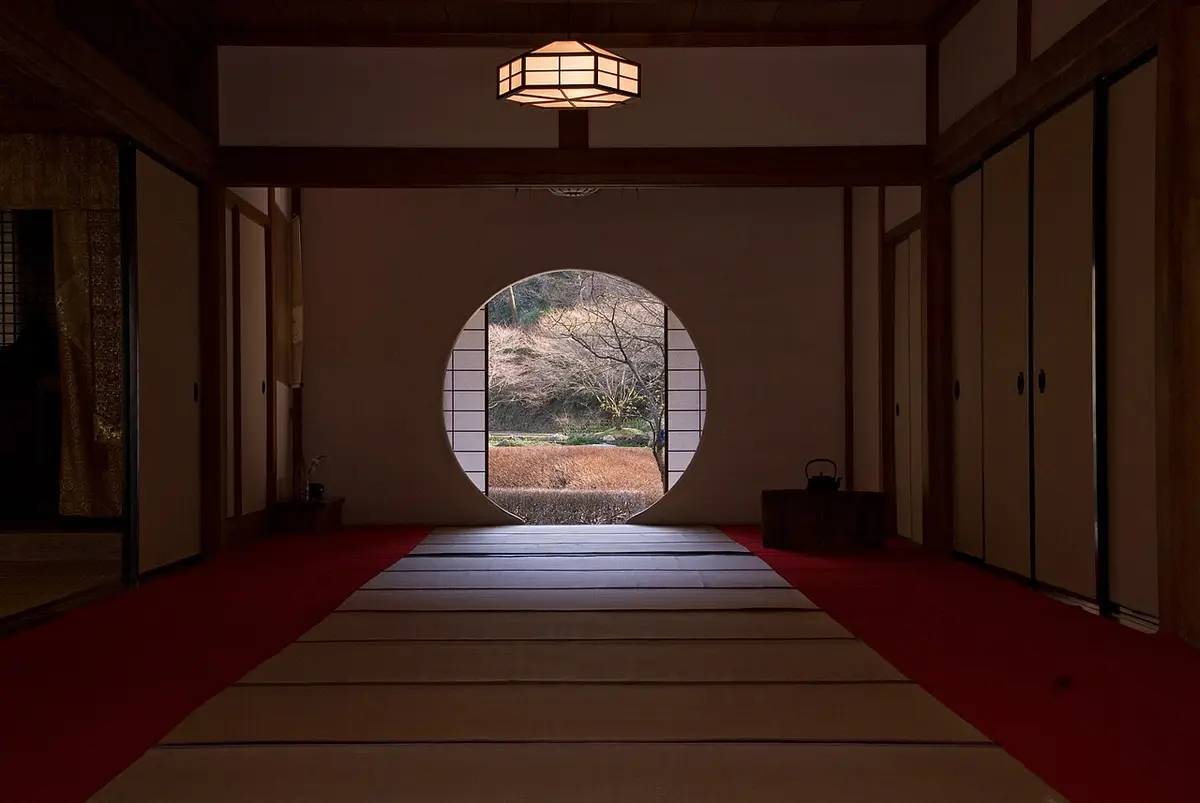
Meigetsu-in is small and famous for two things: the round window in its main hall and, in June, the blue hydrangeas that line its approach. Outside June it opens at 9:00, so on this route you arrive just after it opens. In June it opens at 8:30 and the order changes (see the hydrangea swap; the tourism association’s hydrangea page posts the year’s hours). The rear garden behind the round window opens only in certain seasons and costs ¥500 extra. If you are short of time, this is the stop to drop. Our Meigetsu-in guide has the garden openings and the best spot for the window photo.
Fee ¥500 (child ¥300); rear garden ¥500 extra when openHours 9:00-16:00 (June 8:30-17:00)From Kita-Kamakura Stn 10 min walkMapOfficial site

Kenchoji
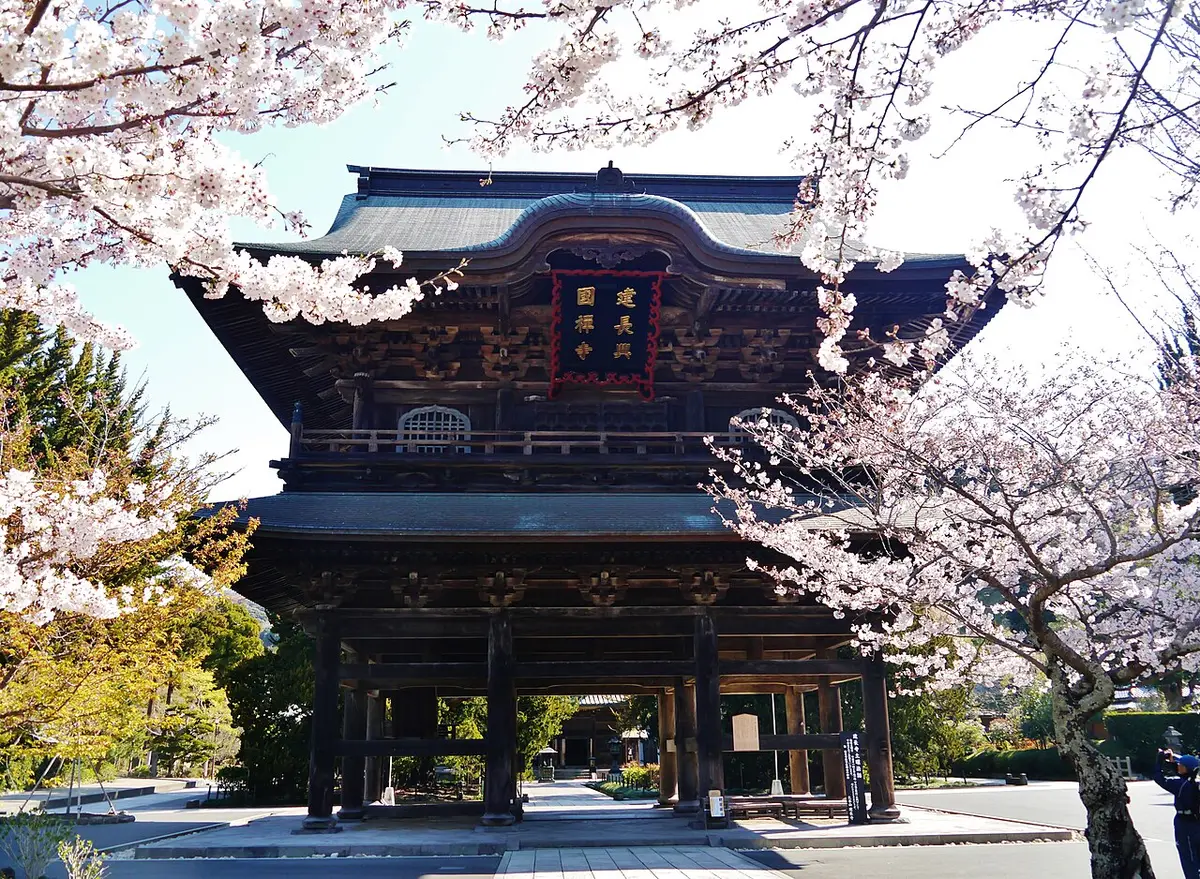
Kenchoji is laid out in a straight line up its valley: gate, bell, Buddha hall and a garden behind the abbot’s quarters. Admission is cash only. Behind the temple a stairway climbs toward the Ten-en trail, which our hiking guide describes if you prefer ridge paths to the road. From Kenchoji the road runs downhill to Tsurugaoka Hachimangu, and the official page puts Kamakura Station about 30 minutes away on foot, or 10 minutes by bus.
Fee ¥500 (child ¥200), cash onlyHours 8:30-16:30From Kita-Kamakura Stn about 15 min walkMapOfficial site

Tsurugaoka Hachimangu and lunch on Komachi-dori
From Kenchoji the shrine is about 13 minutes on foot. Walk through the grounds to the main hall, down the steps and out along the Dankazura path, then cut over to Komachi-dori for lunch around midday. If you want a guide for just this middle part, the Great Buddha, temples and shrines tour covers the shrine, the town and Hase in one walk. Fees and hours for the shrine are under the half-day route above.
Hasedera and the Great Buddha in the afternoon
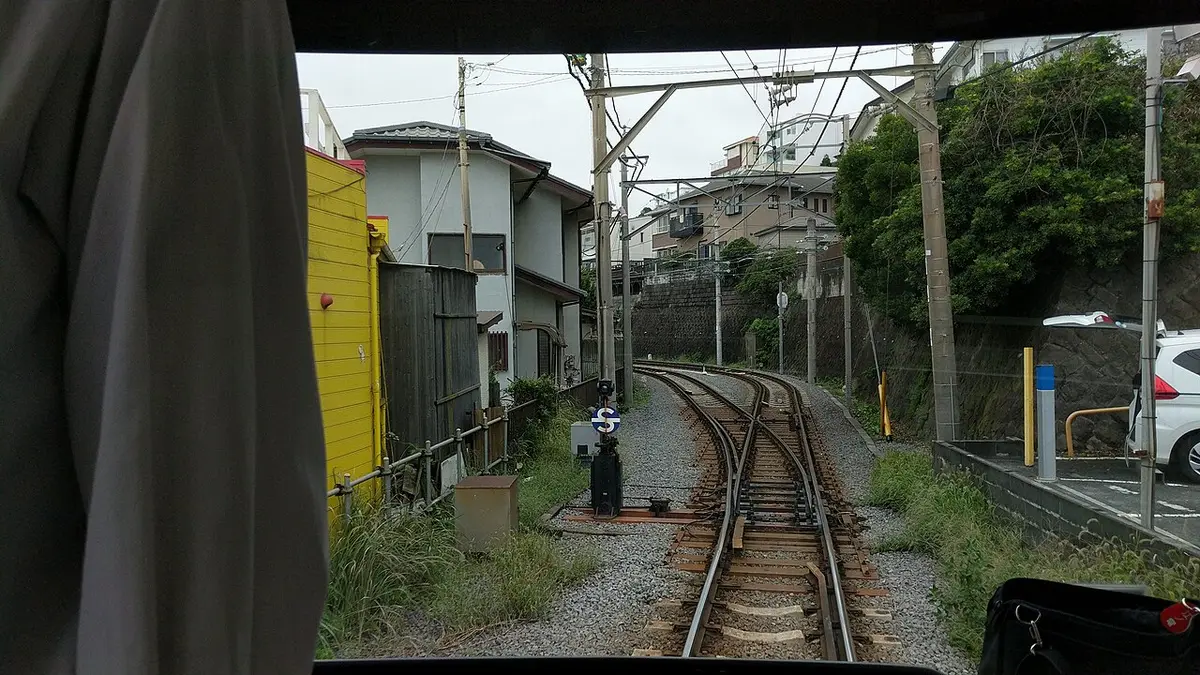
After lunch take the Enoden from Kamakura to Hase. In the afternoon the Hase sights are at their busiest, so take Hasedera first, since its last entry is 16:30 from July to March, then walk five minutes to Kotoku-in, which takes visitors until about 15 minutes before it closes. If you still have energy, Yuigahama beach is about 18 minutes on foot from Hasedera; our beach guide has the details. The Enoden from Hase back to Kamakura takes 4 minutes.

Full-day cost line: JR Tokyo to Kita-Kamakura ¥902, Engakuji ¥500, Kenchoji ¥500, Enoden ¥200 each way, Hasedera ¥400, Kotoku-in ¥300, JR Kamakura to Tokyo ¥1,034: ¥4,036 per adult, plus ¥500 for Meigetsu-in.
Two days in Kamakura with Enoshima: day 1
Two days lets each part of the coast have its best hour. Day 1 is the full-day route without Hase, plus the bamboo garden at Hokokuji. You sleep near the sea, and on day 2 you are at Hasedera at 8:00, before most day-trippers arrive, and on Enoshima by late morning.
Day 1 legs: Tokyo 7:25 to Kita-Kamakura 8:17 (¥902). Engakuji at 8:30, Meigetsu-in if you like, Kenchoji, then Tsurugaoka Hachimangu and lunch as above. From the shrine, Hokokuji is about 23 minutes on foot along the road east, or take the bus from Kamakura Station’s east exit to the Jomyoji stop (about 12 minutes) and walk 3 minutes. Evening on Komachi-dori, then to your hotel.
Hokokuji bamboo temple
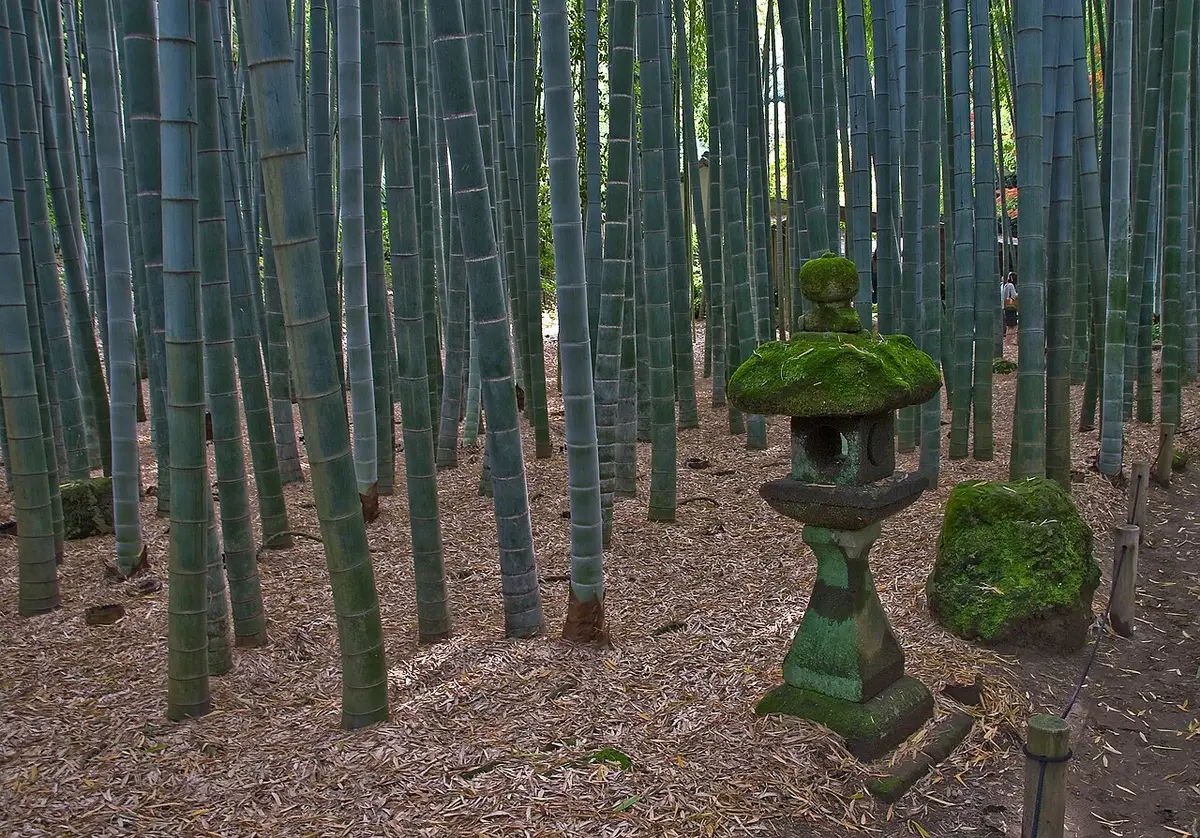
Hokokuji’s grove of tall moso bamboo is small enough that the number of people on the path shapes the visit, so come at the 9:00 opening or in the last hour. For ¥600 more (tea details) you can sit with matcha and a dry sweet looking into the bamboo; tickets for the tea are sold until 15:30. The temple closes for visits from December 29 to January 3. Our Hokokuji guide has more on the garden and the nearby Jomyoji temple.
Fee ¥400 (child ¥200)Matcha ¥600, until 15:30Hours 9:00-16:00From Kamakura Stn bus about 12 min to Jomyoji, then 3 min walkMapOfficial site

Where to sleep between the two days
Pick a base on the Enoden line so that day 2 starts with a short ride. Our where to stay in Kamakura and where to stay in Enoshima pages compare areas in detail; three options fit this route:
- WeBase KAMAKURA stands near Yuigahama Station, one Enoden stop from Hase. The simplest way to wake up next to Hasedera.
- Kamakura Prince Hotel is a resort hotel on the Shichirigahama shore between Hase and Enoshima, with sea-view rooms that look toward Enoshima and, on clear days, Mount Fuji.
- Iwamotoro is a traditional inn on Enoshima itself, with tatami rooms and public baths. The listing says staff speak Japanese only. If you stay here, swap day 2 around: island at sunrise, Hase in the afternoon.
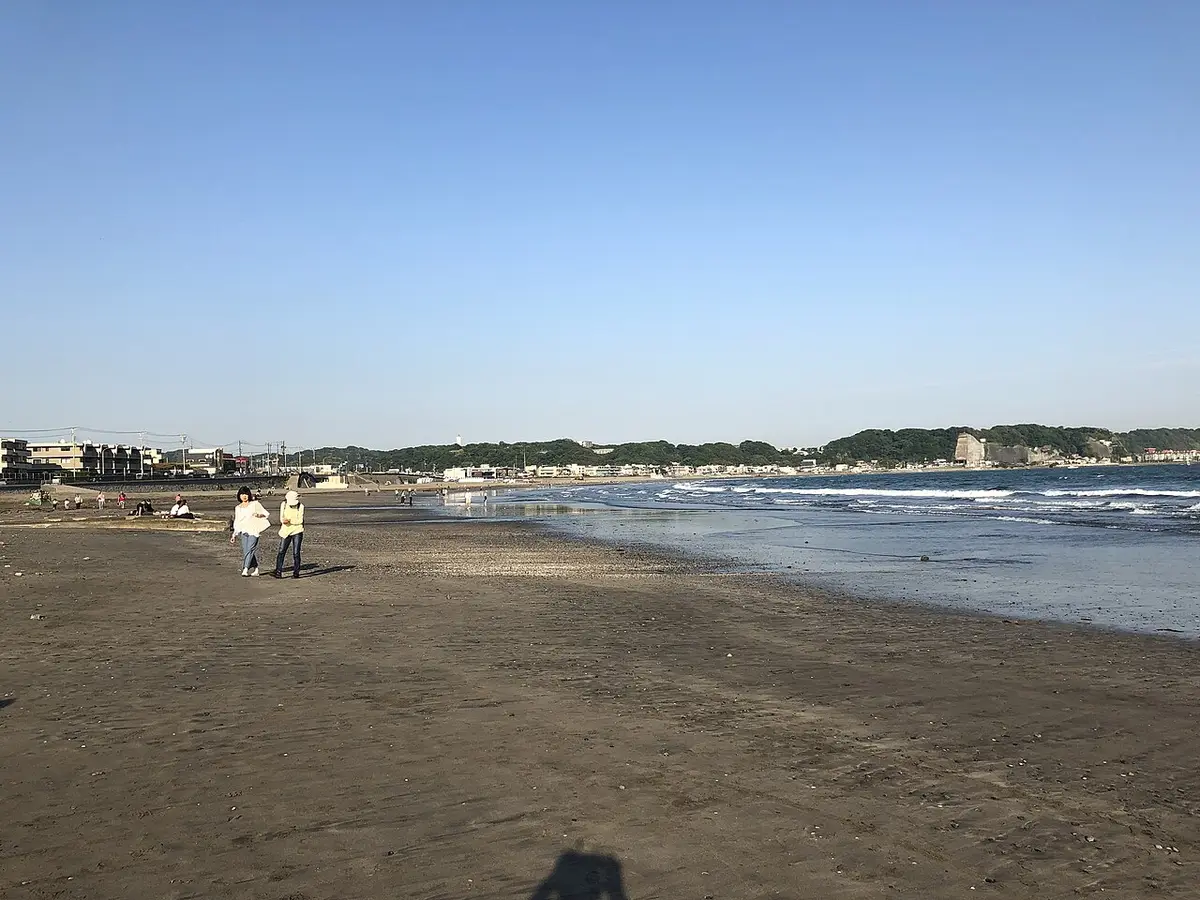

Day 1 cost line: JR to Kita-Kamakura ¥902, Engakuji ¥500, Kenchoji ¥500, Hokokuji ¥400: ¥2,302 per adult, plus the bus and your room.
Two days in Kamakura with Enoshima: day 2
Day 2 legs
| Leg | Time | Fare or fee |
|---|---|---|
| Hotel to Hasedera at 8:00 (Enoden to Hase, 5 min walk) | depends on base | Hasedera ¥400 |
| Hasedera to Kotoku-in | 5 min walk | ¥300 |
| Kotoku-in to Hase Station, Enoden Hase to Enoshima | 7 min, then 19 min | ¥260 |
| Enoshima Station to Benten Bridge | about 12 min on foot | free |
| Benten Bridge to Enoshima Shrine | about 8 min on foot | free |
| Shrine to Sea Candle, then Iwaya Caves | about 6 min, then about 9 min on foot | ¥800, ¥500 |
| Katase-Enoshima to Shinjuku, Odakyu Romancecar | direct | ¥1,399 |
Hase at opening, then the Enoden coast
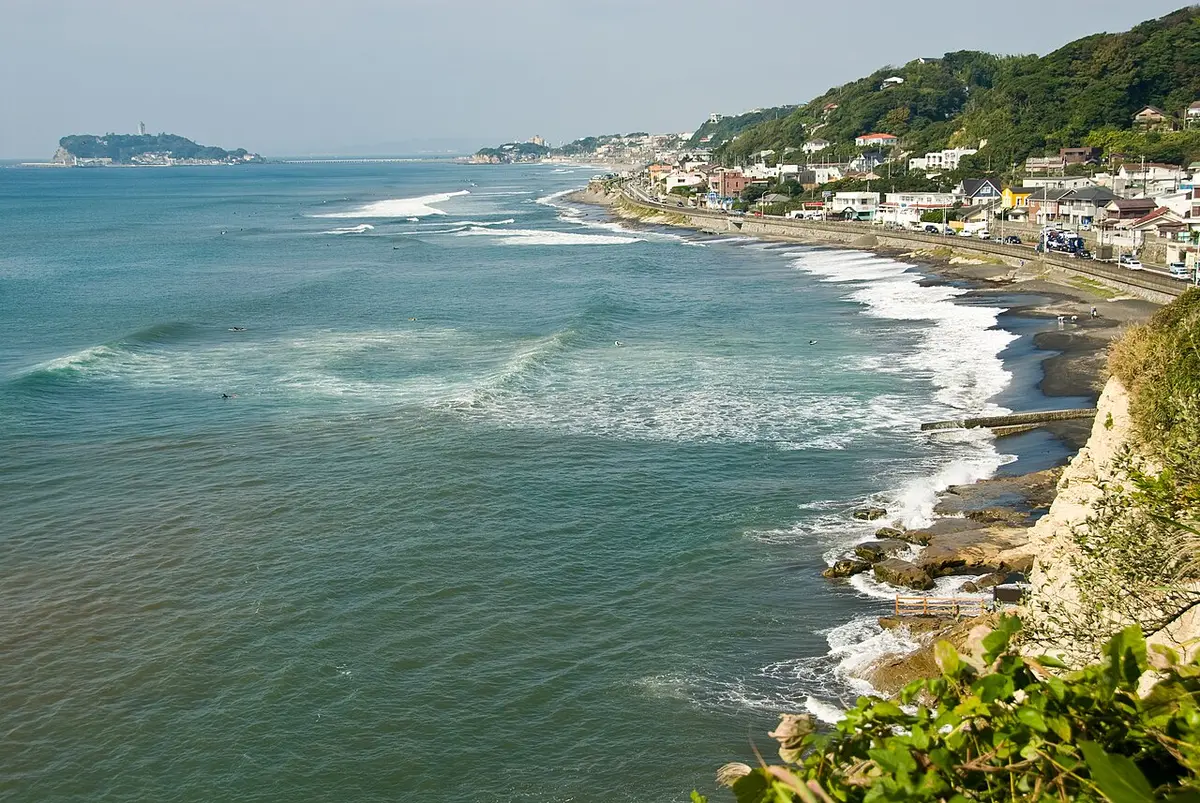
Repeat the Hase pair from the half-day route at 8:00, when only people who slept nearby are there. Then ride the Enoden west: after Inamuragasaki the line runs along the Shichirigahama shore, and at Kamakura-kokomae a level crossing by the sea draws photographers all day. You can stop there (Hase to Kamakura-kokomae is 14 minutes, ¥220) and continue on the next train, or stay on to Enoshima Station, 19 minutes from Hase. A Noriorikun day pass costs ¥800; three single rides from Kamakura to Hase, Hase to Enoshima and Enoshima back to Kamakura come to ¥720, so the pass only pays off if you add a fourth hop.

Enoshima Shrine and the island top
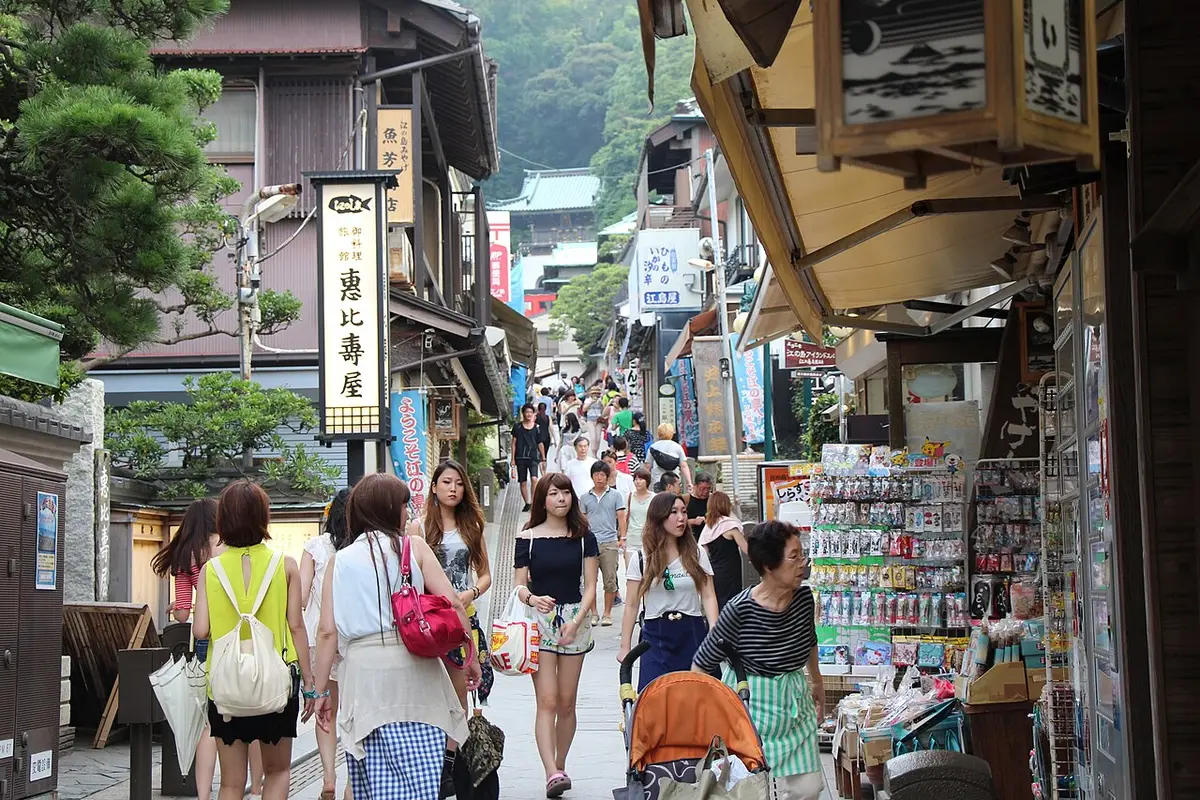
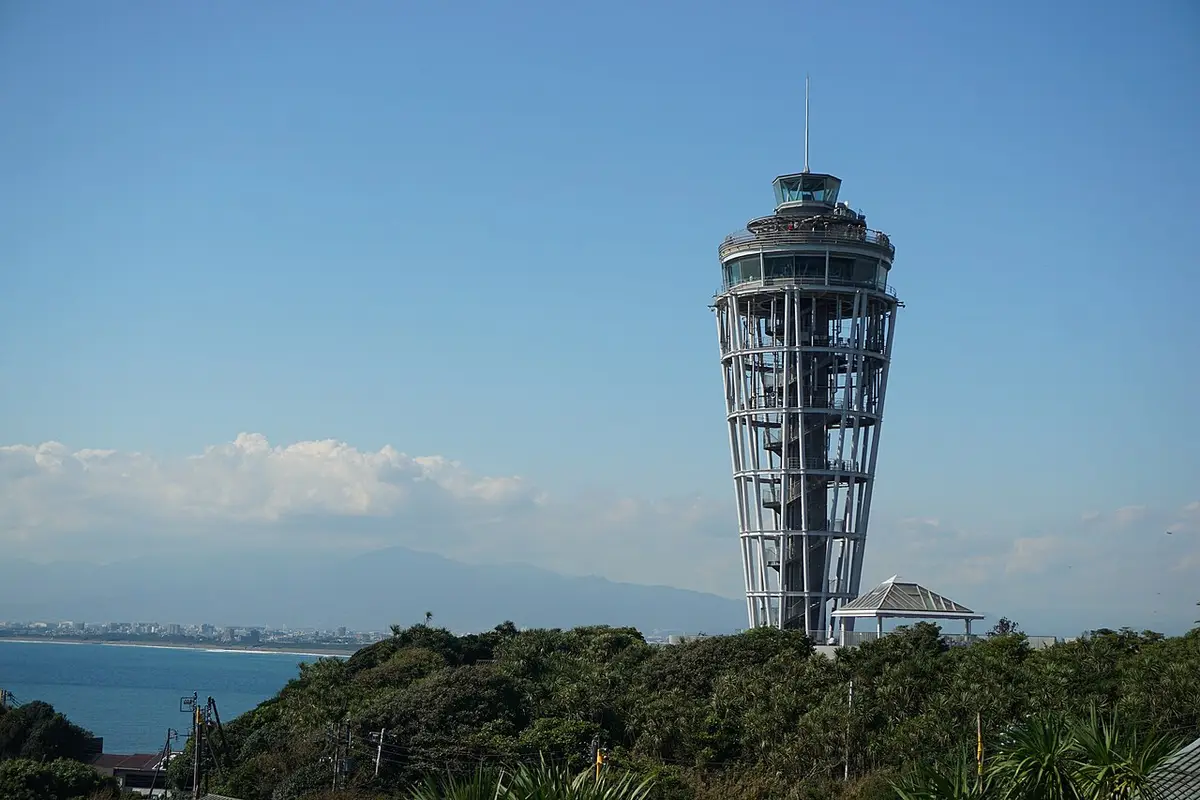
From Enoshima Station the walk crosses Benten Bridge to the island and climbs the shopping street to the shrine. Enoshima Shrine’s lower hall, Hetsunomiya, is open 8:30 to 17:00. Above it, the Samuel Cocking Garden is free from 9:00 to 17:00 and the Sea Candle lighthouse tower costs ¥800 (ticket table). The paid Escar escalators carry you up in three sections for ¥500 if you would rather skip the stairs. The island’s 1day ticket, ¥1,550, covers Escar, the Sea Candle and the Iwaya caves together. Our Enoshima guide walks the island route uphill and down in detail. Lunch on the island is mostly shirasu and seafood.
Shrine free; Hetsunomiya 8:30-17:00Sea Candle ¥800, 9:00-20:00Escar ¥500, 8:50-19:05From Enoshima Stn about 20 min on foot to the shrineMapOfficial site


Iwaya Caves and the boat back
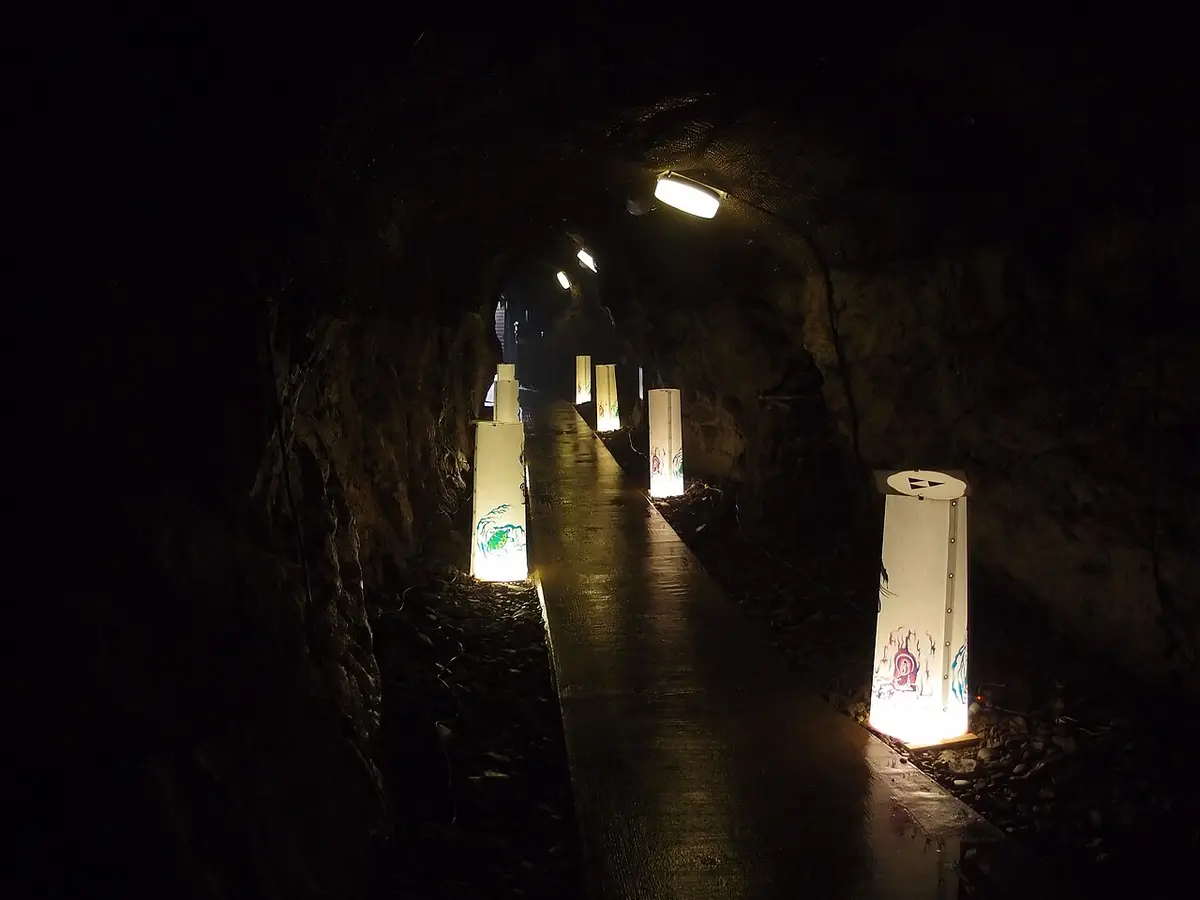
On the far side of the island, steps lead down to the Iwaya Caves, two sea-cut caverns lit by candles you carry. The caves usually open 9:00 to 17:00, with shorter hours in some seasons. Instead of climbing back over the island, take the Benten-maru boat from the rocks below the caves to Benten Bridge: about 6 minutes for ¥500, cash only, and only when the sea allows. From the bridge, Katase-Enoshima Station is a short walk, and a direct Odakyu Romancecar to Shinjuku costs ¥1,399; the ordinary Odakyu fare is ¥649 with two changes. If you want to wear a kimono on the island, there is a kimono rental with hairstyling on Enoshima.
Iwaya Caves ¥500 (age 7 to 12: ¥200)Hours 9:00-17:00, shorter in some seasonsBenten-maru boat ¥500, about 6 minMapOfficial site

Day 2 cost line: Hasedera ¥400, Kotoku-in ¥300, Enoden Hase to Enoshima ¥260, Sea Candle ¥800, Iwaya ¥500, Romancecar to Shinjuku ¥1,399: ¥3,659 per adult. If you start and end in Shinjuku, the Enoshima-Kamakura Freepass can cover the Enoden and Odakyu legs instead; that page does the sums.
Seasonal swaps: hydrangea, autumn leaves, cherry blossom
The three routes work all year. In three seasons the order should change, because one temple draws most of the crowd. The bloom windows below are for the Japan Meteorological Agency’s observation trees in Yokohama, not for Kamakura itself; treat them as a guide to the season, not a promise for a given temple. Our bloom and crowd calendar shows every year since 2007.
June: hydrangea order
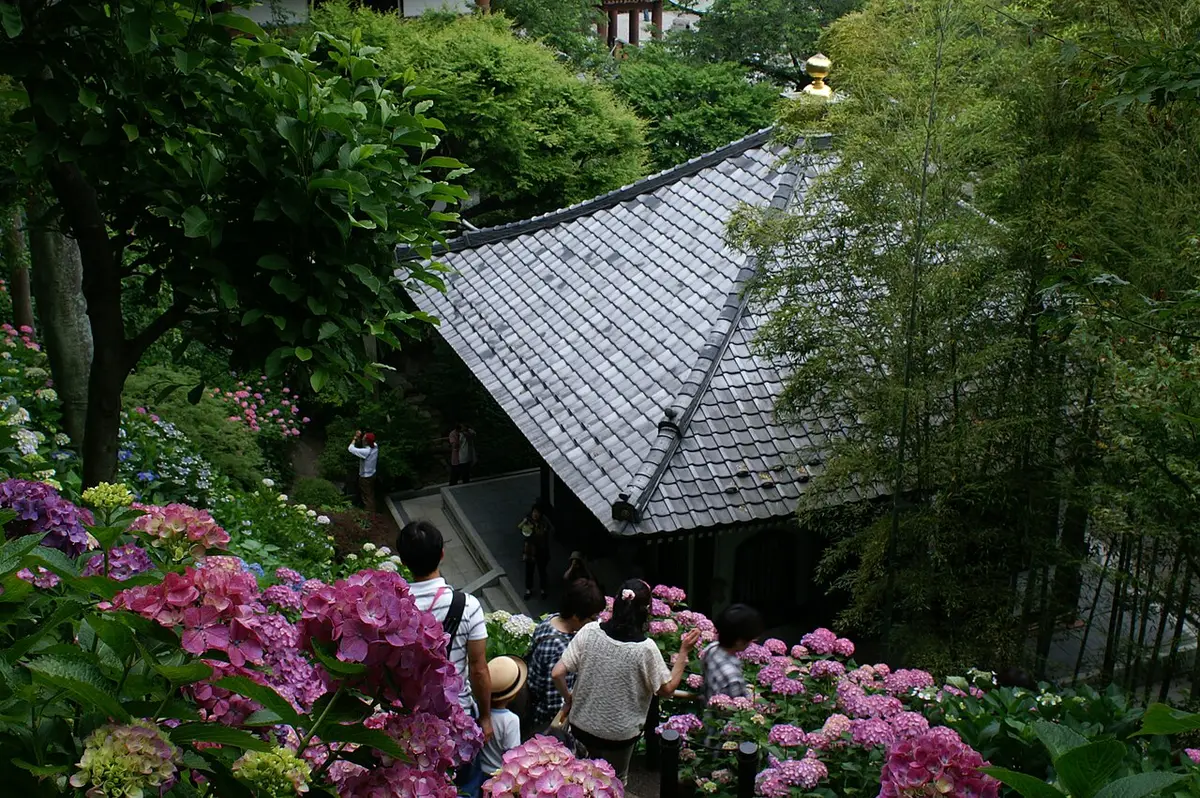
Kamakura’s tourism association puts the Western hydrangea peak in early to late June. Two temples matter. Hasedera sells a timed hydrangea path ticket (¥500 in 2025 and 2026), booked online each week; in 2026 booking opened on Tuesdays at 10:00 for the next seven days, with 60-minute entry windows from 8:00. Meigetsu-in opens at 8:30 in June, and its narrow approach fills quickly. So: if you get an 8:00 Hasedera window, follow the half-day route and go to Kita-Kamakura afterwards (JR Kamakura to Kita-Kamakura is 3 minutes, ¥155). If not, take the 7:25 from Tokyo, walk straight to Meigetsu-in for 8:30, then Engakuji, and use your afternoon Hasedera window last. The hydrangea guide has temple-by-temple detail, and Hasedera’s booking page is linked from its site in season.

Late November to mid-December: leaves
The tourism association says Kamakura’s leaves peak from late November to early December, starting around Kita-Kamakura in early November. Run the full-day route with more time in the Kita-Kamakura valleys and less in town, and remember Engakuji closes at 16:00 from December. In 2026 Hasedera held an autumn evening opening from November 21 to December 6, from sunset until the gate closed at 19:00; if it runs again, end the day there instead of at the Great Buddha. More spots are in our autumn leaves guide.

Spring: cherry blossom
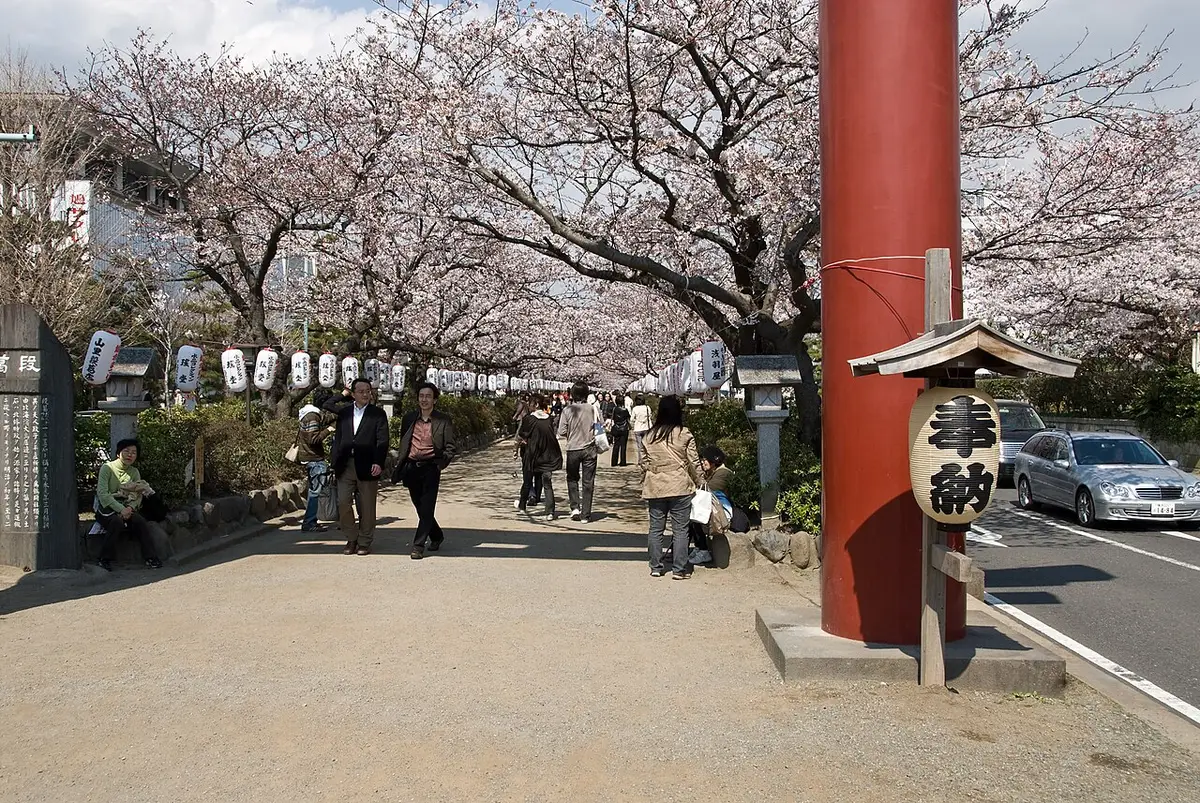
Around full bloom, start the day at Tsurugaoka Hachimangu instead: the gates open at 6:00, and the cherry-lined Dankazura path is quiet early. Reverse the full day: Kamakura Station, the shrine at about 7:30, Kenchoji at 8:30, Engakuji, then JR from Kita-Kamakura back to Kamakura (3 minutes, ¥155) and the Enoden to Hase for the afternoon. The cherry blossom guide lists other spots.

Practical: tickets, timing and costs
Getting there. The city’s English guide, VISIT KAMAKURA, lists events and closures. JR is the simple choice from Tokyo, Shinagawa and Yokohama; from Shinjuku, the Odakyu line and the Freepass (¥1,640 from Shinjuku) can be cheaper if Enoshima is in your plan. Our how to get to Kamakura page covers every start point, including Haneda and Narita.
Paying. Suica, PASMO and other IC cards work on JR and the Enoden; the Enoden also takes contactless bank cards for adult fares; children need an IC card or a paper ticket. Kenchoji takes cash only, so carry cash for temple gates.
Crowds. Kamakura City’s live crowd map shows how busy the main streets and stations are right now. In the city’s 2025 count, January (New Year shrine visits) was the busiest month by far and June (hydrangeas) the second; a weekday start at opening time is the best single fix. The best time to visit page goes month by month.
More stops. If you have extra time, our things to do in Kamakura list has fees and hours for every temple not in these routes, and the Kamakura map puts them all on one screen. Prefer someone else to handle the logistics? Our Kamakura tours page compares guided days, and the Kamakura and Enoshima day tour from Tokyo covers Tsurugaoka Hachimangu, Hasedera, the Great Buddha and Enoshima with an English-speaking guide.
Questions people ask
Can you see Kamakura in one day?
Yes. A full day covers the Zen temples of Kita-Kamakura, Tsurugaoka Hachimangu, lunch on Komachi-dori, Hasedera and the Great Buddha. Leave Tokyo Station on the 7:25 weekday train to Kita-Kamakura, start at Engakuji when it opens at 8:30 and finish in Hase. Trains, the Enoden and five temple fees come to about ¥4,036 per adult.
Is half a day enough for Kamakura?
Half a day is enough for the Hase area and the town center: Hasedera, the Great Buddha at Kotoku-in, Komachi-dori and Tsurugaoka Hachimangu. Take the Enoden from Kamakura Station to Hase (4 minutes), be at Hasedera when it opens at 8:00 and you can be back at Kamakura Station before lunch. The Zen temples of Kita-Kamakura need the full-day route.
Is 2 days in Kamakura worth it?
Two days lets you add Hokokuji's bamboo garden and Enoshima island without rushing, and a night in Kamakura or on Enoshima puts you at Hasedera and the Great Buddha at 8:00 the next morning, before day-trippers from Tokyo arrive. If you only care about the big sights, one well-timed day is enough.
What time should I leave Tokyo for Kamakura?
For Hasedera or the Great Buddha at their 8:00 opening, take the 6:32 weekday train from Tokyo Station; it reaches Kamakura at 7:30 with no change. For the full-day route that starts at Engakuji, take the 7:25 from Tokyo Station, which reaches Kita-Kamakura at 8:17. Check weekend times on JR East's route search.
Can you do Kamakura and Enoshima in one day?
Yes, but pick one area of Kamakura. Hase plus Enoshima works well: Hasedera and the Great Buddha in the morning, then the Enoden from Hase to Enoshima (19 minutes, ¥260) and the island in the afternoon. Kita-Kamakura's temples and Enoshima on the same day leave too little time for both.
Read next
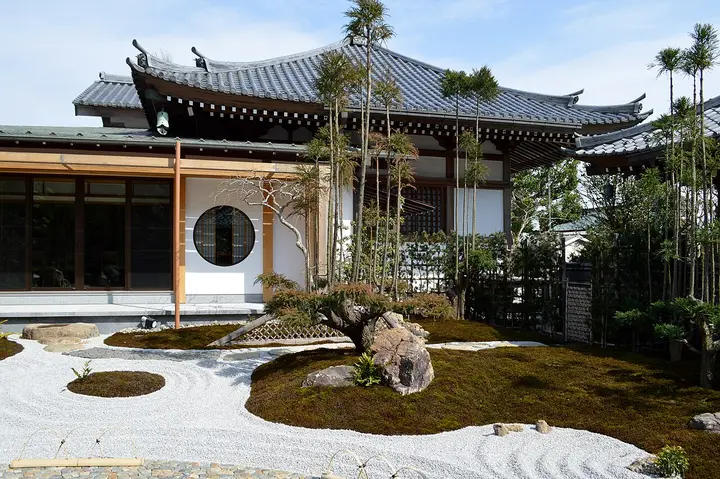 Things to do in KamakuraTemples, shrines, trails and streets with fees, hours and walking times.
 Where to stay in KamakuraStation, Hase, Kita-Kamakura or the coast: which base fits your plan.
 Day trip from TokyoWhich train, which pass and when to leave to beat the crowds.
 EnoshimaThe island route, the caves, the Sea Candle and sunset over Fuji.
Sources (19)
- Kotoku-in (official): hours, fees, access
- Hasedera (official): admission and access
- Tsurugaoka Hachimangu (official): access and gate hours
- Engakuji (official): visiting hours and fees
- Kenchoji (official): visiting hours, fees, access
- Kamakura City Tourism Association: Meigetsu-in
- Hokokuji (official): bamboo garden and matcha
- Enoshima Sea Candle (official): tickets and hours
- Fujisawa City Tourist Association: Benten-maru boat (Japanese)
- Enoshima Shrine (official): access and hours
- Enoden: fares between stations
- Enoden: Kamakura Station timetable
- Enoden: Noriorikun one-day pass
- JR East Real-Time Route Search (train times and IC fares)
- Odakyu: Enoshima-Kamakura Freepass
- Kamakura City Tourism Association: hydrangea season
- Kamakura City Tourism Association: autumn leaves
- Japan Meteorological Agency: phenology records (Yokohama)
- OpenStreetMap walking routes (OSRM foot profile)