Temples
Hasedera temple, Kamakura: fees, hours and what to see
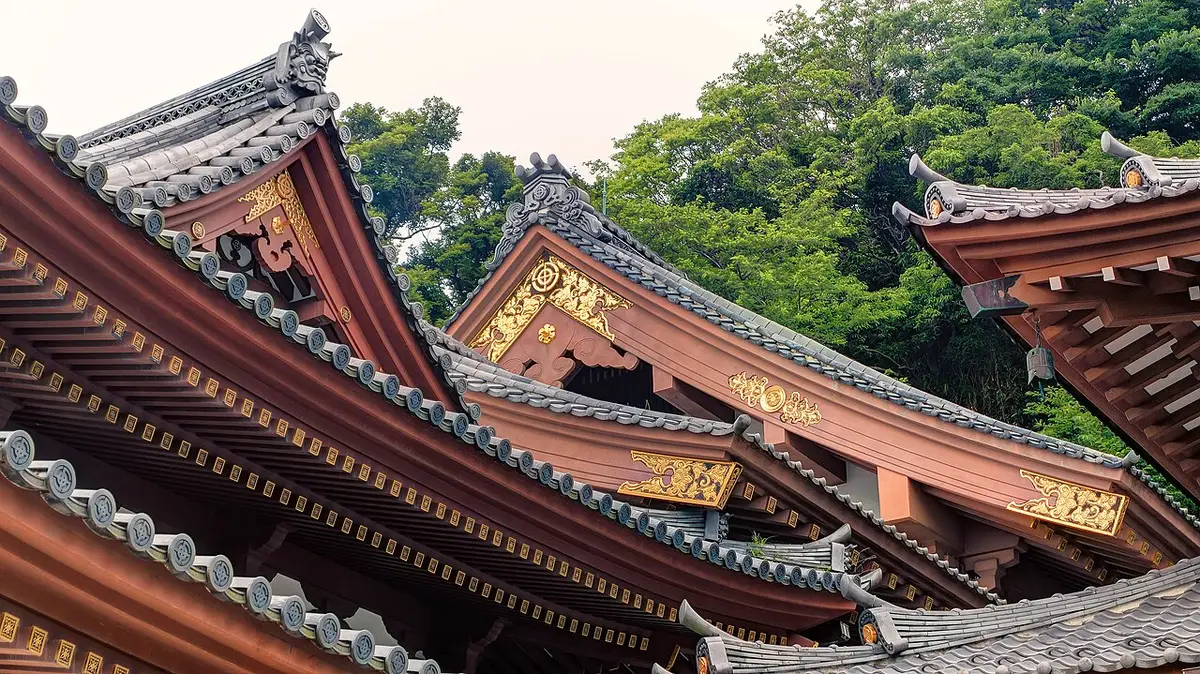
Table of contents
Hasedera (Hase-dera, also called Hase Kannon) is the temple on the hillside above Hase, five minutes on foot from the Enoden’s Hase Station and five minutes from the Great Buddha. It holds one of Japan’s largest wooden statues, a 9.18 m eleven-headed Kannon, a cave carved with deities, a terrace looking over Yuigahama and the sea, and in June a hydrangea path that needs its own timed ticket. Admission is ¥400 and the gate opens at 8:00, earlier than most Kamakura temples. That is the decision: come at opening, before the late-morning arrivals from Tokyo, and you get the terrace and the cave at their quietest.
Fees and hours by season
Fee ¥400 (child ¥200)Open 8:00 dailyLast entry 16:30, April-June 17:00From Hase Stn 5 min walkMapOfficial site
| Hours | Price | |
|---|---|---|
| July to March | 8:00 to 17:00, last entry 16:30 | Adults ¥400, children 6 to 11 ¥200 |
| April to June | 8:00 to 17:30, last entry 17:00 | Adults ¥400, children 6 to 11 ¥200 |
| Hydrangea path, paid period in June | within your 60-minute entry window | ¥500 extra, elementary school age and up |
| Kannon Museum | 9:00 to 16:00 entry, closes 16:30 | Adults ¥500, children ¥200, plus temple admission |
| Autumn night viewing (2026) | November 21 to December 6, sunset to 19:00 | Adults ¥400, children ¥200 |
| Car park | 8:00 to 16:30, April to June to 17:00 | ¥350 per 30 minutes |
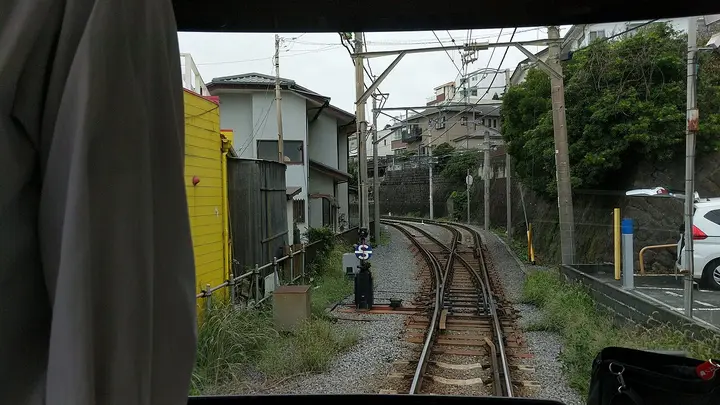
Hours and prices are from Hasedera’s admission page and the Kannon Museum. The ticket machines at the gate accept Suica and Pasmo. The car park has 30 spaces, takes no reservations and locks its cars in overnight if you return after closing, so most visitors come by Enoden: Kamakura to Hase is 4 minutes and ¥200 (fares). From Tokyo, the how to get to Kamakura guide has the JR connection, and the Kamakura map shows Hase in relation to the station. Keikyu buses from Kamakura and Ofuna stations stop at Hase Kannon, a 3-minute walk from the gate.
Pets are not allowed in the grounds except fully enclosed in a carrier or pet cart, and never inside the halls. Assistance dogs are welcome everywhere.
What to see at Hasedera
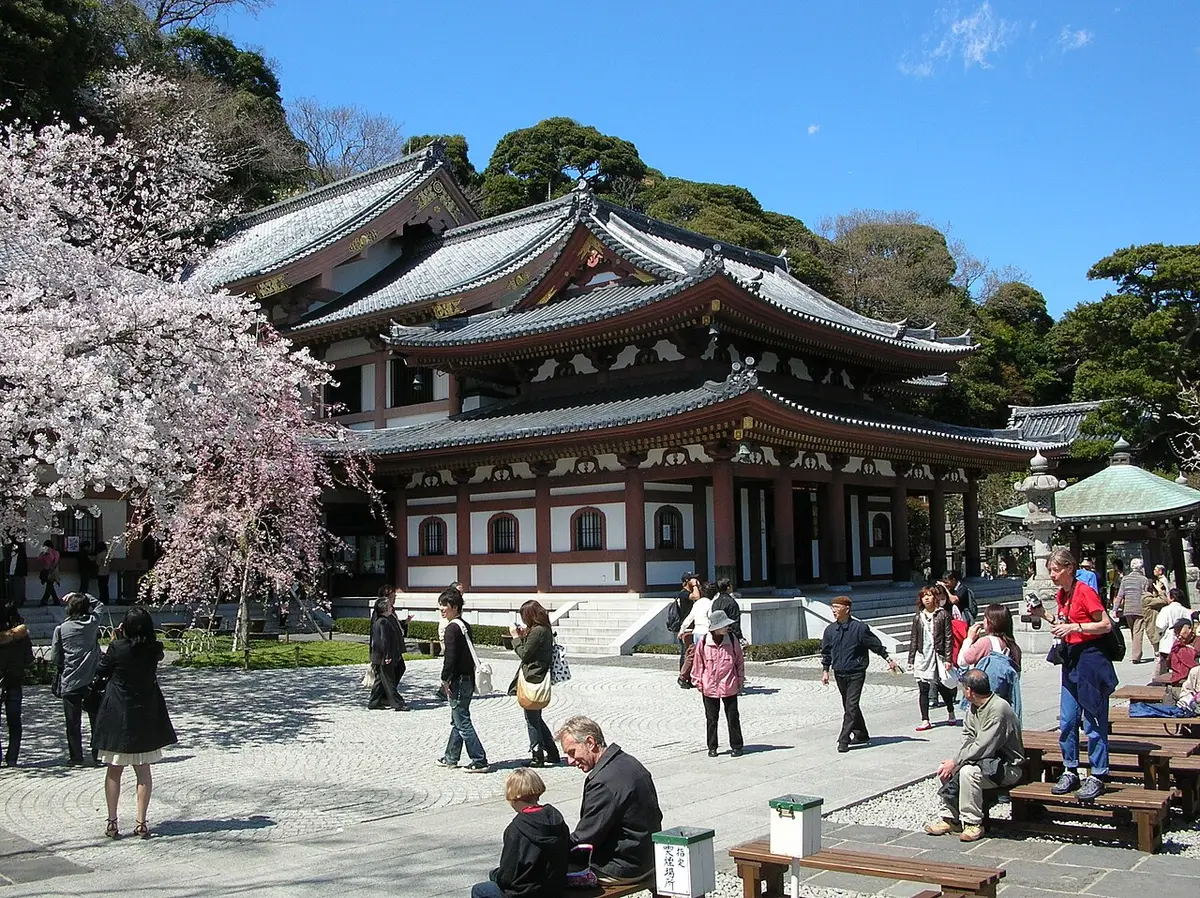
Hasedera is built on two levels. The lower precinct, just inside the gate, has ponds, the Benten-do hall and the Benten-kutsu cave. Steps lead to the upper precinct with the Kannon-do, the Amida-do and the view terrace. The hydrangea path climbs the slope above that. The temple’s own map of the halls has a numbered plan.
The Kannon-do and the eleven-headed Kannon
The main hall houses the reason for the temple: a wooden statue of the eleven-headed Kannon, 9.18 m tall and one of the largest wooden Buddhist statues in Japan. Temple tradition says it was carved in 721 from the same sacred tree as the Kannon of Hasedera in Nara, cast into the sea and washed ashore near Kamakura fifteen years later, and the temple dates its founding to 736. The hall itself was destroyed in the 1923 Great Kanto Earthquake; the present concrete hall was completed in 1985. Charms are sold just inside the entrance on the left.
Benten-kutsu cave
In the lower precinct, next to the Benten-do hall, is the Benten-kutsu, a cave where the monk Kobo Daishi is said to have meditated. Inside, the goddess Benzaiten and her sixteen attendants are carved into the rock walls, and in the last chamber you can leave a small Benzaiten figure, called a hono benzaiten, with your wish and name written on it. The Benten-do hall enshrines Fukutoku-benzaiten, the goddess of music and wisdom, and the Daikoku-do has a Daikoku figure visitors may touch for luck.
Jizo-do and the Thousand Jizo
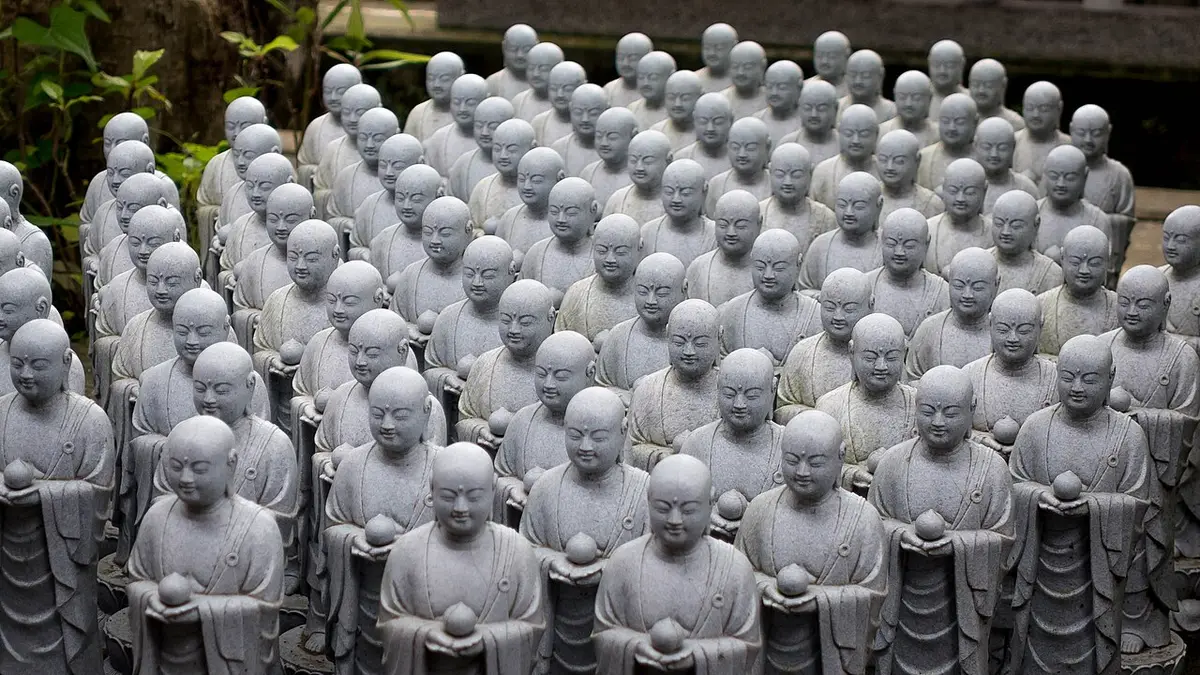
On the stairs between the two levels stands the Jizo-do, surrounded by rows of small stone statues the temple calls Sentai Jizo, the Thousand Jizo. Jizo is the bodhisattva believed to protect children and bring prosperity to one’s descendants. Near the hall is a Mizukake Jizo you can pour water over to calm the mind. The smiling Nagomi Jizo, placed in 2010, is a popular photo spot by the path.
Amida-do, the Kyozo and the bell
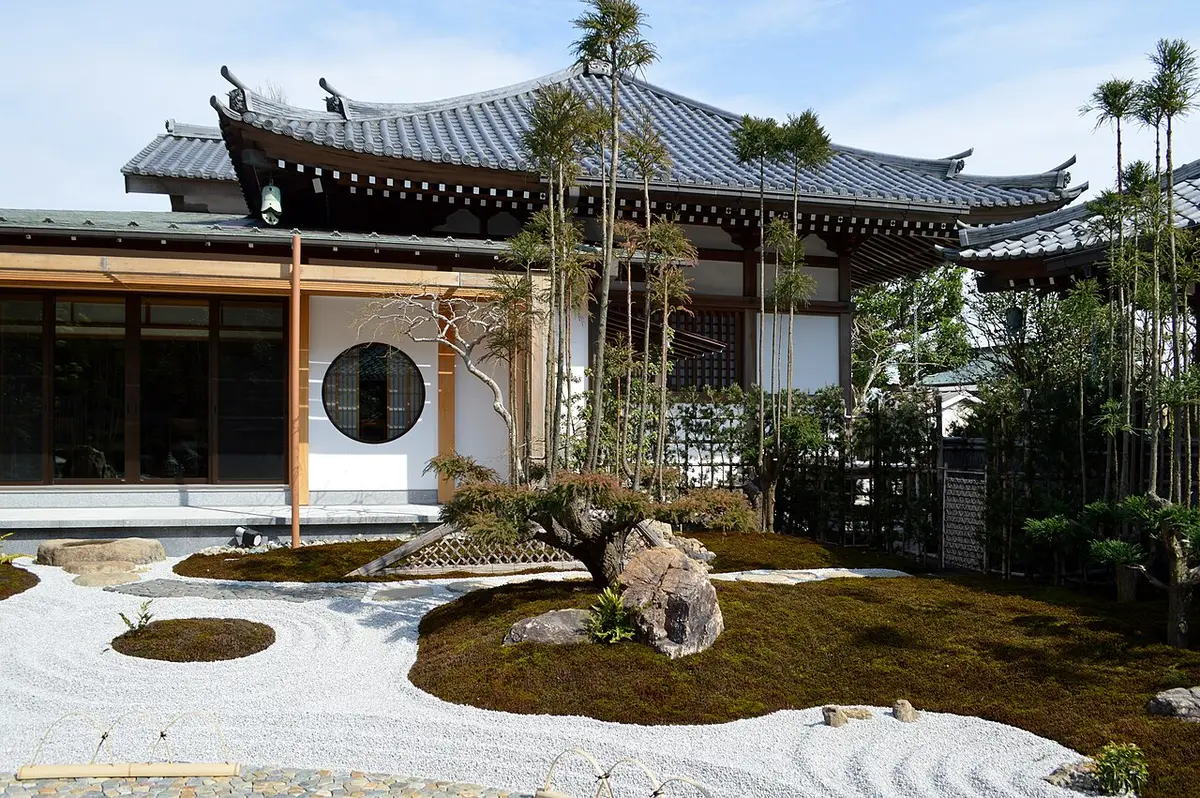
The Amida-do holds an Amida statue said to have been carved to ward off misfortune for Minamoto no Yoritomo, the first Kamakura shogun, and one of Kamakura’s Six Amida. It also has a mokugyo wooden drum 105 cm wide, which the temple calls the largest in Japan. The Kyozo, the sutra repository, holds a revolving bookcase you may turn only on the 18th of each month, January 1 to 3, April 8 and August 10. The bell in the belfry is a 1984 casting, struck every morning at 8:00 when the gate opens; the original, cast in 1264, is in the Kannon Museum.
Kannon Museum
The Kannon Museum shows the temple’s treasures in three rooms, including the 1264 bell, with touch screens that explain the Kannon faith. Admission is ¥500 for adults and ¥200 for elementary school children, on top of temple admission. It closes occasionally between exhibitions; the museum calendar lists closed days.
The view terrace and Kaikoan
The observation platform on the upper level looks over the roofs of Hase to Yuigahama beach and the bay, with tables and chairs to sit at; the temple calls it one of the best viewpoints in Kamakura. Kaikoan, the temple’s restaurant, has a panoramic sea view from its windows. The Teraya shop and café by the ticket office sells the temple’s own souvenirs and sweets. For a beach walk afterwards, Yuigahama is about 18 minutes on foot.
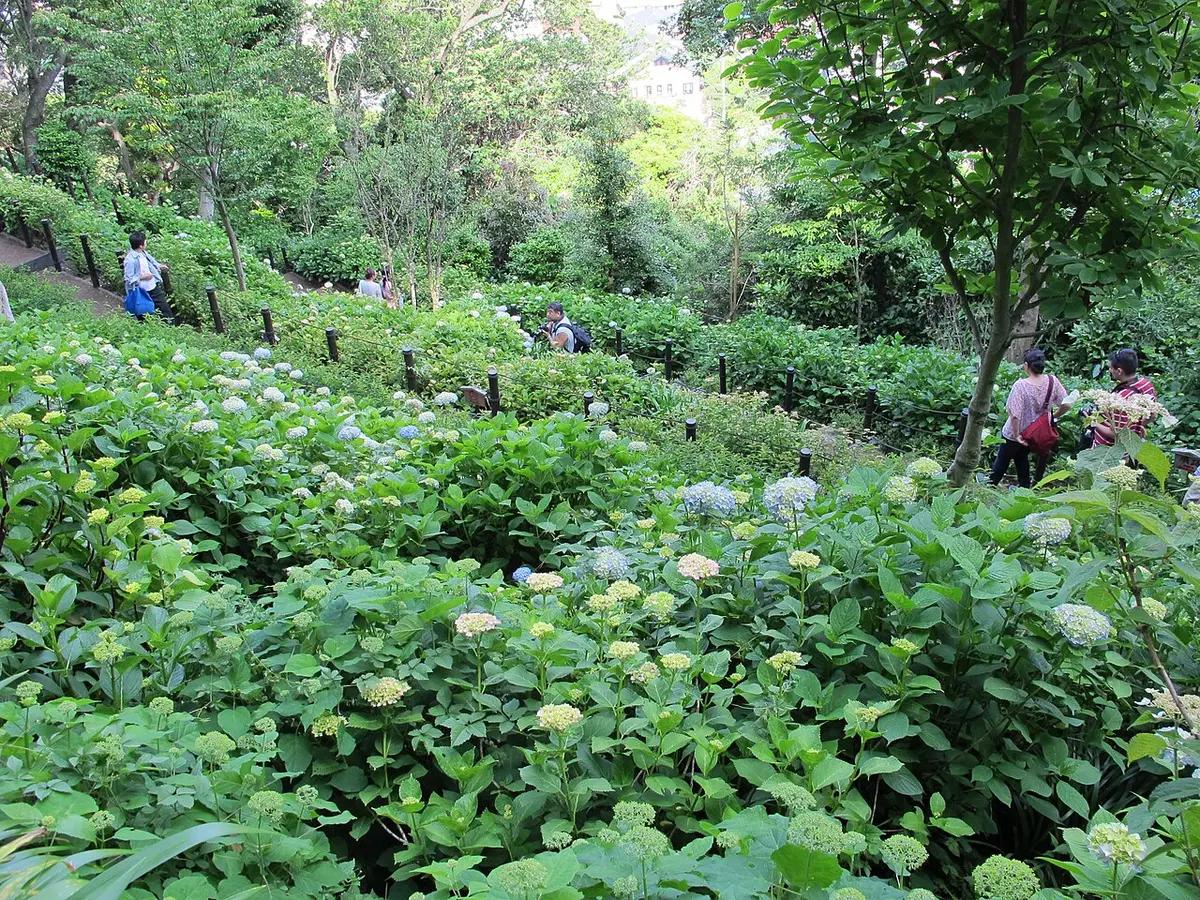
The hydrangea path and its ticket
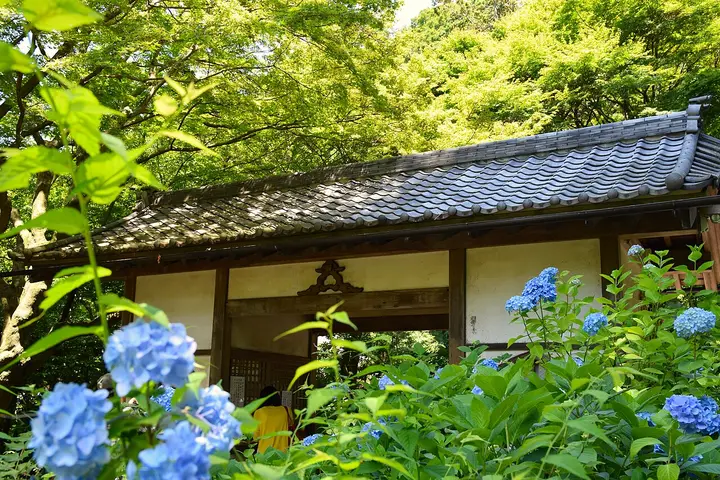
From the upper precinct a path climbs the hillside through more than 40 varieties and about 2,500 hydrangea plants, with the sea behind you as you climb. Outside June it is the Prospect Path, a quiet walk with a view. In June it gets very crowded, and from about half bloom until the peak has passed the temple charges ¥500 (elementary school age and up) on top of admission and controls entry with timed windows.
In 2026, as Hasedera set out in its hydrangea notice and press release:
- the paid period started on June 5; in 2025 it ran from June 6 to June 26;
- online booking opened every Tuesday at 10:00 for the seven days from that weekend, up to 10 tickets per booking;
- each ticket had a 60-minute entry window, the first from 8:00 to 9:00 and the last from 15:50 to 16:50;
- day tickets were sold at the path entrance with a fixed window while they lasted;
- the path starts after about 80 steps and has about 130 more, with no slope.
The window above is the first-bloom date at the Japan Meteorological Agency’s Yokohama observatory, not a Hasedera date. First bloom is not peak, and the temple’s best weeks move less than the Yokohama date: in Hasedera’s own reports, the week of June 10 to June 17 fell inside the path’s peak in every year from 2023 to 2026. Even without a hydrangea ticket you see hydrangeas: the lower precinct displays potted early varieties, including ones the temple has named, such as Hase no Inori. The hydrangea season guide has the full ticket rules, the year-by-year bloom table and a route with Meigetsu-in.
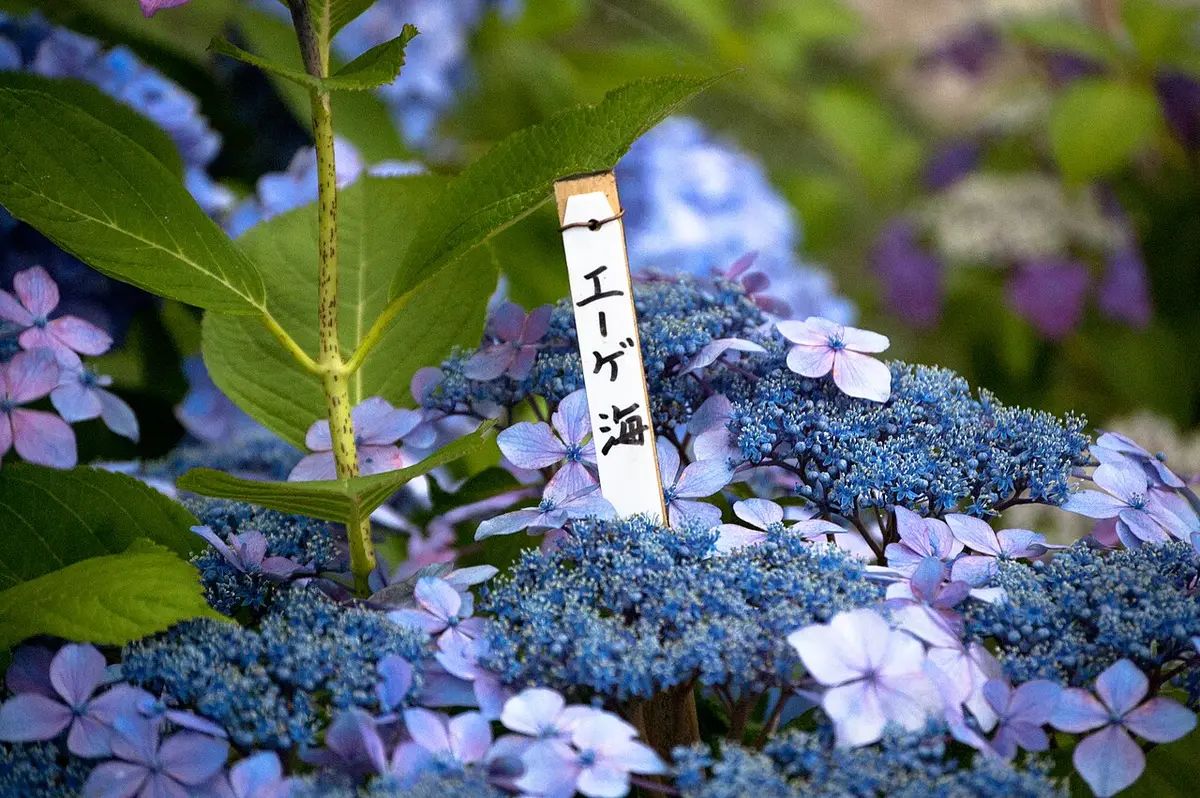
Autumn leaves and evening openings
Hasedera’s garden is planted to flower in every month; its garden calendar lists maples in November. In autumn the temple lights the grounds after dark. In 2026 the autumn night viewing runs from November 21 to December 6, from sunset until the gate closes at 19:00 (grounds clear at 19:30), at the normal ¥400 and ¥200. It goes ahead in rain, may be extended if the leaves last, and tripods and monopods are not allowed. On November 28, 2025, the temple reported its leaves at their best with the light-up running, and by early December they were falling.
The temple also runs Night Table, a ticketed evening of art, music and dinner in the lit grounds after regular hours; in 2026 it ran from October 2 to 4 and sold out. Watch hasedera.jp from late summer for the next one.
For the wider autumn picture, the autumn leaves guide has the dated window for Kamakura’s maples and ginkgo.
Combining Hasedera with the Great Buddha
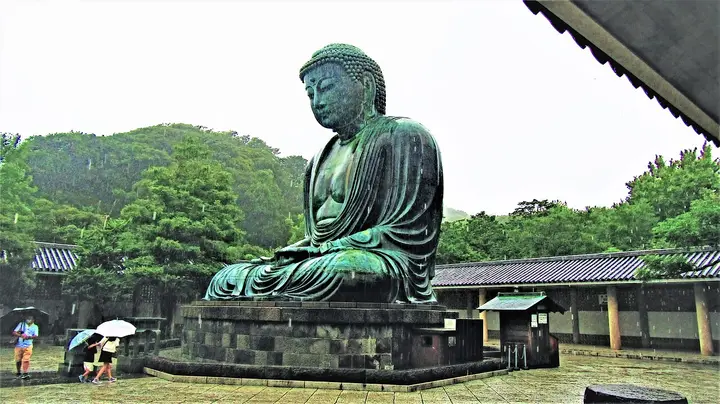
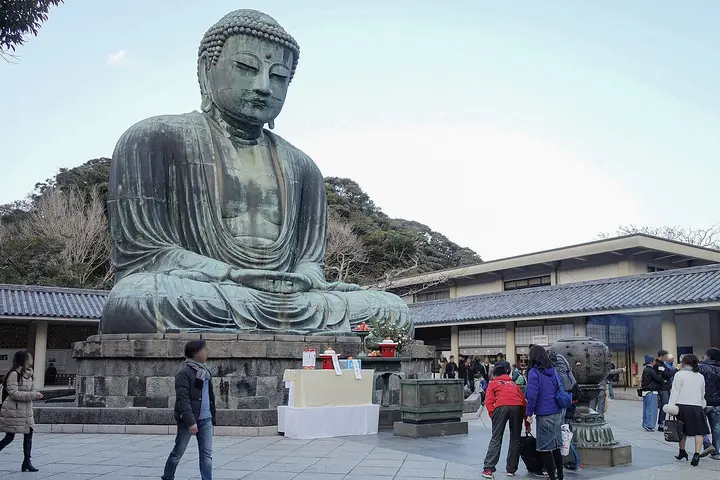
The Great Buddha at Kotoku-in is about 5 minutes on foot from Hasedera, as Kotoku-in itself states, along Hase’s main street. Both open at 8:00, so the order is yours:
- Hasedera first if you want the terrace and the cave at their quietest, or if you booked an early hydrangea window in June.
- The Great Buddha first if you arrive late morning: Kotoku-in is open until 17:30 from April to September and 17:00 from October to March, so it keeps later.
Fee ¥300 (child ¥150)Hours 8:00-17:30 (Oct-Mar 17:00)Inside the statue ¥50From Hase Stn 7 min walkMapOfficial site
Admission to both comes to ¥700 per adult; with the Enoden from Kamakura and back (¥200 each way) a Hase morning costs ¥1,100. The Great Buddha guide covers Kotoku-in in detail, including the ¥50 entry into the statue (8:00 to 16:30). A guided Great Buddha, Hasedera and Money-Washing Shrine walk covers both temples in about three and a half hours from Kamakura Station.
More nearby. Walk west from Hase past Goryo Shrine, where the Enoden passes the torii, to Jojuin and Gokurakuji, about 7 and 10 minutes on foot from Hase Station. Or ride the Enoden on to Enoshima: Hase to Enoshima is 19 minutes and ¥260. The Enoden guide has the stations, the Enoshima guide the island, and the Enoshima-Kamakura Freepass page shows when a pass is cheaper than single tickets.
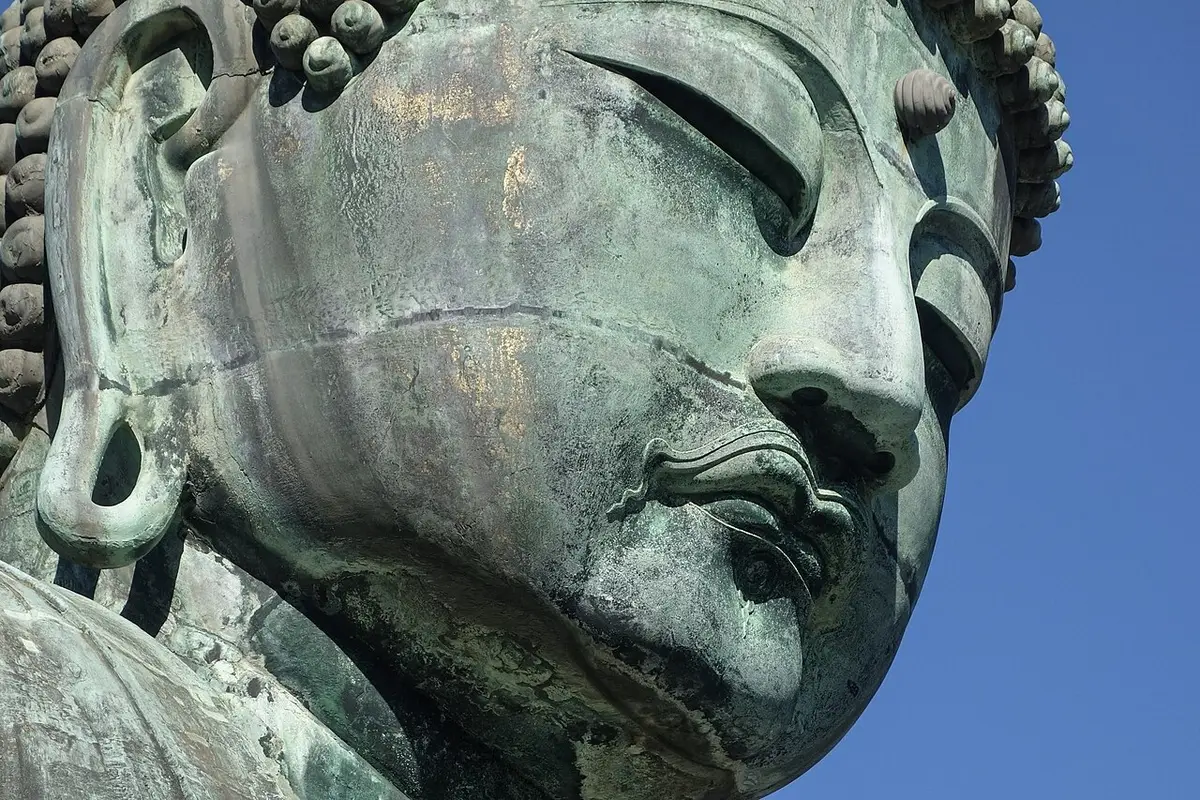
Practical tips
- Arrive at 8:00. Hasedera opens earlier than most temples in town, and the bell is struck at 8:00 as the gate opens. The day trip from Tokyo guide has the trains that get you there for it.
- Steps. The lower precinct is level, but everything else involves stairs; the hydrangea path has no slope. Strollers are easier left at the lower level, and Kamakura with kids has more on steps and child fares.
- Sutra copying and goshuin. The Shoin hall has a room for shakyo, copying a sutra by hand, and the goshuin office for temple stamps is left of the entrance.
- Food. Kaikoan inside the temple, or Hase’s main street toward the Great Buddha; the food guide has more.
- When to come. The bloom calendar dates hydrangea, cherry and maple seasons, and best time to visit weighs crowds against weather month by month.
- Plan the day. The itinerary puts Hasedera into half-day and full-day routes, the day planner builds a version for your date, and the trip cost calculator adds up fares and fees. For other sights, see things to do in Kamakura.
Staying in Hase
A night in Hase puts you at the gate at 8:00 without an early train from Tokyo, which matters most in June. BRB Kamakura Hase is a small property in a residential street of Hase, within walking distance of Hasedera and the Great Buddha. Ushio Guesthouse is a renovated older house about six minutes on foot from Hasedera. The where to stay in Kamakura guide compares Hase with the station area and Kita-Kamakura, and where to stay in Enoshima covers the other end of the Enoden. The Kamakura travel guide links every page on the site.
Questions people ask
How much is the entrance fee at Hasedera?
Admission is ¥400 for adults and ¥200 for children aged 6 to 11, paid at the gate; the ticket machines take Suica and Pasmo. During the June paid period, the hydrangea path costs another ¥500 for anyone of elementary school age and up. The Kannon Museum inside the grounds is ¥500 for adults and ¥200 for children.
What are Hasedera's opening hours?
Hasedera opens at 8:00 every day. From July to March last entry is 16:30 and the grounds close at 17:00. From April to June last entry is 17:00 and the grounds close at 17:30. In late autumn the temple adds evening openings: in 2026 from November 21 to December 6, from sunset until the gate closed at 19:00.
Where are the thousand Buddhas at Hasedera?
Around the Jizo-do hall, on the way up from the lower precinct to the Kannon hall, rows of small stone Jizo statues stand together. The temple calls them Sentai Jizo, the Thousand Jizo. Jizo is the bodhisattva believed to protect children. Nearby is a Mizukake Jizo you can pour water over.
How far is Hasedera from the Great Buddha?
Kotoku-in, home of the Great Buddha, gives the walk to Hasedera as about 5 minutes. Both are a short walk from Hase Station on the Enoden: Hasedera 5 minutes, the Great Buddha 7. Together they make an easy morning, and admission to both comes to ¥700 per adult.
How long do you need at Hasedera?
We suggest about an hour for the halls, the cave and the view terrace, and another 30 to 45 minutes in June if you walk the hydrangea path with its timed entry. Add the Kannon Museum or lunch at the temple restaurant and you can spend half a morning without hurrying.
Read next


Sources (13)
- Hasedera (official): admission and access (Japanese)
- Hasedera (official): admission and access (English)
- Hasedera (official): introduction and map of the halls
- Hasedera (official): garden calendar
- Hasedera Kannon Museum (official): hours and admission
- Hasedera (official): 2026 hydrangea path notice (archived copy)
- Hasedera press release, 6 May 2026 (PR TIMES)
- Hasedera (official): autumn night viewing 2026
- Hasedera (official): Night Table 2026
- Hasedera (official): autumn leaves report, 28 November 2025
- Kamakura City Tourism Association: 2026 hydrangea reports
- Kotoku-in (official): hours, fees and nearby spots
- Enoden: fares between stations