Sights
Kamakura Great Buddha at Kotoku-in
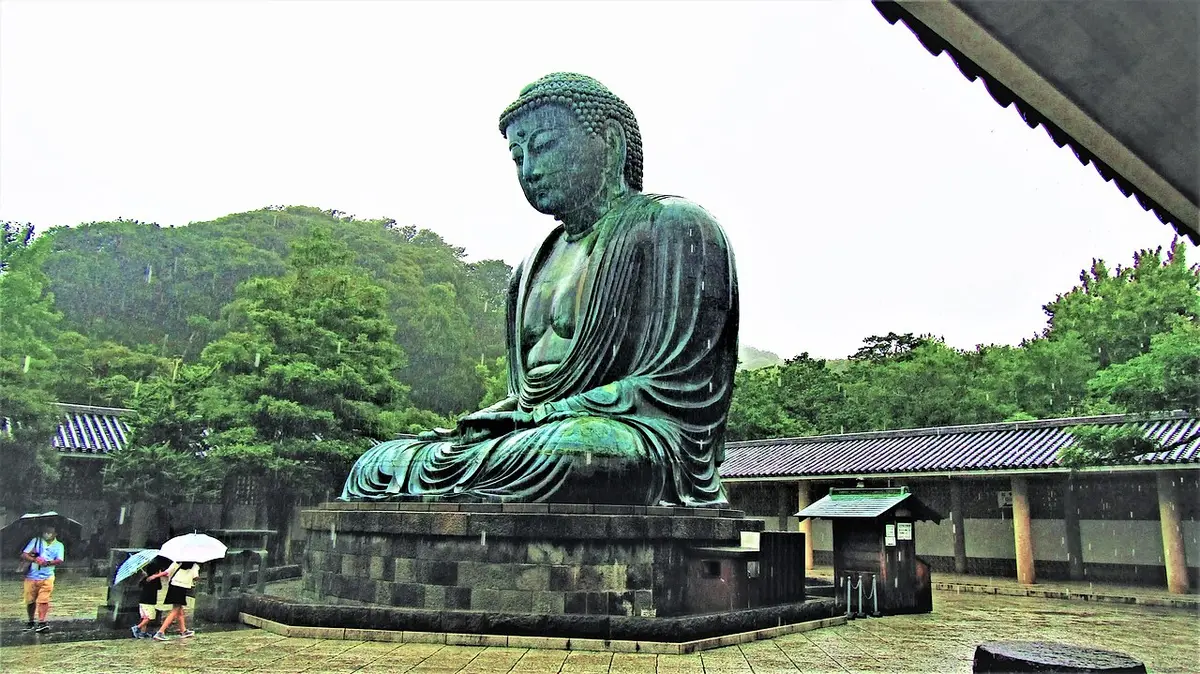
Table of contents
- Fee, hours and the statue interior
- The statue in figures
- History in brief
- What else to see on the grounds
- How to get there from Hase Station
- Best time of day to visit
- A morning in Hase: Great Buddha and Hasedera
- With children, in rain and in summer
- Rules on the grounds
- Tours that include the Great Buddha
- Nearby
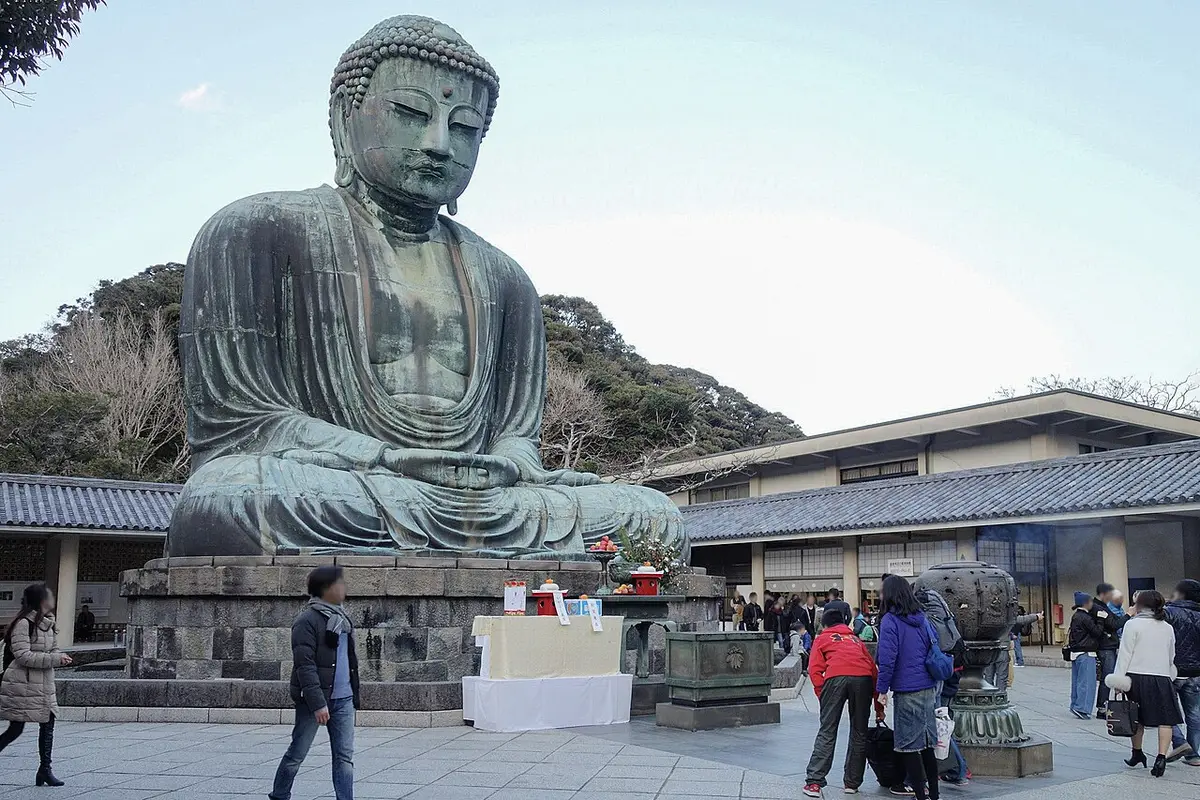
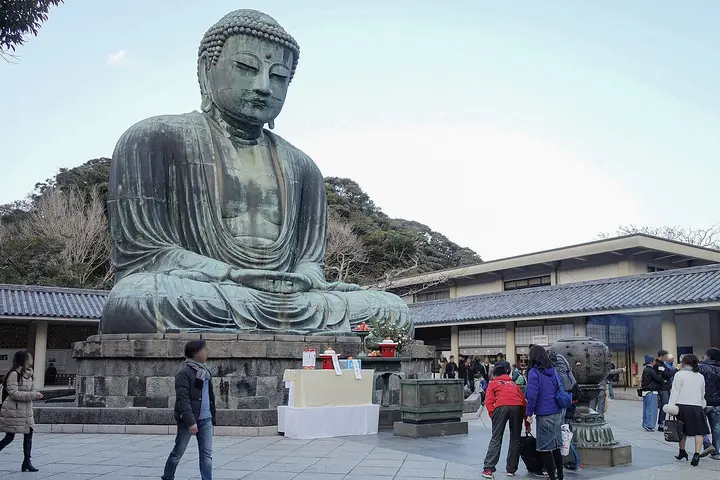
The Great Buddha of Kamakura is a bronze statue of Amida Buddha that has sat in the open air at Kotoku-in temple since its hall was lost in the 14th and 15th centuries. Admission is ¥300, the grounds open at 8:00, and for ¥50 more you can climb inside the hollow statue until 16:30. The temple is a 7-minute walk from Hase Station, which is 4 minutes from Kamakura Station on the Enoden line. Come at opening time or late in the afternoon, and pair it with Hasedera, a short walk away.
Fee, hours and the statue interior
Fee ¥300 (age 6 to 12: ¥150)Interior ¥50 extra, 8:00-16:30Hours 8:00-17:30 Apr-Sep, 8:00-17:00 Oct-MarFrom Hase Stn 7 min walkMapOfficial site
Kotoku-in charges ¥300 for adults and ¥150 for children aged 6 to 12. Children under six enter free. No reservation is needed. The grounds open at 8:00 all year and close at 17:30 from April to September and at 17:00 from October to March. Last entry is 15 minutes before closing.
Inside the statue. The interior (tainai) is open to anyone who pays the extra ¥50 per person. It keeps shorter hours than the grounds: 8:00 to 16:30 year-round, with last entry 10 minutes before closing. Inside, you stand in the hollow body and can see how the statue was put together from separate castings. The temple bans filming inside and does not allow selfie sticks there.
The temple shop is open 8:30 to 16:45. Commemorative seals (goshuin) cost ¥300 for the year-round design and ¥600 for the seasonal one. On busy days in autumn 2026 the temple gives out printed seals only, not handwritten ones; its announcements page lists the dates.
The statue in figures
These are the measurements the temple publishes on its overview page, next to the Great Buddha of Todai-ji in Nara:
| Kotoku-in (Kamakura) | Todai-ji (Nara) | |
|---|---|---|
| Height including platform | 13.35 m | 18.03 m |
| Statue height | 11.312 m | 14.98 m |
| Weight | 121 t | 250 t |
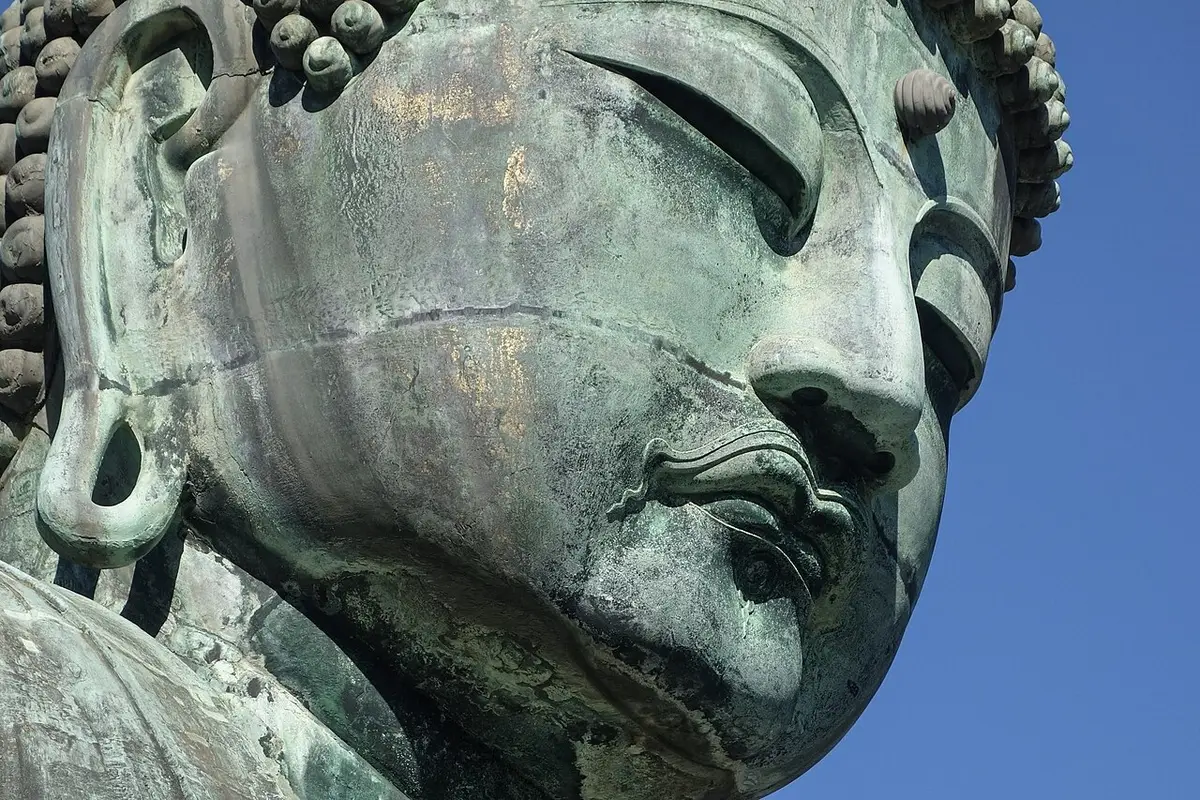
| Face length | 2.35 m | 5.33 m |
| Eye width | 1.00 m | 1.02 m |
| Mouth width | 0.82 m | 1.33 m |
| Ear length | 1.90 m | 2.54 m |
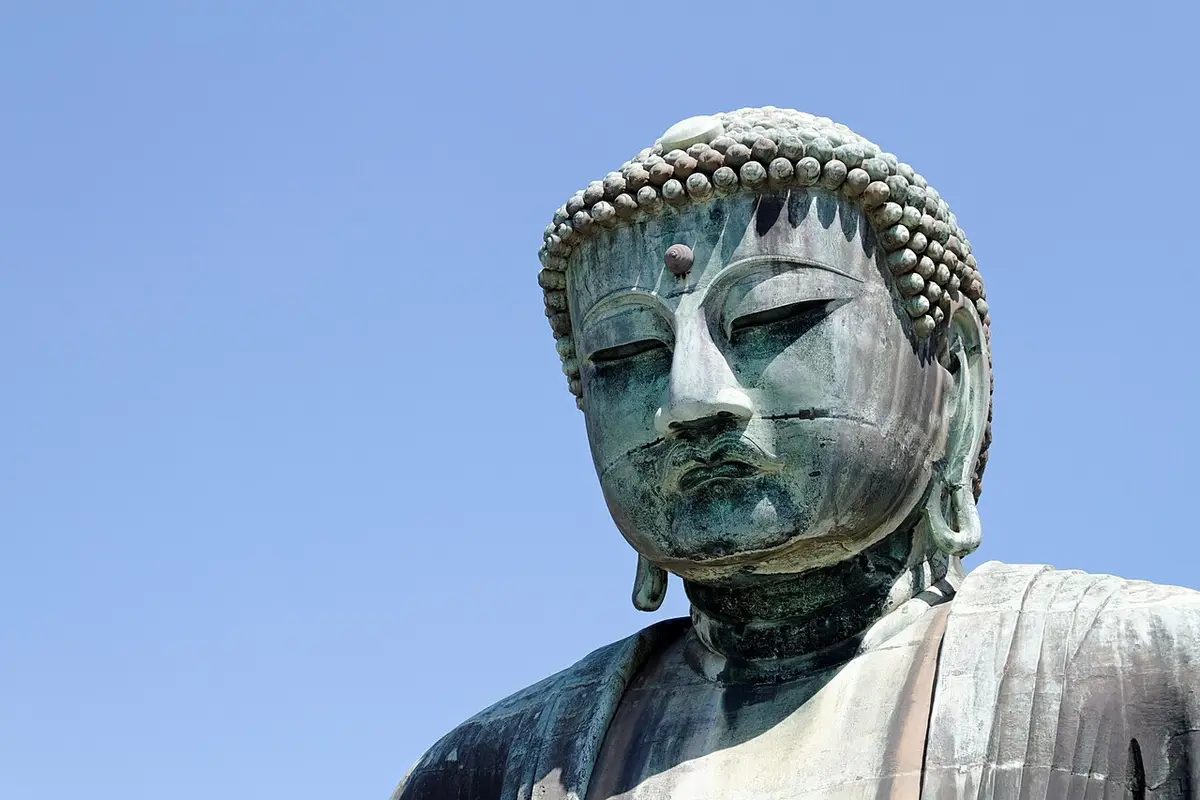
| Number of hair curls | 656 | 492 |
So Kamakura’s Buddha is smaller and lighter than Nara’s but has more hair curls and almost the same eye width. The temple describes the figure as a typical example of Kamakura-period sculpture (1192 to 1333). From the inside you can see that it was made in a series of 40 separate castings. The casting page explains the method: plaster molds with soil piled around them for support, bronze poured into the gap between an outer and an inner mold, and the body cast in stages from the base up.
History in brief
According to the temple’s history page, construction of the Great Buddha began in 1252, a date taken from the Azumakagami chronicle. A priest named Joko collected donations from ordinary people to pay for it. The sculptor is unknown, and so is the exact reason the statue was made.
The statue once stood inside a hall. Old records say the hall was damaged and then destroyed by typhoons in 1334 and 1369, and later by a severe earthquake in 1498. Since then the Buddha has sat in the open, exposed to weather. Many guides blame a tsunami for the loss of the hall; the temple’s own account names typhoons and an earthquake.
In the mid-Edo period two priests of the Jodo sect, Yuten (1637 to 1718) and Yokoku, repaired the statue with money from Nojima Shinzaemon, a merchant from Asakusa in Edo. They also revived the temple, which is why its full name is Shojosen-ji Kotoku-in. Kotoku-in belongs to the Jodo (Pure Land) sect founded by the priest Honen (1133 to 1212), and the statue is designated a National Treasure. The Japan Tourism Agency’s multilingual guide text tells the same story: begun in 1252, halls lost to natural disasters in the 14th and 15th centuries, restored in the middle of the Edo period.
What else to see on the grounds
The grounds are compact. See the temple’s map for the layout.
- The giant straw sandals (warazori). In the corridor to the right as you face the Buddha hangs a pair of straw sandals 1.8 m long, 0.9 m wide and 45 kg. A children’s club from Hitachi-Ota in Ibaraki first wove and donated them in 1951, so that the Buddha could walk around Japan bringing happiness; the club has made a new pair every three years since 1956.
- Kangetsu-do hall. A small hall believed to have come from a 15th-century palace in Hanyang (now Seoul), moved here in 1924. It houses a standing Kannon. Viewing of the Kannon is suspended while the hall is renovated, according to a current notice on the temple’s Japanese homepage.
- Stone monuments. The temple lists 20 inscribed stones, from a 1716 record of the restoration to a tanka poem about the Buddha by Yosano Akiko, set up in 1952. The monuments page describes each one.
- Nio-mon gate. The entrance gate, with its guardian figures, was moved here from another site and rebuilt in the early 18th century.
How to get there from Hase Station
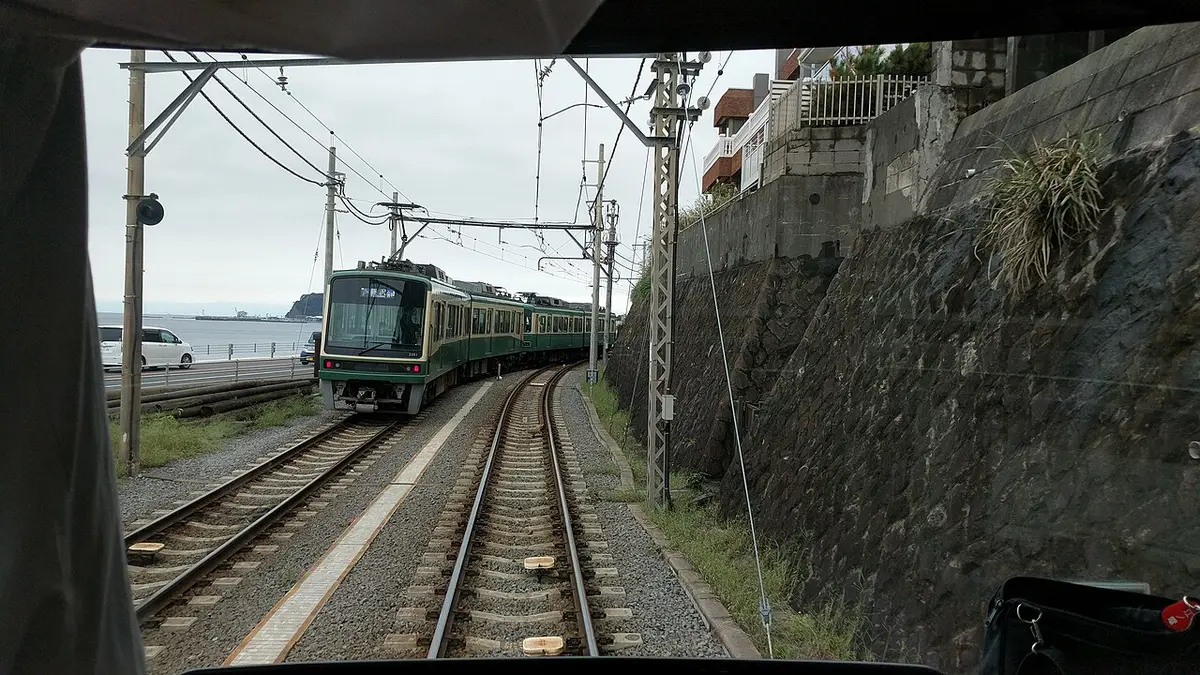
Take the Enoden from Kamakura Station toward Fujisawa and get off at Hase, the third stop: 4 minutes, ¥200 (Enoden fares). From Fujisawa it is the 11th stop. JR trains from Tokyo reach Kamakura Station directly; see how to get to Kamakura.
From Hase Station, the temple gives the walk as 7 minutes. The route is about 730 m; routed on OpenStreetMap paths it takes about 10 minutes, so allow that on busy days.
By bus: buses from Kamakura Station’s East Exit (Enoden bus stop 1 or Keikyu bus stop 6) reach the Daibutsu-mae stop next to the temple in about 10 minutes.
On foot over the hills: the Daibutsu hiking trail has entrances close to the temple. The temple’s list of nearby spots puts the trail entrances 10 and 15 minutes away and Zeniarai Benten about 30 minutes. Hasedera is about 5 minutes away on the same list. A guided hidden trails day hike follows the Daibutsu trail with a licensed local guide in about six hours.
By car: Kotoku-in has no parking, and its parking spaces for visitors with disabilities have been discontinued. Use a paid lot nearby or come by train.
Enoden Kamakura to Hase 4 min, ¥200Hase Stn to temple 7 min walkBus stop Daibutsu-maeParking noneMapOfficial site
Best time of day to visit
Go at 8:00 or after 15:00. The grounds open at 8:00, before most visitors get to Hase. Tours that leave Tokyo at 8:00 often make the Great Buddha their first stop; one rail-and-bus tour we list arrives at 10:00 and stays 25 minutes. From late morning, groups keep arriving. The early-bird morning tour starts early, keeps groups to eight and includes the Great Buddha.
Go on a weekday. Weekends and Japanese public holidays bring Tokyo residents as well as tourists. Our crowd calendar marks the holidays.
Watch the month. By Kamakura City’s 2025 count, January was by far the busiest month in the city (New Year shrine visits), followed by June (hydrangeas at nearby Hasedera) and November (autumn leaves). If you visit then, the opening hour matters even more.
Check the crowd map. The city’s live crowd map shows congestion in the Hase area in real time.
Plan for the interior. If you want to go inside, arrive before 16:20, as the interior closes at 16:30 even when the grounds stay open until 17:30 in summer.
For a full timed route, our half-day itinerary starts at Hasedera at 8:00 and reaches the Great Buddha before the crowds. The planner builds a day around your start time.
A morning in Hase: Great Buddha and Hasedera
The two temples sit on the same side of Hase Station, and both open at 8:00, so they fit into one unhurried morning. With a guide, the Great Buddha, Hasedera and Money-Washing Shrine walk covers both temples in an afternoon, starting at 13:00 from Kamakura Station.
- Kamakura Station to Hase. Take the Enoden toward Fujisawa: 4 minutes, ¥200. Trains leave about every 14 minutes. From Tokyo, check JR times on the JR East route search.
- Hasedera first. Hasedera is a 5-minute walk from Hase Station by the temple’s count (about 470 m). Admission is ¥400. Go up to the Kannon hall and the lookout over the bay while it is quiet.
- Walk to the Great Buddha. The routed walk between the two temples is about 770 m (map). Arrive before the first tour groups and go inside the statue while there is no queue.
- Then choose. Walk to Yuigahama beach (about 20 minutes), climb onto the Daibutsu trail toward Zeniarai Benten, or ride the Enoden from Hase to Enoshima in 19 minutes for ¥260.
From Tokyo Station, the JR round trip, the Enoden to Hase and back, Hasedera and the Great Buddha come to ¥3,168 per adult. If you plan to ride the Enoden more than three times, the ¥800 Noriorikun day pass or the Enoshima-Kamakura Freepass may work out cheaper; our cost calculator checks it for your route.
With children, in rain and in summer
Children. Admission for ages 6 to 12 is ¥150, and children under six enter free. The temple’s ramps make the front of the statue reachable with a stroller, though the stone paths are bumpy. Our Kamakura with kids page has a family-paced route.
Rain. The Buddha sits outdoors and there is no large hall to shelter in, so bring an umbrella.
Summer. From April to September the grounds stay open until 17:30, which makes a late-afternoon visit after the beach easy. Remember that food and drink are not allowed inside apart from sealed bottles, so drink before you go in.
Is it worth it? For most first-time visitors, yes. The statue is the image most people have of Kamakura, the entry fee is low, and a visit takes under an hour. If your time is short, combine it with Hasedera and skip the walk into town; if you have a full day, add the Kita-Kamakura Zen temples or Tsurugaoka Hachimangu.
Rules on the grounds
- No food or drink. Eating and drinking on the grounds is prohibited, and visitors walking in with food are not admitted. Sealed bottles or flasks for water are allowed; drinks in paper or plastic cups are not. There are no trash bins, so take rubbish with you. Eat before you arrive or after; see our food guide for the Hase area.
- Photos. Personal photos are fine. Drones are banned, filming inside the statue is not allowed, and selfie sticks are banned inside. Commercial photography needs advance permission.
- Pets. Only in a cage or carrier. Leashed dogs are not admitted, except assistance dogs.
- Smoking. Not allowed anywhere on the grounds.
- Access. Ramps lead to the front of the statue and the gallery, but many paths are bumpy stone, so wheelchair users should come with a helper. Wheelchairs can be borrowed at the ticket counter from 9:00 to 16:00 and must be back by 16:30. There is one accessible restroom. Visitors with a disability booklet enter free.
Tours that include the Great Buddha
Almost every Kamakura tour stops here; few include the ticket. Three that do:
- The coach Kamakura & Enoshima Day Trip including Temple Tickets from Ueno or Shinjuku covers the Kotoku-in and Hasedera tickets.
- The Hidden Kamakura Hike walks from Kita-Kamakura over the hills and ends at the Great Buddha, with Kotoku-in admission included.
- The afternoon Half-Day Walking Tour & Japanese Sweets starts at 13:00 at Kamakura Station and includes the Enoden ride, both temple tickets, and sweets with matcha.
More options, from private guides to zazen, are on our Kamakura tours page.
Nearby
- Hasedera for the Kannon hall, the cave and the sea view (¥400, opens 8:00).
- Yuigahama beach, about 20 minutes on foot from the temple.
- Zeniarai Benten, the cave shrine where people wash coins, via the hill path.
- Enoshima, 19 minutes from Hase on the Enoden.
For everything else in town, see things to do in Kamakura and the map.
Questions people ask
Can you go inside the Great Buddha of Kamakura?
Yes. The hollow statue is open from 8:00 to 16:30 every day for an extra ¥50 on top of the ¥300 admission; enter at least 10 minutes before it closes. Inside you see the seams of the separate castings that make up the body. Filming inside is not allowed and selfie sticks are banned.
How much does it cost to see the Great Buddha?
Admission to Kotoku-in is ¥300 for adults and ¥150 for children aged 6 to 12; children under six enter free. Going inside the statue costs ¥50 more per person. No reservation is needed. The temple has no parking, so come by Enoden train to Hase Station or by bus.
How tall is the Kamakura Great Buddha?
The temple gives the statue's height as 11.312 m, or 13.35 m including the platform, and its weight as 121 tons. For comparison, the temple lists the Great Buddha of Todai-ji in Nara at 14.98 m and 250 tons. Kamakura's face is 2.35 m long and its ears 1.90 m.
How long do you need at the Great Buddha?
Allow 30 to 45 minutes to walk around the statue, go inside, and see the giant straw sandals and the poem stones. Day tours often allow about 25 minutes. Hasedera is a short walk away, so most visitors pair the two in one morning.
What is the best time to visit the Great Buddha?
Come at the 8:00 opening or after 15:00. Many day tours from Tokyo reach the statue around 10:00, and the Hase area fills up from late morning. Weekdays are calmer than weekends, and January, June and November are the city's busiest months. The statue interior closes at 16:30.
Read next


Sources (13)
- Kotoku-in (official): visiting guide, fees, hours, access
- Kotoku-in (official, Japanese): fees, access, notices
- Kotoku-in: an overview of the Great Buddha (measurements)
- Kotoku-in: the Great Buddha and the teachings of Kotoku-in (history)
- Kotoku-in: the casting method
- Kotoku-in: map of the temple grounds
- Kotoku-in: stone monuments
- Kotoku-in: FAQ
- Kotoku-in: announcements
- Japan Tourism Agency multilingual commentary: the Great Buddha of Kamakura
- Enoden: fares
- Kamakura City: tourism statistics 2025
- Kamakura crowd map