Getting around
Enoden train guide
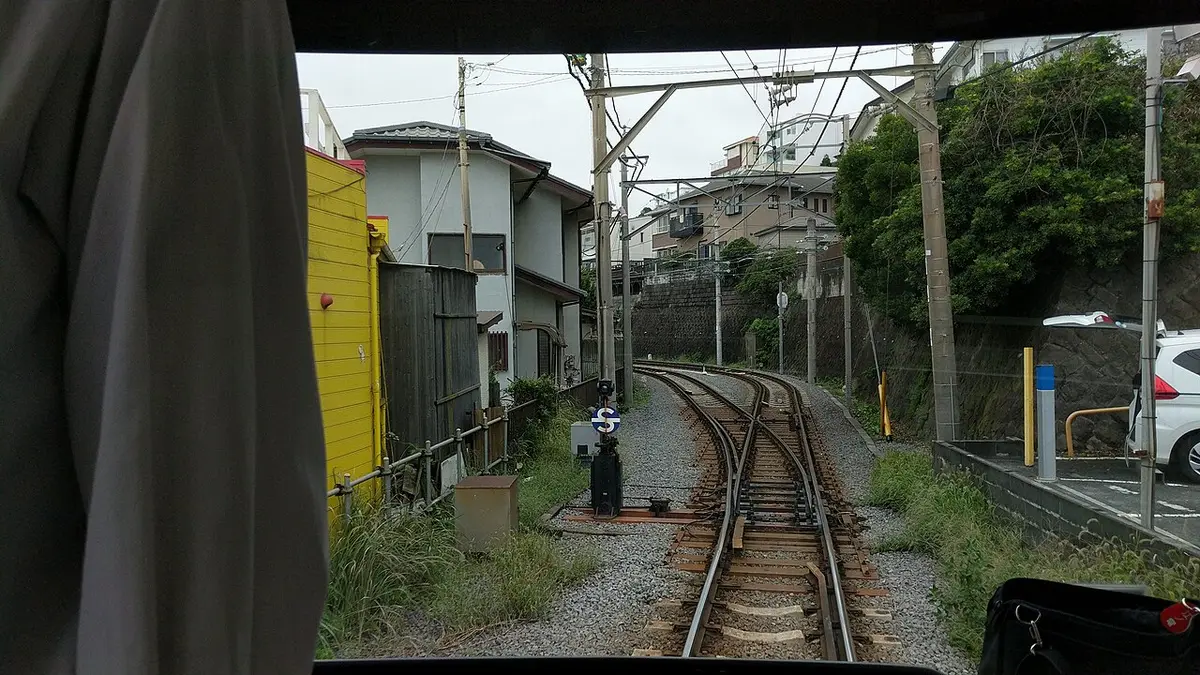
Table of contents
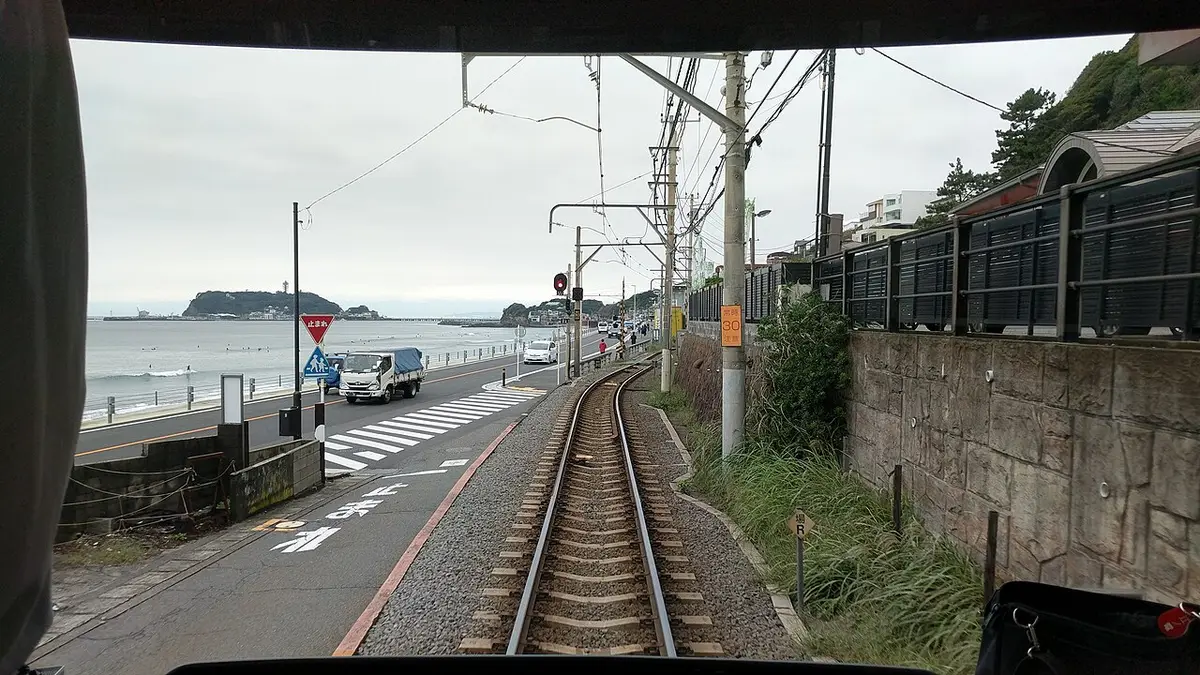
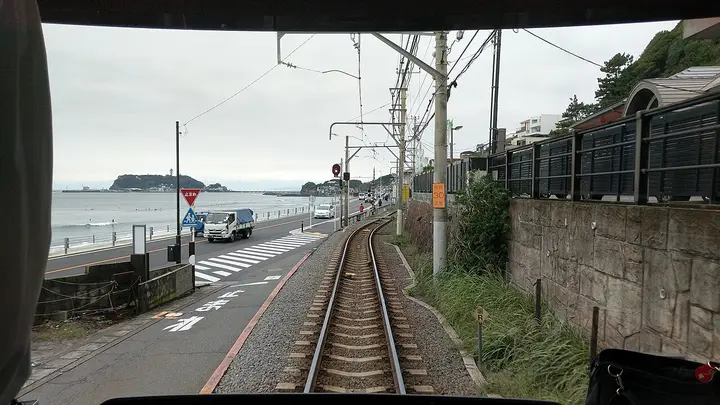
The Enoden, short for Enoshima Electric Railway, is the local train that links Kamakura with Enoshima and Fujisawa along the coast. It has 15 stations, takes 37 minutes end to end and costs ¥200 to ¥310 a ride for adults. Trains leave Kamakura every 14 minutes during the day. The line opened in 1902. It squeezes between houses, runs along the sea from Inamuragasaki to Koshigoe and, near Koshigoe, shares a street with cars like a tram.
Most visitors use four stops: Kamakura, Hase for the Great Buddha and Hasedera, Kamakura-kokomae for the sea view, and Enoshima for the island. This guide covers all 15, how to pay, when a day pass pays off and how to dodge the weekend crush.
The Enoden at a glance
| Route | Kamakura (EN15) to Fujisawa (EN01), 15 stations |
| End to end | 37 minutes, ¥310 adult, ¥160 child |
| Fares | ¥200, ¥220, ¥260 or ¥310 for adults by distance |
| Frequency | every 14 minutes in the daytime from Kamakura |
| First and last from Kamakura | 5:20 and 23:38 toward Fujisawa |
| Payment | IC cards, contactless bank cards, QR tickets, paper tickets |
| Day pass | Noriorikun, ¥800 adult, ¥400 child |
Fares below are adult fares from Enoden’s fare table; our trip cost calculator adds them to temple fees for your own route.
How to pay
IC cards. Suica, PASMO and the other Japanese transport IC cards (Kitaca, manaca, TOICA, PiTaPa, ICOCA, Hayakaken, nimoca, SUGOCA) work on every Enoden gate. Fujisawa, Enoshima, Hase and Kamakura have normal ticket gates. Every other station is unstaffed and has two upright readers instead: touch the green one when you board and the yellow one when you leave. They are easy to miss, and if you skip one your card shows an error at the next gate. You need at least the minimum fare on the card to enter. Visitors can order a Suica IC card on Klook for pickup at an airport counter.
Contactless bank cards. Visa, Mastercard, JCB, American Express, Diners Club, Discover and UnionPay contactless cards, or a phone wallet with one of them, work at a dedicated reader at all stations. Three limits: adult fare only, so children need a ticket or IC card; one card per person; and you must tap out with the same card or phone you tapped in with.
QR tickets. Digital tickets bought in Odakyu’s EMot app, including the Noriorikun and the Enoshima-Kamakura Freepass, open the gates through a QR reader beside the contactless reader or at the window.
Changing to JR at Kamakura. A transfer gate inside Kamakura Station links the Enoden platforms with the JR Yokosuka Line. It takes IC cards and paper tickets, but not contactless bank cards or QR tickets; with those, exit the Enoden and enter JR from outside. Getting to Kamakura from Tokyo is covered in how to get to Kamakura.
Noriorikun day pass
The Noriorikun is Enoden’s one-day pass: ¥800 for adults, ¥400 for children, sold from the ticket machines at every station and as a digital ticket in EMot. It is valid only on the day it is issued and gives discounts at 53 shops and sights along the line. The maths is tight because fares are low:
| Plan for the day | Single fares | Noriorikun | Better buy |
|---|---|---|---|
| Kamakura, Hase, Enoshima, back to Kamakura | ¥720 | ¥800 | singles by ¥80 |
| Kamakura, Hase, Kamakura-kokomae, Enoshima, Kamakura | ¥880 | ¥800 | pass by ¥80 |
The pass pays off at four rides or more, or when one of its partner discounts covers the gap. Enoshima Aquarium sells its own set with the Noriorikun for ¥3,320, against ¥2,800 for the aquarium alone plus ¥800 for the pass; if you only need the aquarium, an Enoshima Aquarium e-ticket is sold online. Children ride for ¥400 on the pass, and our Kamakura with kids page adds up a family day.
Enoshima-Kamakura Freepass and other passes
Coming from Shinjuku, the Odakyu Enoshima-Kamakura Freepass usually beats both: ¥1,640 covers the Odakyu round trip to Fujisawa, the Fujisawa to Katase-Enoshima section and the whole Enoden line for the day. Our Freepass page has a calculator for each start station. The city’s Kamakura Free Kankyo Tegata (¥900) covers buses and the Enoden between Kamakura and Hase only, which suits a temples-and-Buddha day but not Enoshima.

All 15 Enoden stations, from Kamakura to Fujisawa
| No. | Station | From Kamakura | Adult fare | From Fujisawa | Adult fare |
|---|---|---|---|---|---|
| EN15 | Kamakura | n/a | n/a | 37 min | ¥310 |
| EN14 | Wadazuka | 1 min | ¥200 | 35 min | ¥310 |
| EN13 | Yuigahama | 3 min | ¥200 | 34 min | ¥310 |
| EN12 | Hase | 4 min | ¥200 | 32 min | ¥310 |
| EN11 | Gokurakuji | 7 min | ¥220 | 30 min | ¥310 |
| EN10 | Inamuragasaki | 10 min | ¥220 | 24 min | ¥260 |
| EN09 | Shichirigahama | 17 min | ¥260 | 21 min | ¥260 |
| EN08 | Kamakura-kokomae | 19 min | ¥260 | 17 min | ¥260 |
| EN07 | Koshigoe | 22 min | ¥260 | 15 min | ¥220 |
| EN06 | Enoshima | 24 min | ¥260 | 9 min | ¥220 |
| EN05 | Shonan-kaigan-koen | 29 min | ¥310 | 8 min | ¥220 |
| EN04 | Kugenuma | 31 min | ¥310 | 4 min | ¥200 |
| EN03 | Yanagikoji | 34 min | ¥310 | 3 min | ¥200 |
| EN02 | Ishigami | 35 min | ¥310 | 1 min | ¥200 |
| EN01 | Fujisawa | 37 min | ¥310 | n/a | n/a |
Child fares are half the adult fare, rounded up to ¥10: ¥100, ¥110, ¥130 or ¥160.
Kamakura (EN15)
The eastern terminus sits beside JR Kamakura Station, with a transfer gate between the two. Enoden puts Tsurugaoka Hachimangu about 10 minutes on foot from its station. Because every train starts here, letting one go and waiting 14 minutes for the next usually gets you a seat. See Tsurugaoka Hachimangu and things to do in Kamakura.
To Hase 4 min, ¥200To Enoshima 24 min, ¥260Tsurugaoka Hachimangu about 10 min on footMapOfficial site
Wadazuka (EN14) and Yuigahama (EN13)
Two small unstaffed stops between the houses, 1 and 3 minutes from Kamakura. Each is about 5 minutes on foot from Yuigahama beach, so they are the quiet way to the sand in summer while crowds pile out at Hase. Details and the swimming season are on the Kamakura beaches page.
From Kamakura 1 min and 3 min, ¥200Yuigahama beach about 5 min on footMapOfficial site
Hase (EN12)
The busiest stop for sightseers. Hasedera is 5 minutes on foot and the Great Buddha at Kotoku-in 7 minutes, by each temple’s own figures; Yuigahama beach is about 5 minutes the other way. Hase is one of the four stations with a staffed gate. A guided walk that links the Great Buddha, Hasedera, the Enoden and the seaside covers this stretch in about three hours. Plan the area with Hasedera and the Great Buddha.
From Kamakura 4 min, ¥200Hasedera 5 min on footKotoku-in 7 min on footMapOfficial site
Gokurakuji (EN11)
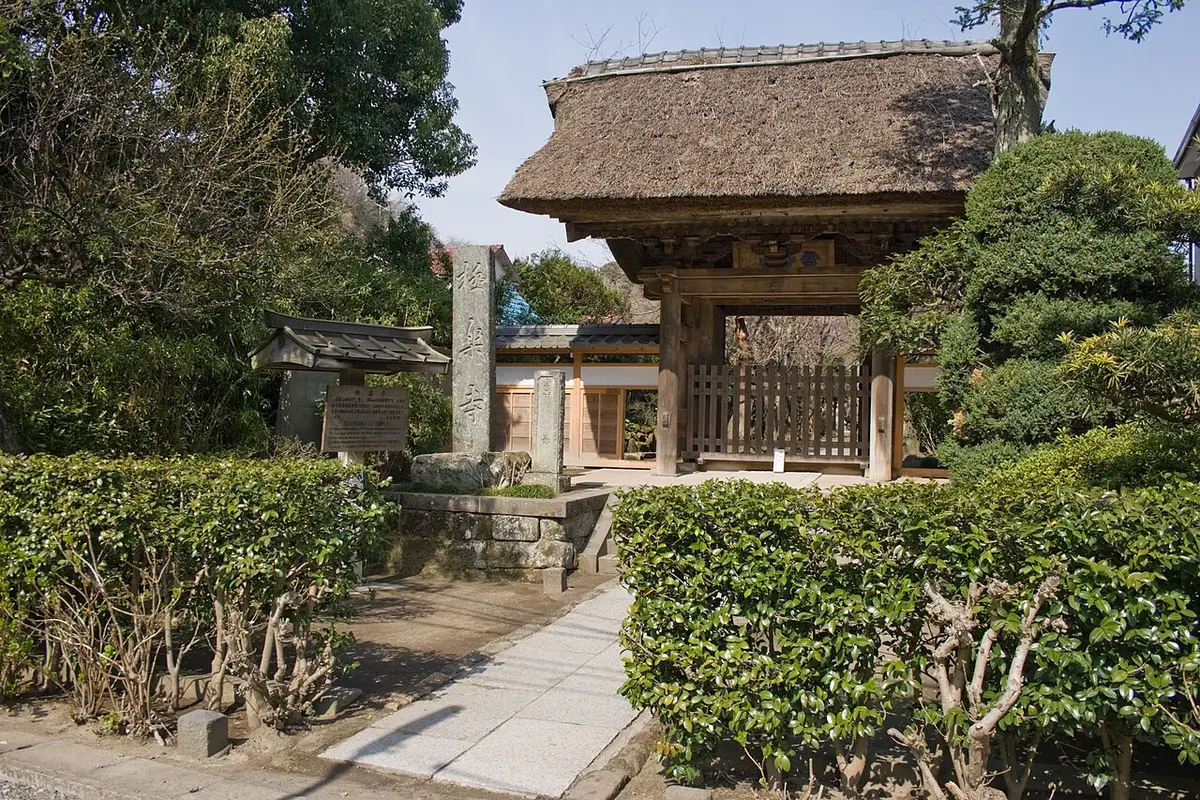
Seven minutes from Kamakura, in a quiet valley. Gokurakuji temple is 2 minutes away and Jojuin, known for its hydrangea steps, 3 minutes. In June this stop and Hase both serve the hydrangea temples.
From Kamakura 7 min, ¥220Gokurakuji temple 2 min on footJojuin 3 min on footMapOfficial site

Inamuragasaki (EN10)
Ten minutes from Kamakura. Enoden puts the cape of Inamuragasaki 10 minutes on foot from the station and recommends it for views of Mount Fuji and Enoshima, especially at sunset. It is a good place to break the ride on a clear late afternoon.
From Kamakura 10 min, ¥220Inamuragasaki cape 10 min on footMapOfficial site
Shichirigahama (EN09)
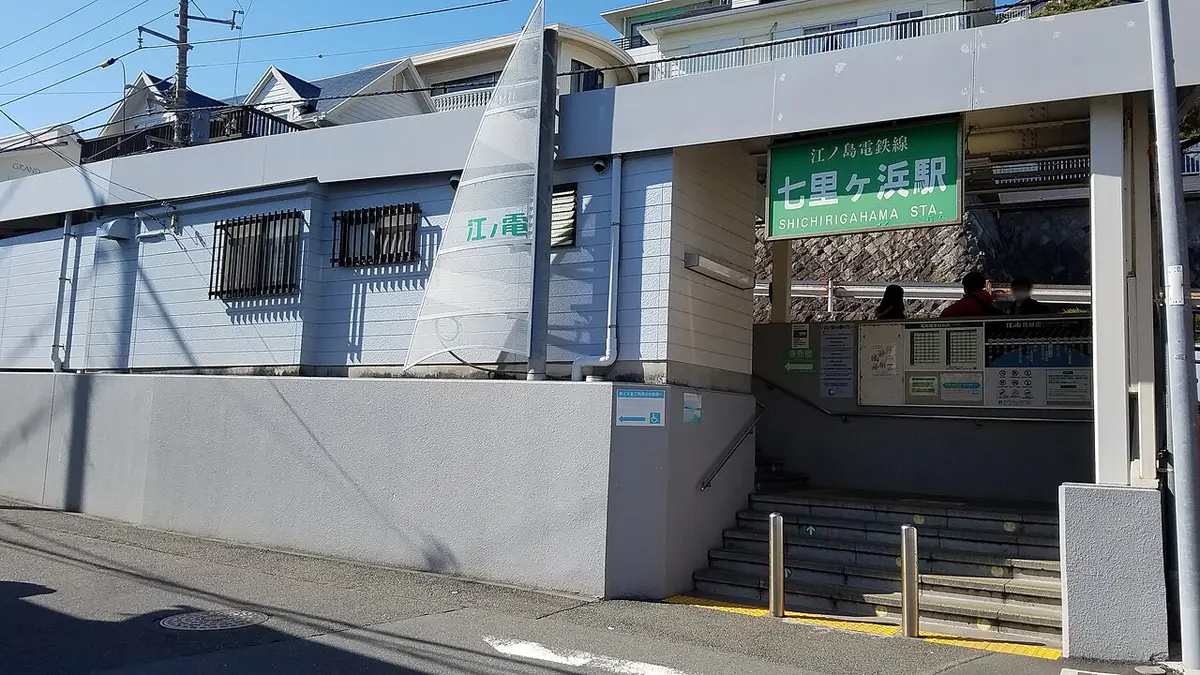
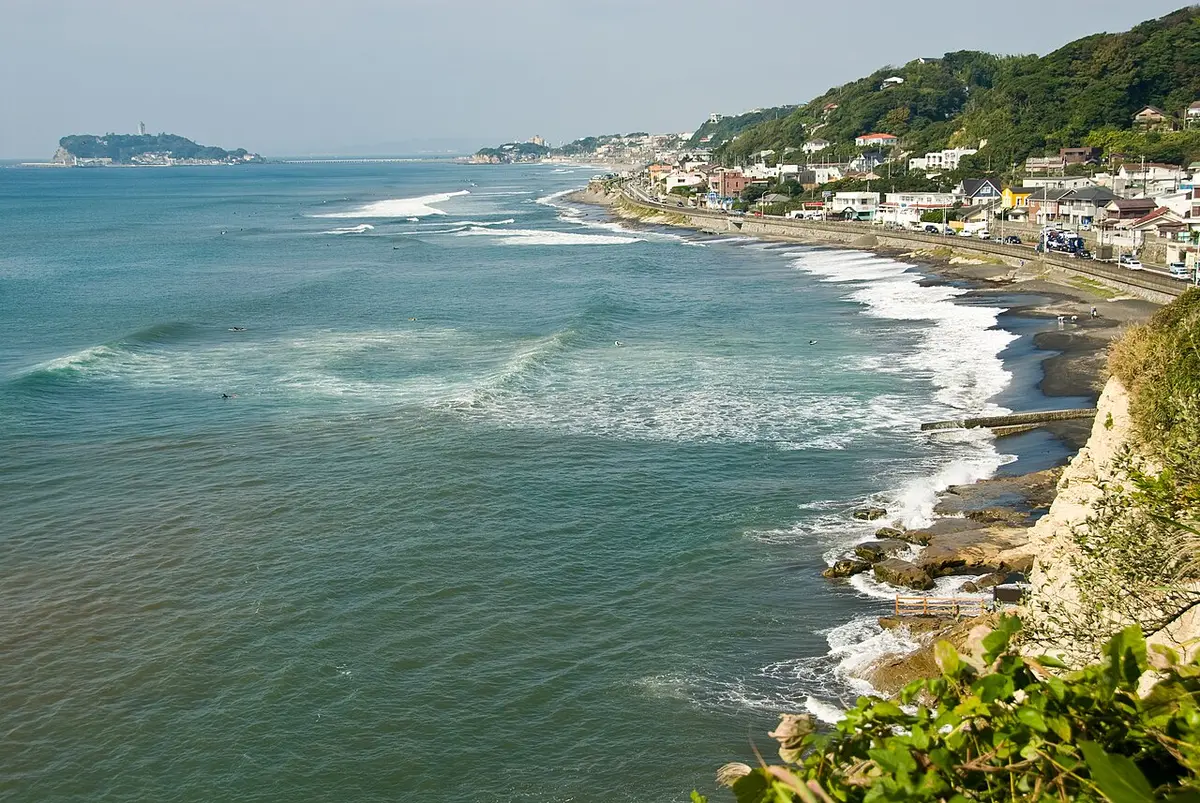
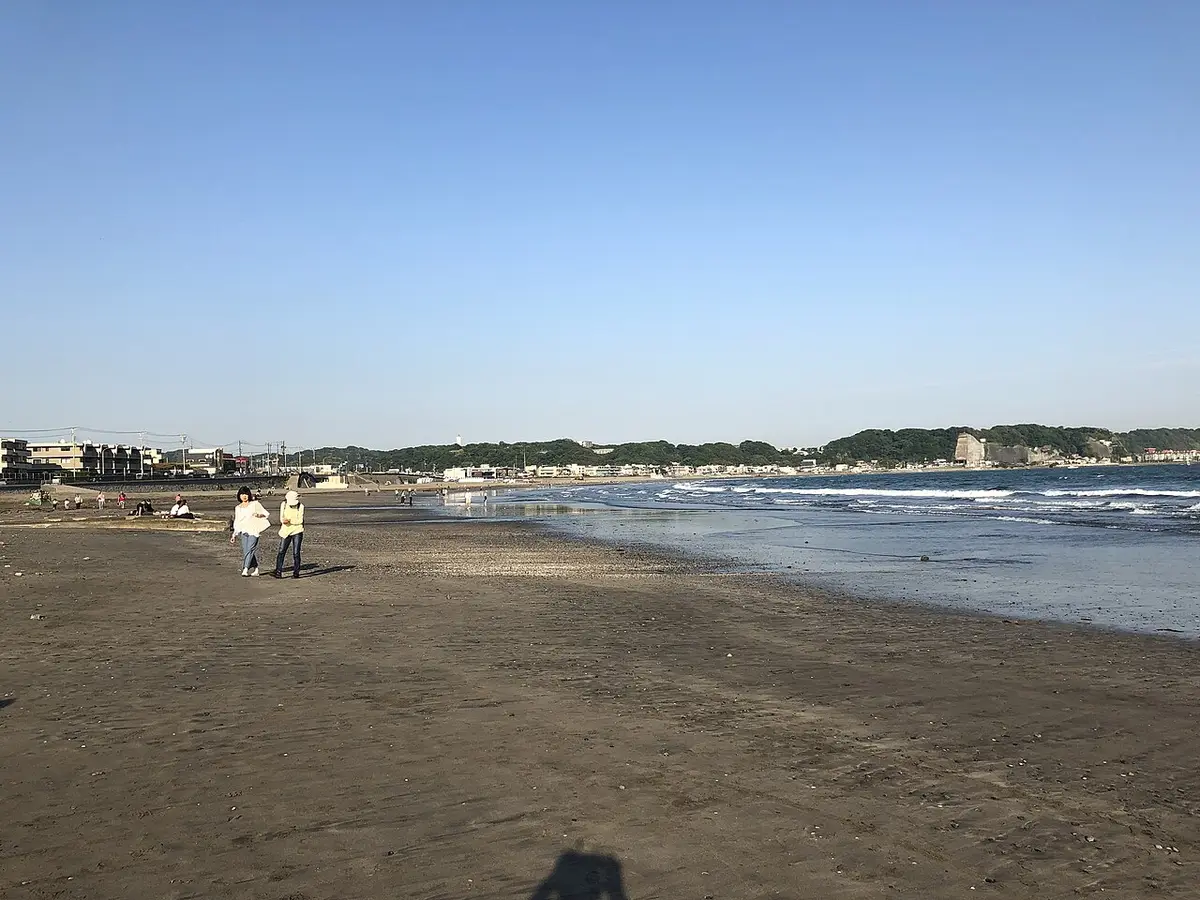
The line now runs beside the sea. Shichirigahama beach, about 4 km long, is 2 minutes on foot from the station. The tourism association notes it is not suitable for swimming, so it belongs to surfers and walkers.
From Kamakura 17 min, ¥260Shichirigahama beach 2 min on footMapOfficial site

Kamakura-kokomae (EN08)
The famous one. The level crossing next to the station, with the sea behind passing trains, was made famous by a hit anime, and it draws large crowds; see the etiquette section below. From here Enoshima is 4 minutes and ¥200 away.
From Kamakura 19 min, ¥260To Enoshima 4 min, ¥200MapOfficial site
Koshigoe (EN07)
Near Koshigoe the Enoden leaves its own track and runs along the street like a tram before reaching Enoshima. Koshigoe beach, Kamakura’s westernmost swimming beach, is 3 minutes on foot, next to the fishing port.
From Kamakura 22 min, ¥260Koshigoe beach 3 min on footMapOfficial site
Enoshima (EN06)
The stop for the island. Benten Bridge is about 12 minutes on foot; Enoden gives 20 minutes to Enoshima Shrine, 25 to the Sea Candle, 40 to the Iwaya caves and 10 to Enoshima Aquarium. Katase East Beach is 5 minutes away. The Enoshima Island All-Access Pass bundles the Escar, Sea Candle, Iwaya caves and the aquarium. The island route, tickets and sunset times are on our Enoshima guide, and if you are staying overnight see where to stay in Enoshima.
From Kamakura 24 min, ¥260From Fujisawa 9 min, ¥220Benten Bridge about 12 min on footMapOfficial site
Shonan-kaigan-koen (EN05), Kugenuma (EN04), Yanagikoji (EN03) and Ishigami (EN02)
West of Enoshima the line turns inland into Fujisawa. Shonan-kaigan-koen is 1 minute from Enoshima for ¥200; the others are 1 to 4 minutes from Fujisawa for ¥200. Ride through unless you are staying nearby.
From Enoshima 1-8 min, ¥200-220From Fujisawa 1-8 min, ¥200-220MapOfficial site
Fujisawa (EN01)
The western terminus, with transfers to JR Fujisawa and Odakyu Fujisawa stations. Coming from Yokohama or Shinjuku, starting here and riding east to Kamakura is a good way to do the whole line in one direction, and like Kamakura it is a terminus, so seats are easy.
To Enoshima 9 min, ¥220To Kamakura 37 min, ¥310MapOfficial site
Connecting to JR, Odakyu and the Shonan Monorail
The Enoden touches three other railways, which is why it fits so many day plans:
| Enoden station | Connects with | Typical use |
|---|---|---|
| Kamakura | JR Yokosuka Line, through transfer gate | Tokyo (¥1,034, 56 min) and Yokohama |
| Enoshima | Odakyu Katase-Enoshima, about 9 min on foot; Shonan Monorail Shonan-Enoshima | Shinjuku on Odakyu (¥649, 71 min); Ofuna by monorail (¥340, 14 min) |
| Fujisawa | JR Fujisawa and Odakyu Fujisawa | JR toward Yokohama and Tokyo, or Odakyu toward Shinjuku |
A common loop from Shinjuku is Odakyu to Katase-Enoshima, the island, the Enoden east to Hase and Kamakura, and JR home from Kamakura. Another is the reverse. Both are priced, with and without the Freepass, on the Freepass page, and the full set of routes from Tokyo is on how to get to Kamakura. To see every station and sight on one screen, open the Kamakura map, or let the day planner fit the trains to your date.
Where to stay along the line
Staying near an Enoden station means you can ride before the day-trippers arrive. Around Kamakura Station you have the most choice and the JR link; Hase and Yuigahama put you on foot from the Great Buddha, Hasedera and the beach; Enoshima and Katase put the island and the sunset on your doorstep. In Hase, BRB Kamakura Hase is within walking distance of Hasedera and the Great Buddha. Our where to stay in Kamakura and where to stay in Enoshima pages list properties by station.
The Kamakura-kokomae crossing: what the city and Enoden ask
The crossing next to Kamakura-kokomae Station is the most photographed spot on the line. The City of Kamakura explains in its manners ordinance FAQ that, since a hit anime made the crossing famous, fans have crowded it to recreate the shot, including from the middle of the road, and residents complain. Its ordinance on manners in public places lists these as nuisance acts:
- photographing in the roadway in a way that stops or blocks traffic;
- photographing in dangerous places near the tracks, for example leaning out over the line.
Enoden’s own requests to passengers add: do not enter the tracks; on platforms stay behind the yellow line and do not use flash or lights; do not use tripods or stepladders; and avoid photographing other passengers and neighbors.
In practice: take your photo from the pavement, keep moving, and go early on a weekday morning, when there are fewer people. The road along the coast here is busy with traffic, so stay off it. Kamakura High School next to the station is a working school.
Frequency, crowds and the best times to ride
Daytime trains leave Kamakura at a steady 14-minute interval, so missing one costs you 14 minutes, not an hour. The first train toward Fujisawa is at 5:20 and the last at 23:38.
Day-trippers, beachgoers and locals all share the same trains. Fujisawa City counted 3,531,010 tourist visits in August 2025, its busiest month, and three times February’s figure; Golden Week 2025 brought 494,000 people to the Katase-Enoshima area. Expect full trains on summer weekends, holidays and in hydrangea season.
How to keep the day smooth:
- Board at a terminus. Kamakura and Fujisawa are the ends of the line, so trains start empty there. From Hase or Enoshima on a busy afternoon, you may stand.
- Reverse the usual order. Day plans from Tokyo usually start in Kamakura. Starting at Enoshima in the morning and finishing in Kamakura puts you on the train in the opposite direction.
- Have a card ready. An IC card, contactless card or Noriorikun skips the ticket machine queue at Kamakura and Hase.
- Go early. On weekends, aim to be on the train by 9:00 or 10:00.
- Use the quiet stops. Wadazuka and Yuigahama reach the beach without the Hase crowd.
For dates with fewer people, see best time to visit Kamakura and the bloom and crowd calendar.

Three good Enoden rides
The classic loop (¥720 in singles). Kamakura to Hase (4 minutes, ¥200) for the Great Buddha and Hasedera, Hase to Enoshima (19 minutes, ¥260) for the island, Enoshima back to Kamakura (25 minutes, ¥260). Our Kamakura itinerary times it with temple hours.
The coast hop (¥880 in singles, ¥800 with Noriorikun). Add a stop at Kamakura-kokomae between Hase and Enoshima, and the day pass is the cheaper option.
The whole line (¥310). Ride Kamakura to Fujisawa in 37 minutes without getting off: the narrow run between houses, the sea from Inamuragasaki to Koshigoe and the street section near Koshigoe. From Fujisawa, JR or Odakyu takes you on.
If you would rather leave tickets to someone else, the guided Kamakura and Enoshima trip with a train ride and the Great Buddha meets at Tokyo or Shinjuku Station and includes the Enoden fare, and the Kamakura and Enoshima day tour with a train ride includes the Enoden and a stop at Kamakura-kokomae. More options on Kamakura tours, and the day plan from Tokyo is in Kamakura day trip from Tokyo.

Questions people ask
How do I pay for the Enoden?
Touch a Suica, PASMO or other Japanese transport IC card, or a contactless Visa, Mastercard, JCB, American Express, Diners Club, Discover or UnionPay card, at the gate. At unstaffed stations, touch the green reader when you get on and the yellow one when you get off. Paper tickets and QR tickets such as the Noriorikun day pass also work.
Is the Noriorikun day pass worth it?
Only for four or more rides. The pass costs ¥800 for adults. The usual three-ride loop Kamakura to Hase, Hase to Enoshima and Enoshima back to Kamakura costs ¥720 in single fares, so singles win by ¥80. Add a fourth stop such as Kamakura-kokomae and the loop costs ¥880, so the pass saves ¥80.
How often does the Enoden run?
During the day, trains leave Kamakura toward Fujisawa every 14 minutes. The first train from Kamakura is at 5:20 and the last at 23:38. A full run from Kamakura to Fujisawa takes 37 minutes and costs ¥310 for adults, so missing a train costs you only a short wait.
Can I use a credit card on the Enoden?
Yes, a contactless credit, debit or prepaid card works at every station. It charges the adult fare only, one card per person, so children need a ticket or a transport IC card. Contactless cards and QR tickets do not work at the transfer gate to JR inside Kamakura Station.
Is the Enoshima-Kamakura Freepass worth it?
It is worth it if you come from Shinjuku on the Odakyu Line and ride the Enoden more than once. From Shinjuku it costs ¥1,640, covers the Odakyu round trip to Fujisawa and the whole Enoden line for the day. Our Freepass page works out the break-even for each starting point.
Can I take photos at the Kamakura-kokomae crossing?
Yes, from the pavement. The City of Kamakura lists photographing in the roadway in a way that blocks traffic, and photographing in dangerous spots near the tracks, as nuisance acts. Enoden asks people to stay off the tracks and not to use tripods or stepladders.
Read next
 Enoshima-Kamakura FreepassWhen the pass pays off and when single tickets are cheaper.
 EnoshimaThe island route, the caves, the Sea Candle and sunset over Fuji.
 Kamakura beachesYuigahama, Zaimokuza, Shichirigahama and Enoshima.
 Day trip from TokyoWhich train, which pass and when to leave to beat the crowds.
Sources (15)
- Enoden: fares between stations
- Enoden: station information (Japanese)
- Enoden: Kamakura Station timetable
- Enoden: requests to passengers, IC readers, contactless and QR tickets (Japanese)
- Enoden: Noriorikun 1-day pass (Japanese)
- Enoden (official, English): tourist attractions
- Odakyu: Enoshima-Kamakura Freepass
- City of Kamakura: public-place manners ordinance FAQ (Japanese)
- City of Kamakura: Kamakura Free Kankyo Tegata (Japanese)
- Kanagawa Prefecture: 2026 beaches and access (Japanese)
- Kotoku-in (official): access
- Hasedera (official): guide
- VISIT KAMAKURA: Shichirigahama Beach
- Enoshima Sea Candle: about (Enoden centenary)
- Fujisawa City Tourist Association: tourism statistics (Japanese)