Seasons
Kamakura cherry blossoms 2027
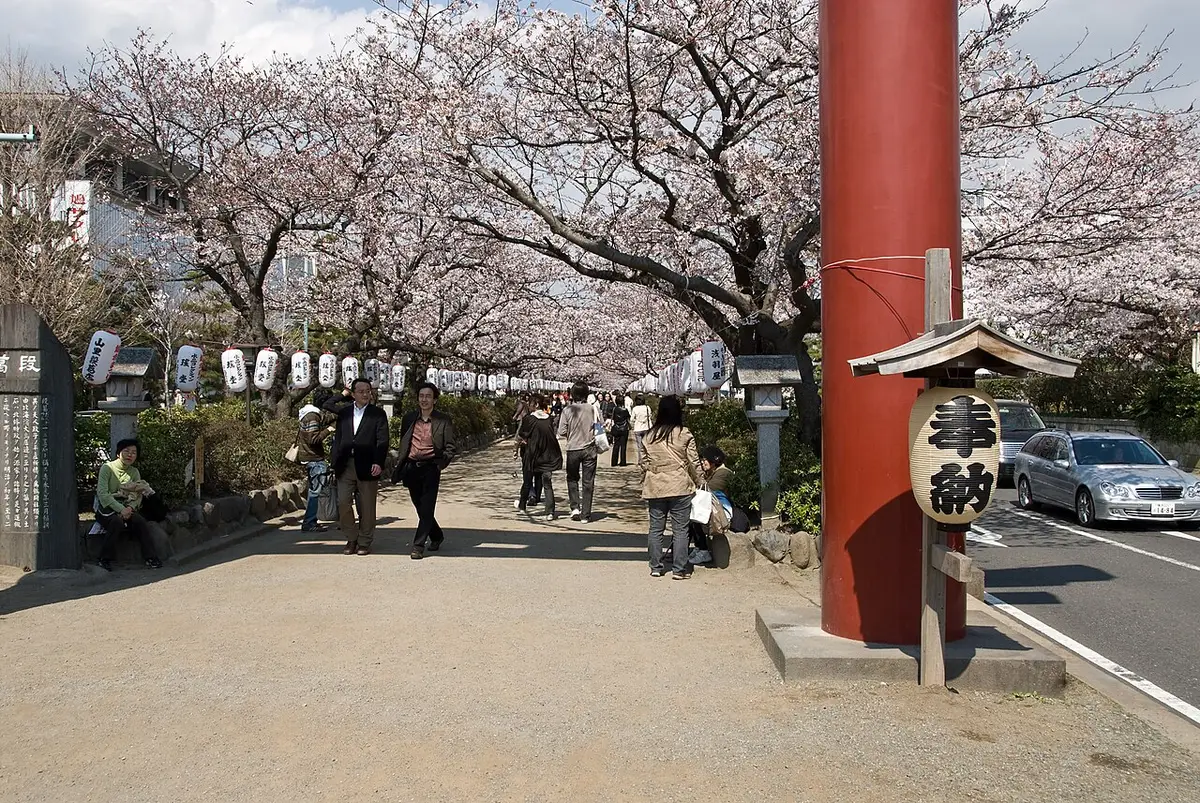
Table of contents
Kamakura’s cherry blossoms most likely open around March 23, 2027 and reach full bloom around March 31, going by 20 years of Japan Meteorological Agency records at the Yokohama observatory, the closest official station. Aim for the last week of March or the first days of April. The best free spot is the Dankazura, the raised, cherry-lined path from Kamakura Station toward Tsurugaoka Hachimangu; the best temple spots are Engakuji and Kenchoji in Kita-Kamakura. Below: the 2027 windows, past years’ dates, seven spots with fees and hours, and a morning route that beats the crowds.
When the cherries bloom in 2027
The windows above are for the Somei-yoshino, the pale pink cherry that fills most Japanese parks. They are for the agency’s observation tree at Yokohama: “first bloom” is the day five or six flowers open on it, and “full bloom” the day about 80% of its buds are open. These are Yokohama dates, not Kamakura peak dates, so use them as a guide and watch local reports as your trip gets close.
Here is what the last ten springs looked like at Yokohama, from the agency’s first bloom and full bloom tables:
| Year | First bloom | Full bloom | Days between |
|---|---|---|---|
| 2026 | March 22 | April 1 | 10 |
| 2025 | March 25 | April 4 | 10 |
| 2024 | April 1 | April 7 | 6 |
| 2023 | March 15 | March 25 | 10 |
| 2022 | March 21 | March 28 | 7 |
| 2021 | March 17 | March 27 | 10 |
| 2020 | March 18 | March 28 | 10 |
| 2019 | March 21 | April 1 | 11 |
| 2018 | March 19 | March 27 | 8 |
| 2017 | March 25 | April 6 | 12 |
Two things follow. First, the date moves by up to two weeks between years: 2023 was full by March 25, 2024 not until April 7. Second, over 20 years the gap from first flowers to full bloom ranged from 4 to 13 days, with a median of nine to ten. If your dates are fixed, the last days of March give the best odds; if they are flexible, wait for the first-bloom announcement and go about a week later.
The full record back to 1953 and the method are on the bloom calendar. For how spring compares with hydrangea and leaf season, see the best time to visit Kamakura.
Kamakura’s cherry blossom spots
The spots below run roughly from north to south, the order of the morning route further down. Fees are for adults; children pay less at every temple.
Dankazura and Tsurugaoka Hachimangu
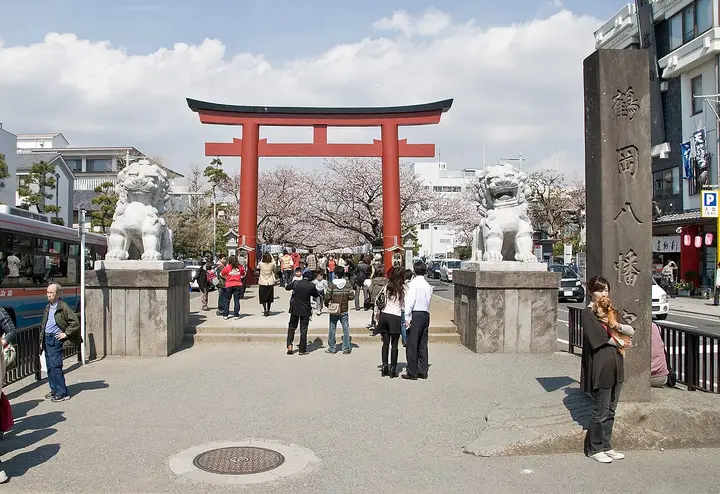
The Dankazura is a raised walkway down the middle of Wakamiya-oji, the avenue Minamoto no Yoritomo laid out from the sea to Tsurugaoka Hachimangu. It runs from the second to the third torii gate, and the city’s tourism association lists cherry blossoms and azaleas as its spring flowers. Walking it under the cherries is the picture most people come for.
Keep going into the shrine. Its two Genpei ponds, dug on Yoritomo’s orders, are ringed by cherries in full bloom in spring. From the top of the great stone steps you look out over Kamakura. The shrine is free and its gates are open 6:00 to 20:00, so you can walk the Dankazura and the ponds before the temples open. The Tsurugaoka Hachimangu and Komachi Street tour covers the shrine with a guide in about 90 minutes from Kamakura Station.
Fee freeHours shrine gates 6:00-20:00From Kamakura Stn Dankazura 3 min walk; shrine 10 min walk (east exit)MapOfficial site
Kamakura-gu
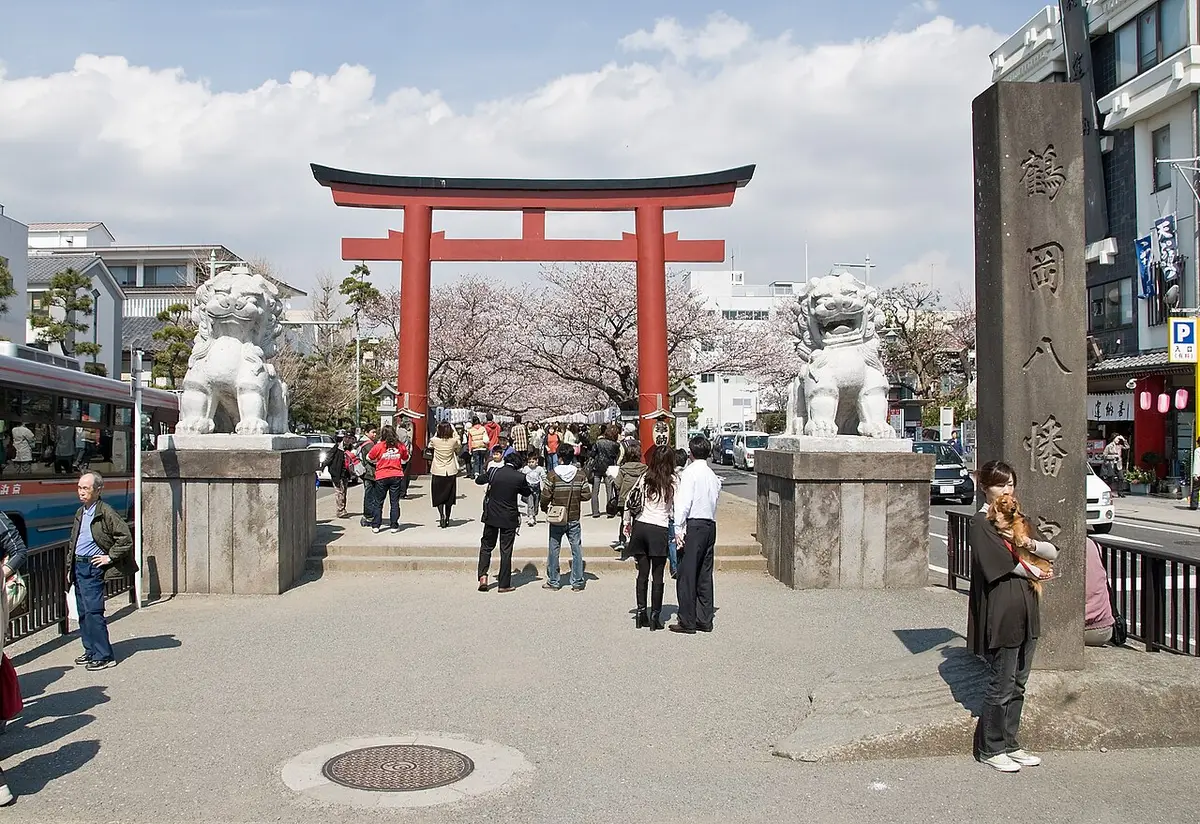
Kamakura-gu, a shrine in the Nikaido district east of the center, lists Yoshino cherry and the ogatama tree, a city natural monument, as its spring flowers. It makes a good stop on the way to Hokokuji’s bamboo garden or Zuisenji. The grounds are free; only the treasure hall charges ¥300.
Fee grounds free; treasure hall ¥300Access bus from Kamakura Stn east exit stop 5 to Daitonomiya, 1 min walkOn foot about 16 min from Tsurugaoka HachimanguMapOfficial site
Engakuji
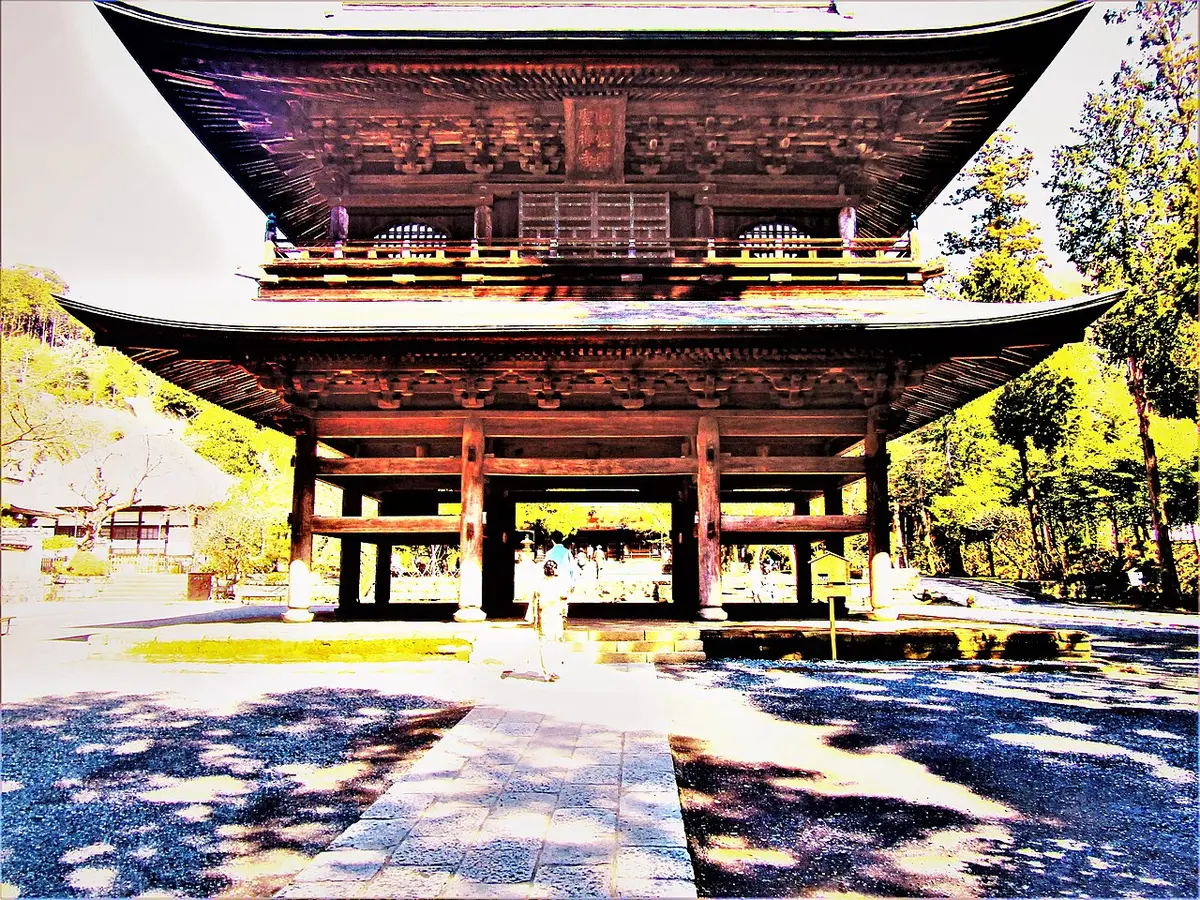
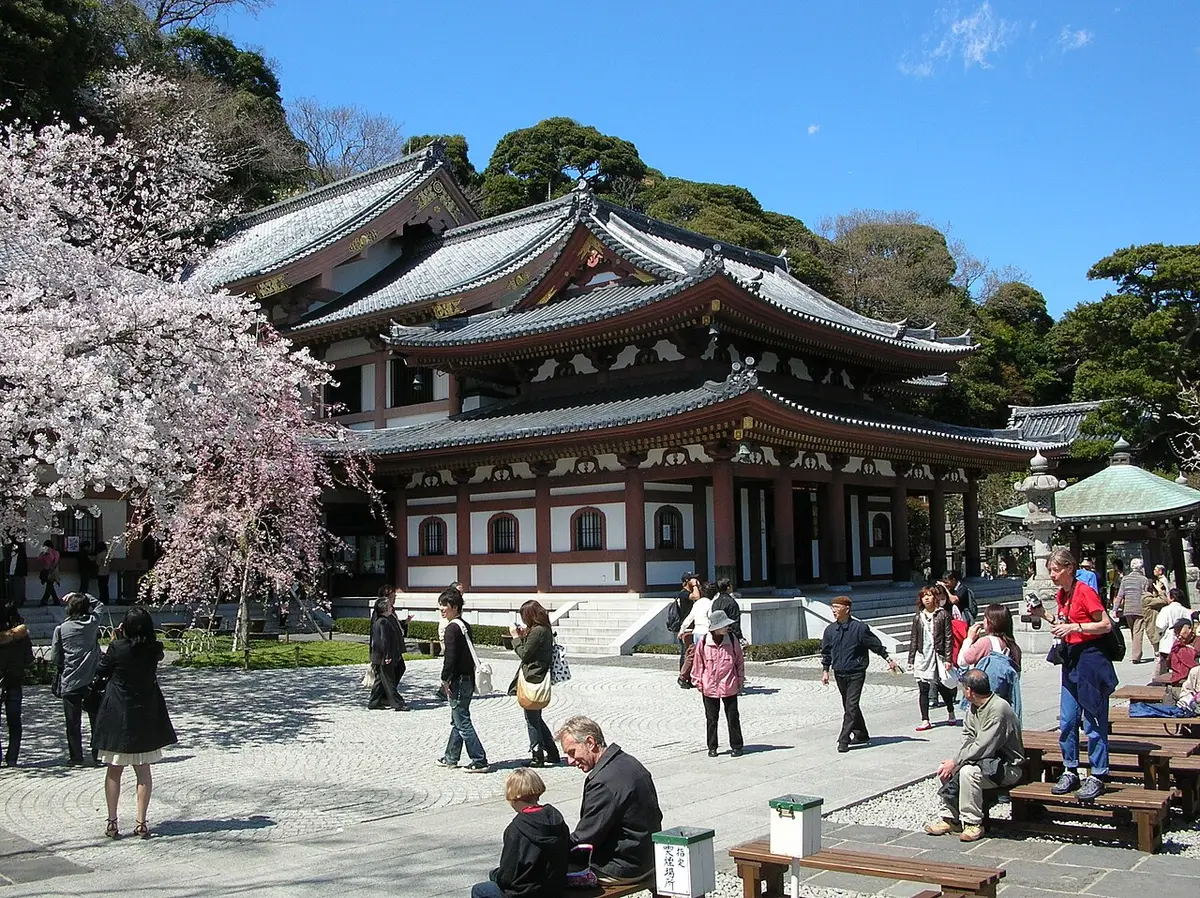
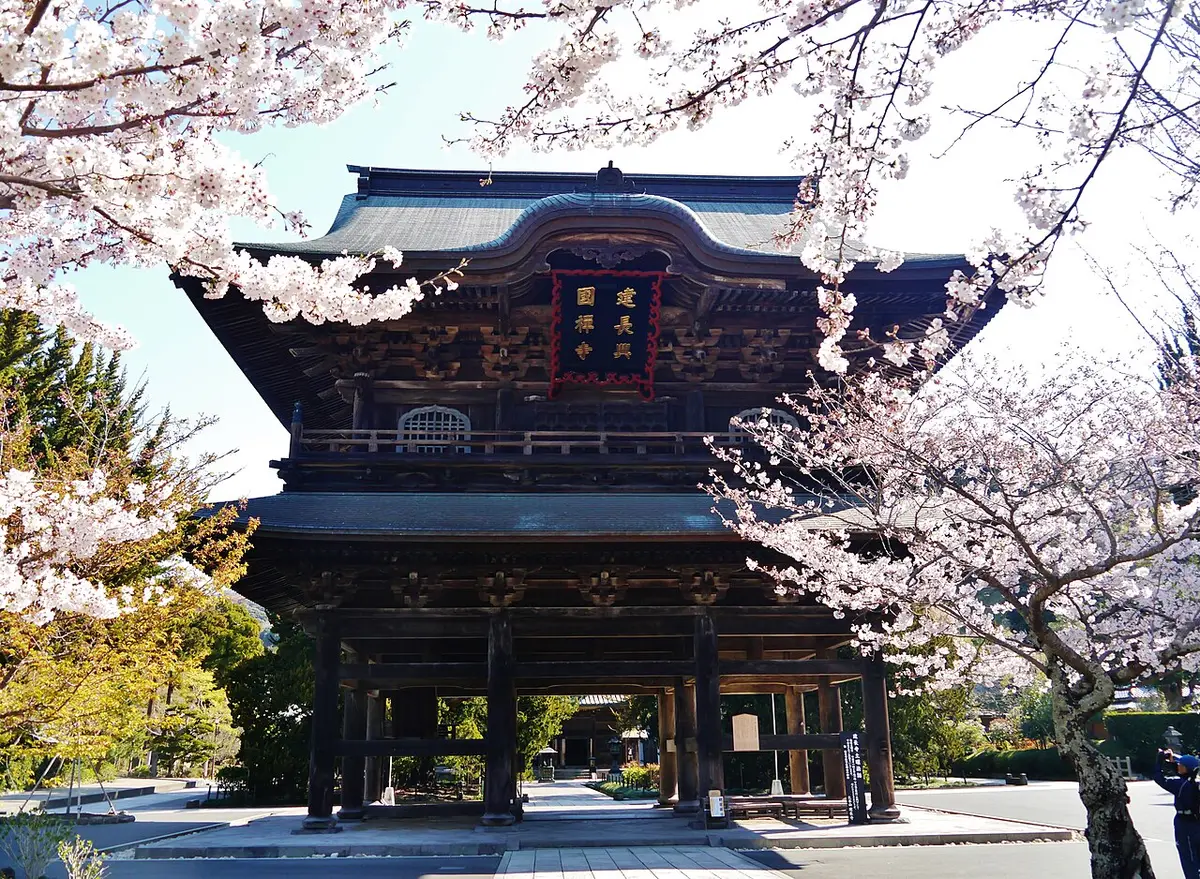
Engakuji, right outside Kita-Kamakura Station, is the first temple on most cherry mornings. Its spring flowers are plum, Yoshino cherry and white magnolia, around the Sanmon gate and the halls behind it. It opens at 8:30, before the Tsurugaoka area fills up.
Fee ¥500 (child ¥200)Hours 8:30-16:30 (March to November)From Kita-Kamakura Stn 1 min walkMapOfficial site
Kenchoji
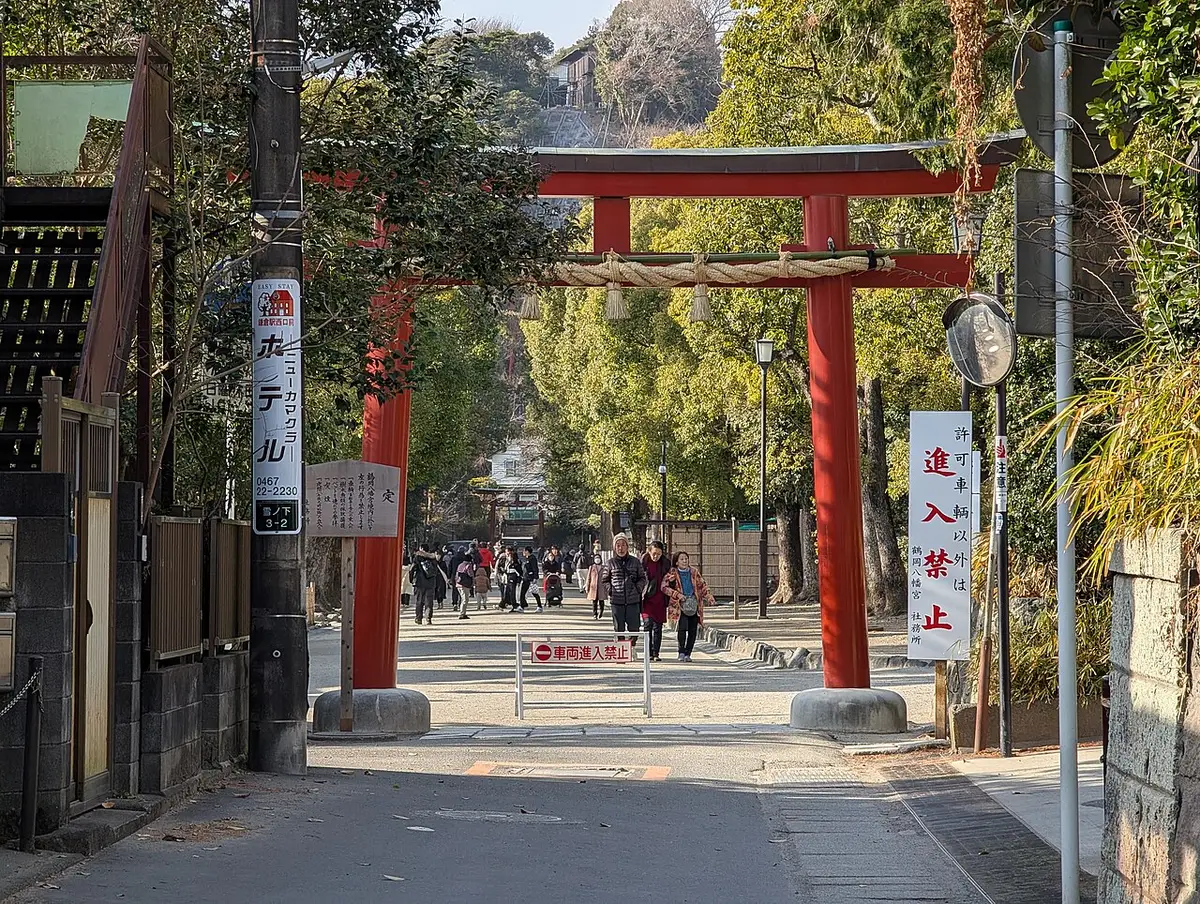
Kenchoji, the first of Kamakura’s five great Zen temples, lies on the road between Kita-Kamakura and Tsurugaoka. White magnolia and cherry are its spring flowers. Deep in the grounds, Hansobo shrine is also a way up to the hills and the hiking trails; if you enter the temple to hike, you pay the admission too. Payment is cash only.
Fee ¥500 (child ¥200), cash onlyHours 8:30-16:30From Kita-Kamakura Stn about 15 min walkMapOfficial site
Genjiyama Park
Genjiyama Park sits on a wooded hill west of the town center, with a statue of the young Yoritomo in its central square and the Kewaizaka pass, a national historic site, beside it. The city says the park is for cherry blossoms in spring and leaves in autumn, and it is a favorite for picnics under the trees. Expect a long slope up from the station and uneven paths. The Daibutsu hiking trail runs through it, so you can continue on foot to the Great Buddha in Hase. The Hidden Kamakura hike follows the hill trails to the Great Buddha with a guide, Kotoku-in admission included.
Fee freeFrom Kamakura Stn about 20 min walk from the west exit, uphillNearby Zeniarai Benzaiten, about 3 min on footMapOfficial site
Hasedera and the Hase area
In Hase, four minutes from Kamakura on the Enoden, Hasedera lists Yoshino cherry and white magnolia among its spring flowers. The lookout platform by the main hall faces out over the town and the sea. Combine it with the Great Buddha at Kotoku-in, a 5-minute walk away. From April Hasedera stays open an extra half hour.
Fee ¥400 (child ¥200)Hours 8:00-17:00 entry April to June; 8:00-16:30 July to MarchFrom Hase Stn 5 min walkEnoden from Kamakura 4 min, ¥200MapOfficial site
Enoshima
Enoshima, at the western end of the Enoden, is less about cherry trees than about the view in cherry season. The Samuel Cocking Garden at the top of the island is free during the day, and the Enoshima Sea Candle’s glass observation room, 101.5 m above the sea, looks out over the coast to the Izu Peninsula and, on a clear day, Mt. Fuji. From early April to early June the garden hosts the Enoshima Art Festival. Pick a clear morning if Fuji is the goal. The Enoshima guide has the island route.
Sea Candle ¥800 (child ¥400), 9:00-20:00, last entry 19:30Garden free 9:00-17:00From Enoshima Stn Sea Candle about 24 min on footMapOfficial site
Weather in cherry season
Cherry season sits on the line between winter and spring. The Japan Meteorological Agency’s 1991 to 2020 normals for Yokohama give March a daily high of 14.0°C (57°F) and a low of 6.0°C (43°F), and April 18.9°C (66°F) and 10.7°C (51°F). Early starts at the Kita-Kamakura temples call for a layer you can take off by lunch.
Spring is also when the rain returns. March and April each average about 140 mm of rain over nine or ten wet days, against about 65 mm in January and February. Pack an umbrella and shoes with grip for wet temple steps.
Getting there in cherry season
From Tokyo Station, JR Yokosuka Line trains reach Kamakura in 56 minutes for ¥1,034 with an IC card, and Kita-Kamakura in 53 minutes for ¥902, with no change. For the morning route above, get off at Kita-Kamakura and finish at Kamakura Station, or carry on along the coast on the Enoden: Kamakura to Hase takes 4 minutes for ¥200, and Hase to Enoshima 19 minutes for ¥260. The how to get to Kamakura guide covers Shinjuku, Shinagawa and Yokohama, and the Freepass page shows when a pass beats single tickets.
On busy cherry weekends, buy or top up your IC card before you travel and keep a little cash for temple gates: Kenchoji takes cash only.
A cherry blossom morning, step by step
This route starts in the north, where temples open first, and reaches the free spots before the midday crowd. Walking times are along OpenStreetMap paths at an easy pace, except where the temple states its own.
- 8:30, Engakuji. Take a JR Yokosuka Line train to Kita-Kamakura (the getting there guide has times and fares). Engakuji is a minute from the station.
- About 9:30, Kenchoji. About 18 minutes on foot from Engakuji. Meigetsu-in is a short detour on the way.
- About 10:30, Tsurugaoka Hachimangu and the Genpei ponds. About 13 minutes on foot from Kenchoji. Climb the great stone steps for the view, then walk down to the ponds.
- About 11:00, the Dankazura. Walk it toward the sea, then cut across to Komachi-dori for lunch (see Kamakura food).
- Afternoon, Genjiyama Park or Hase. For more cherries, walk about 21 minutes to Genjiyama Park and on along the trail. For the coast, take the Enoden to Hase for Hasedera and the Great Buddha.
Full-day versions with exact trains are on the itinerary page, and the map shows every stop. A guided half-day walk from the Zen temples to the Great Buddha starts at Engakuji and follows a similar line.
Crowds and timing
Cherry season brings two crowd peaks on top of normal weekends. The Vernal Equinox falls on Sunday, March 21, 2027, with a substitute holiday on Monday, March 22, so March 20 to 22 is a three-day weekend that may land on the first blossoms. The Kamakura Matsuri runs from the second Sunday to the third Sunday of April each year (tourism association); in 2027 those Sundays fall on April 11 and 18, after the usual full-bloom date. The festival brings a procession and the Shizuka no mai dance to Tsurugaoka.
The simplest way around the crowds is a weekday and an early start. If you want to stay close, Hotel Metropolitan Kamakura is a short walk from Kamakura Station; the where to stay guide compares the areas.
For a guided day, the Kamakura cherry blossom full-day tour is about eight hours with a local expert guide; the listing includes entry tickets and a bento lunch, with stops at Tsurugaoka Hachimangu and Kenchoji. Many visitors also rent a kimono for the walk: the kimono experience at the Komachi-dori entrance dresses you a minute from Kamakura Station.
If you miss the peak
The Somei-yoshino is only one part of Kamakura’s spring. Plum blossoms come first: at the Yokohama observatory the plum first bloom has fallen between mid-January and the start of March over the last 20 years, so February is plum month at Engakuji, Kamakura-gu and Hasedera. The Dankazura also has azaleas in spring, and white magnolias flower at Engakuji, Kenchoji and Hasedera. Zuisenji, in the Nikaido district, even lists a winter-flowering cherry among its autumn flowers.
If your dates are fixed and the windows above miss them, the best time to visit page shows what each week of the year offers instead.
The next big show is hydrangea season in June (hydrangea guide), and in December the autumn leaves.
Questions people ask
When is cherry blossom season in Kamakura in 2027?
At the Yokohama observatory, the closest official record, Somei-yoshino cherries most likely open around March 21, 2027 and reach full bloom around March 31. Most years fall between March 10 and April 1 for first bloom and between March 23 and April 8 for full bloom. Late March to the first days of April is the window to aim for.
Where is the best place to see cherry blossoms in Kamakura?
The Dankazura, the raised path down the middle of Wakamiya-oji avenue to Tsurugaoka Hachimangu, is the classic spot, three minutes from Kamakura Station's east exit and free. The Genpei ponds inside the shrine, Genjiyama Park on the western hills and the temples of Kita-Kamakura are the next best.
How long do cherry blossoms last in Kamakura?
At Yokohama, full bloom came a median of about nine to ten days after the first flowers opened over the last 20 years, with a range of 4 to 13 days. Rain and wind after full bloom shorten the show, so book a flexible day if you can.
Do you have to pay to see the cherry blossoms in Kamakura?
No. The Dankazura, Tsurugaoka Hachimangu's grounds with the Genpei ponds, Kamakura-gu's grounds and Genjiyama Park are all free. Temples charge their normal admission, with no cherry surcharge: ¥500 at Engakuji and Kenchoji (Kenchoji takes cash only) and ¥400 at Hasedera.
Is Kamakura crowded in cherry blossom season?
On weekends, yes. The Vernal Equinox long weekend (March 20 to 22, 2027) and the Kamakura Matsuri, held from the second to the third Sunday of April, add to the crowds. On any day, start at Engakuji at 8:30 and reach Tsurugaoka and the Dankazura by late morning, before the midday crowd.
Read next


Sources (22)
- Japan Meteorological Agency: plant phenology records (Yokohama)
- Japan Meteorological Agency: how first bloom and full bloom are observed (PDF)
- Japan Meteorological Agency: Somei-yoshino first bloom table
- Japan Meteorological Agency: Somei-yoshino full bloom table
- VISIT KAMAKURA: Wakamiya Oji Avenue (Dankazura)
- Tsurugaoka Hachimangu (official): grounds
- Tsurugaoka Hachimangu (official): access and gate hours
- VISIT KAMAKURA: Kamakuragu Shrine
- Kamakura City Tourism Association: Kamakura-gu
- Engakuji (official): visiting hours and fees
- VISIT KAMAKURA: Engakuji Temple
- Kenchoji (official): visiting hours, fees, access
- VISIT KAMAKURA: Kenchoji Temple
- City of Kamakura: Genjiyama Park
- VISIT KAMAKURA: Genjiyama Park
- Hasedera (official): hours and admission
- VISIT KAMAKURA: Hasedera Temple
- Enoshima Sea Candle (official): tower and tickets
- Kamakura City Tourism Association: Kamakura Matsuri
- Cabinet Office: national holidays 2027
- Enoden: fares between stations
- OpenStreetMap walking routes (OSRM foot profile)